Roofing guide · Jacksonville, FL
Metal vs shingle roofs for Jacksonville and Northeast Florida
By Holden Lovett, Roofing Guides Editor · Updated September 2026
Most Jacksonville homes are roofed in shingle, and a growing number of owners are asking about metal. Both are good roofs when they are installed right. The better choice depends on how long you plan to stay, how close you are to salt water, and what the house looks like.
- Material guide
- Shingle and metal
- Northeast Florida
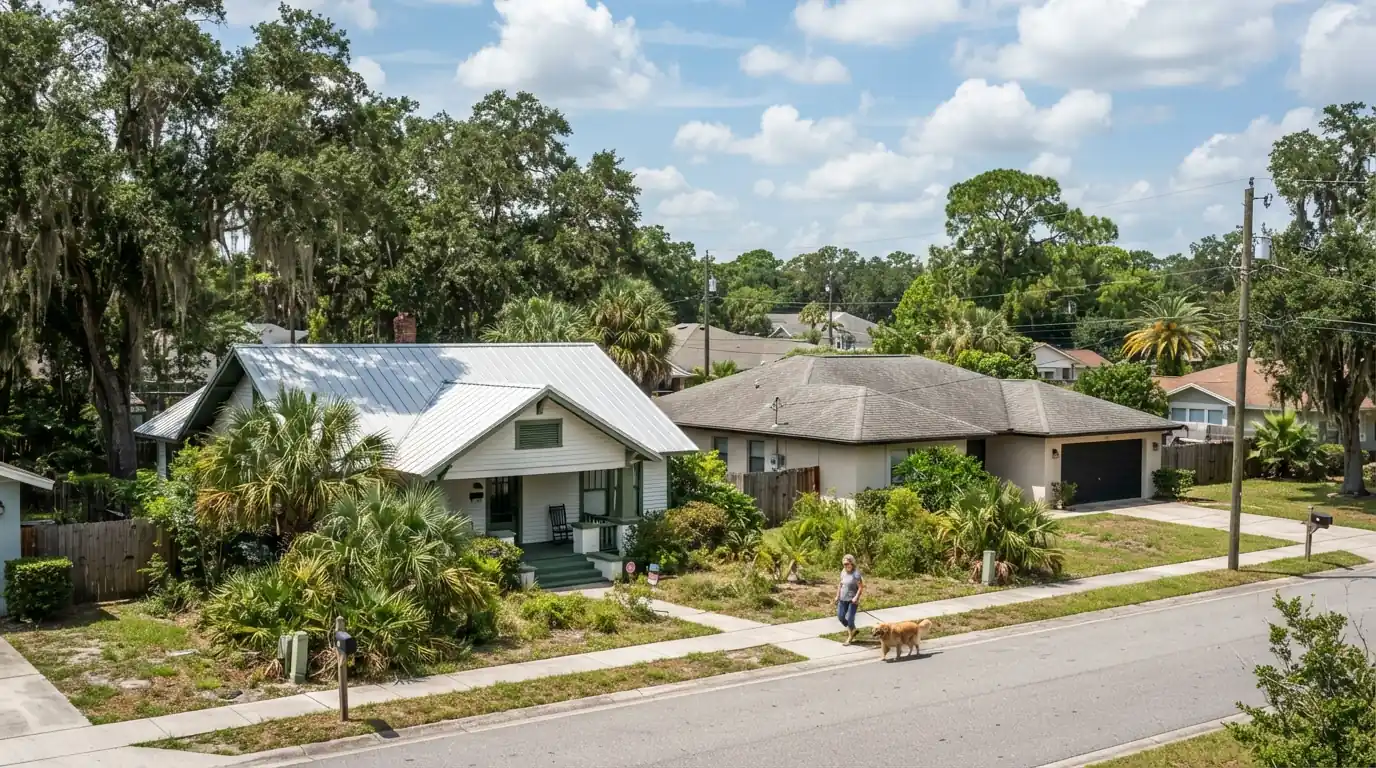
For a Northeast Florida home, architectural shingle costs less up front and suits most houses, while metal costs more, lasts longer, reflects more heat and handles coastal wind well when fastened to its tested pattern. Near salt water, aluminum or coastal-rated metal is the stronger choice; for a shorter stay in the house, a quality shingle roof is usually the better value.
The local mix
Where each one stands in Jacksonville
Shingle is the default here. One large Jacksonville roofer reports that its installs run 82 percent asphalt shingle, 10 percent metal and 8 percent cement tile. Metal is especially popular in coastal areas like Jacksonville Beach and Atlantic Beach, where salt and wind shape the choice more than anywhere else in the city.
Both roofs are built to the same code and permitted the same way. The differences are cost, lifespan, how they handle heat and salt, and how they look on the house.
Price bands
What each costs up front
Published Jacksonville figures put metal in a higher band than shingle, with standing seam at the top of the metal range. Exposed-fastener 5V crimp costs less than standing seam and is the traditional Florida metal roof.
These are planning figures from local roofers' cost guides, not our quote; your roof's size, pitch and complexity decide where it lands. See our roof cost guide for what moves the price.
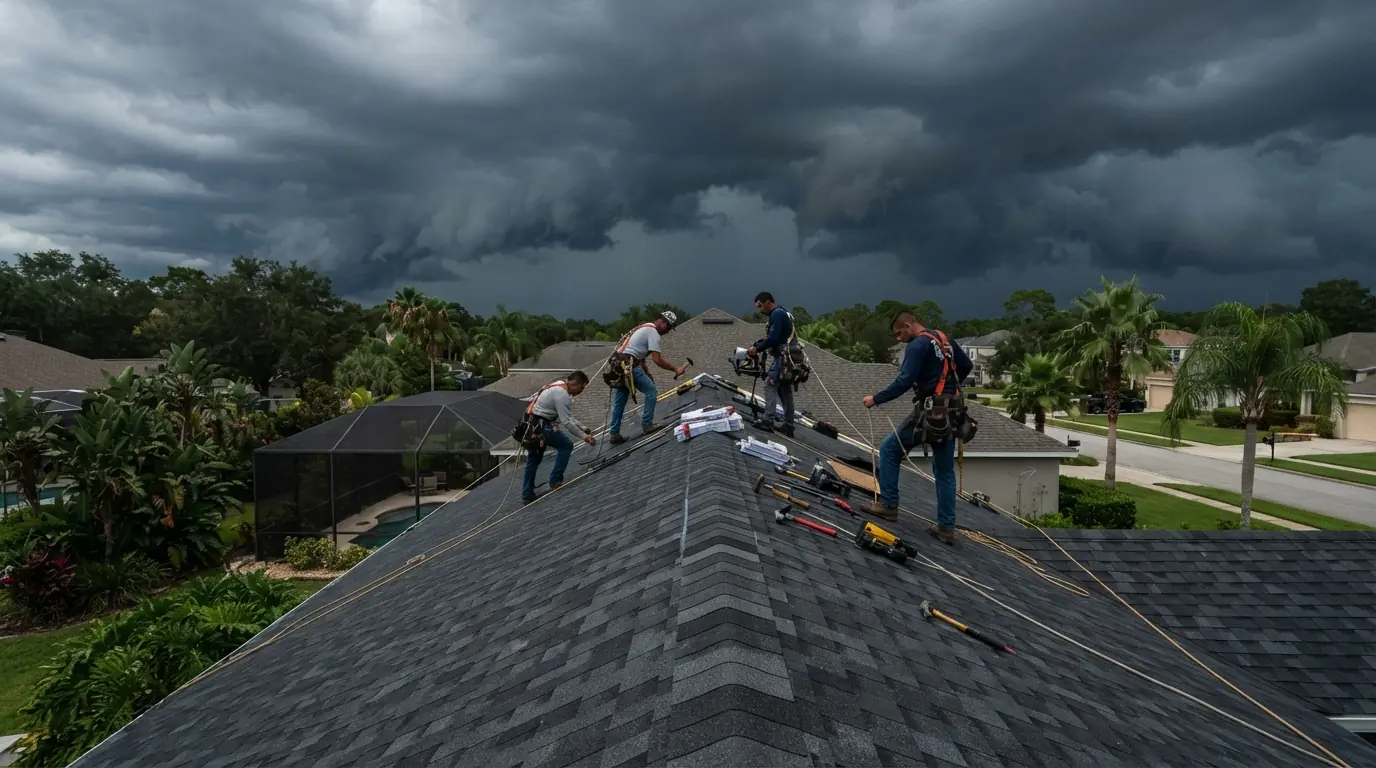
Want both priced for your house?
Call and we will measure the roof and price architectural shingle and metal side by side.
Florida conditions
Wind, heat and salt air
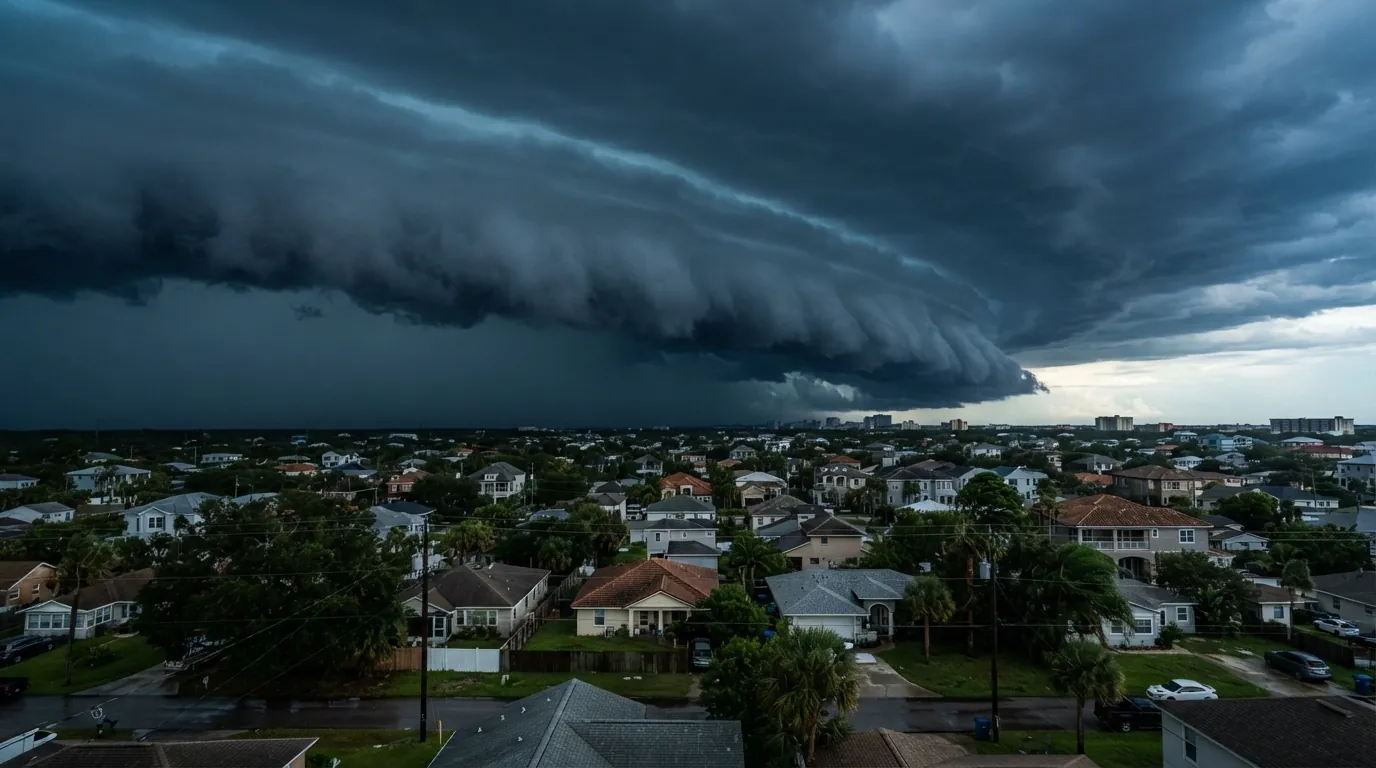
Both can be installed to high-wind ratings. Shingles depend on their nailing pattern and seal strips; metal depends on its clips or fasteners and its tested panel system. Installed to the product approval, both handle Jacksonville's storms; installed carelessly, both fail at the edges first.
Heat is where metal pulls ahead. The Weather Service normal for Jacksonville is 60 summer days at or above 90 degrees, and a light-colored metal roof reflects more of that sun than a dark shingle, which helps attic temperatures. Salt air is where metal needs care: steel near the ocean relies on its coating, so aluminum or coastal-rated finishes and fasteners are the usual choice at the beaches.
The comparison
Side by side
Here is how the two compare on the points Jacksonville homeowners ask about most.
| Architectural shingle | Metal | |
|---|---|---|
| Up-front cost | Lower | Higher |
| Typical lifespan | Shorter | Longer |
| Heat | Absorbs more, especially dark colors | Reflects more, especially light colors |
| Salt air | No corrosion to manage | Needs aluminum or coastal-rated finishes near the ocean |
| Rain noise | Quiet | Quiet over a solid deck; louder without one |
| Repairs | Easy to patch and match | Panel and fastener work; color matching harder with age |
| Look | Traditional | Clean lines, modern or coastal cottage |
Choosing
Which one fits your house
There is no single right answer, but there is usually a clear one for a given house and owner.
- Selling within a few years: a quality architectural shingle is usually the better value
- Staying for the long haul: metal's longer life spreads its cost over more years
- Within sight of the ocean: aluminum or coastal-rated metal, or shingle with coastal fasteners
- A historic or traditional house: shingle or a matching profile, subject to district rules
- A low-slope porch or addition: metal handles low pitch better than shingle
The third option
And what about tile?
Tile is the third roof in the local mix and the heaviest. Concrete and clay tile last a long time and suit Mediterranean and Spanish-style houses; in San Marco, where Mediterranean revival homes are common, tile is often the roof the house was designed for. It costs more than metal or shingle and needs framing designed for its weight, so it is rarely a like-for-like swap for a shingle roof.
If your house already has tile, the usual choice is between repairing the underlayment beneath it and replacing the roof in tile again. See tile roof installation and tile roof repair for how each is done.
Over the years
Lifespan and upkeep
Shingle roofs in Florida sun age faster than the wrapper suggests, because heat and ultraviolet light break down the asphalt and loosen the granules. Metal lasts longer, but exposed-fastener roofs need their screws and washers checked over time, while standing seam needs little more than clear valleys and gutters.
Whichever you choose, a yearly inspection and a spring tune-up catch small problems before they shorten the roof's life. See shingle roof installation and metal roof installation for how each is built.
Questions we hear
Metal vs shingle questions
For long-term owners and homes near the beaches, often yes. For a shorter stay, shingle is usually the better value.
No. A light-colored metal roof reflects more sun than a dark shingle roof, which helps keep the attic cooler.
Steel can, once its coating is breached. Aluminum does not rust, which is why it is the usual coastal choice.
Over a solid deck with underlayment, not much louder than shingle.
We tear off so the deck can be inspected and re-nailed first. See metal roof installation.
Metal, typically, when it is installed to its tested system and maintained.
Choose the roof that fits your house and your plans
Call any hour. We install shingle and metal roofs across Jacksonville and price them side by side.