Jacksonville, FL · Flat & Commercial
Silicone and elastomeric roof coatings in Jacksonville
Updated September 2026
A coating does not rescue a failed roof. On a sound flat or metal roof it seals seams and fasteners, reflects sun, and buys years before a tear-off. We tell you which of those two roofs you have before selling either.
- Calls answered 24/7
- Flat and metal roofs
- Moisture-checked first
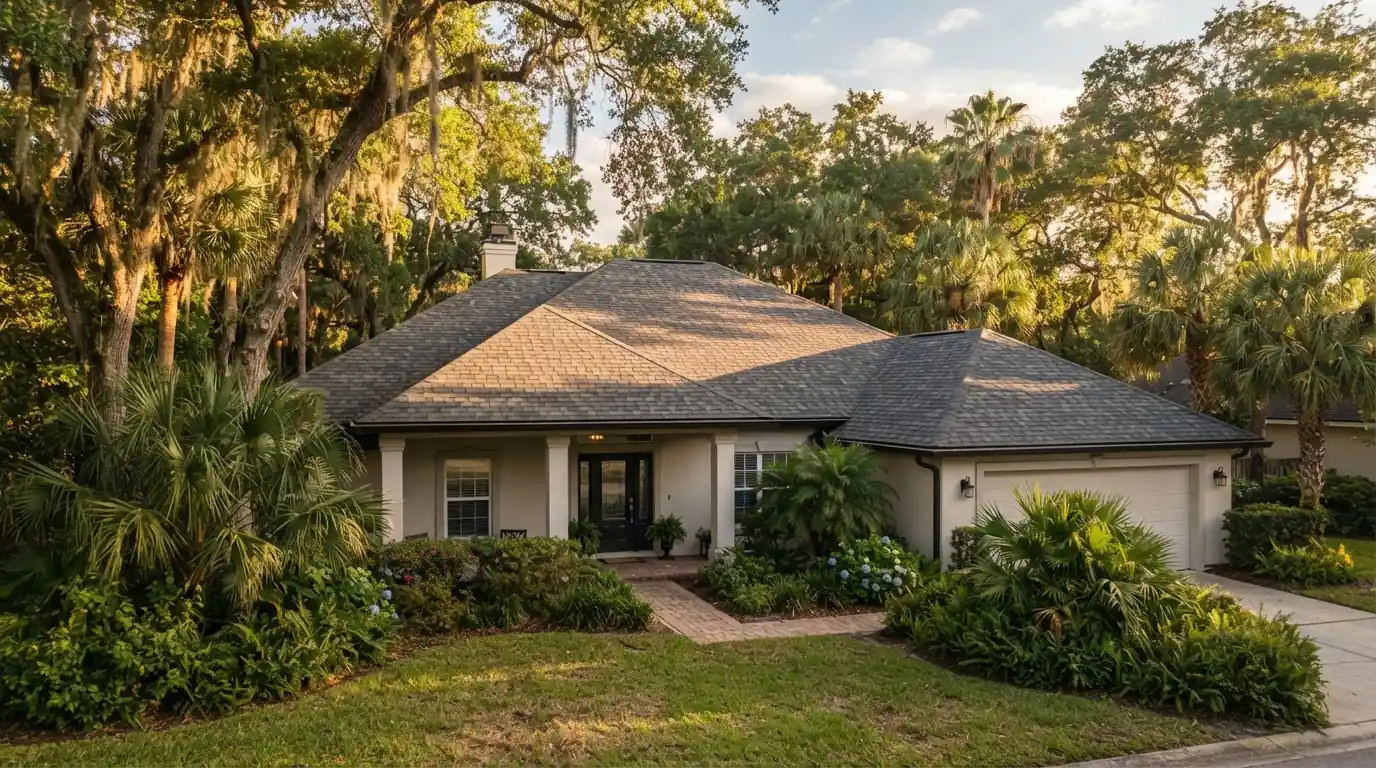
A roof coating in Jacksonville, FL is a fluid-applied membrane, usually silicone or acrylic elastomeric, rolled or sprayed over a clean, sound flat or metal roof. It seals seams and fasteners, reflects heat, and can extend the roof's life, but only when the roof underneath is dry and structurally sound. Saturated insulation and failed decks need replacement instead.
Sound roofs only
When coating is the right call, and when it is not
Coatings work on roofs that are tired but not failed: a flat roof with weathered membrane and a few seam issues, or a metal roof with good panels and aging fasteners. They are cleaned, repaired where needed, primed if the product requires it, and coated in passes to the specified thickness.
They do not work over wet insulation, rotted decking or a membrane already splitting across the field. Coating those roofs traps the problem under a new surface. Before quoting we probe the roof and check for moisture, and if it is not a coating candidate we say so.
Roof Coating
Silicone coatings for flat roofs
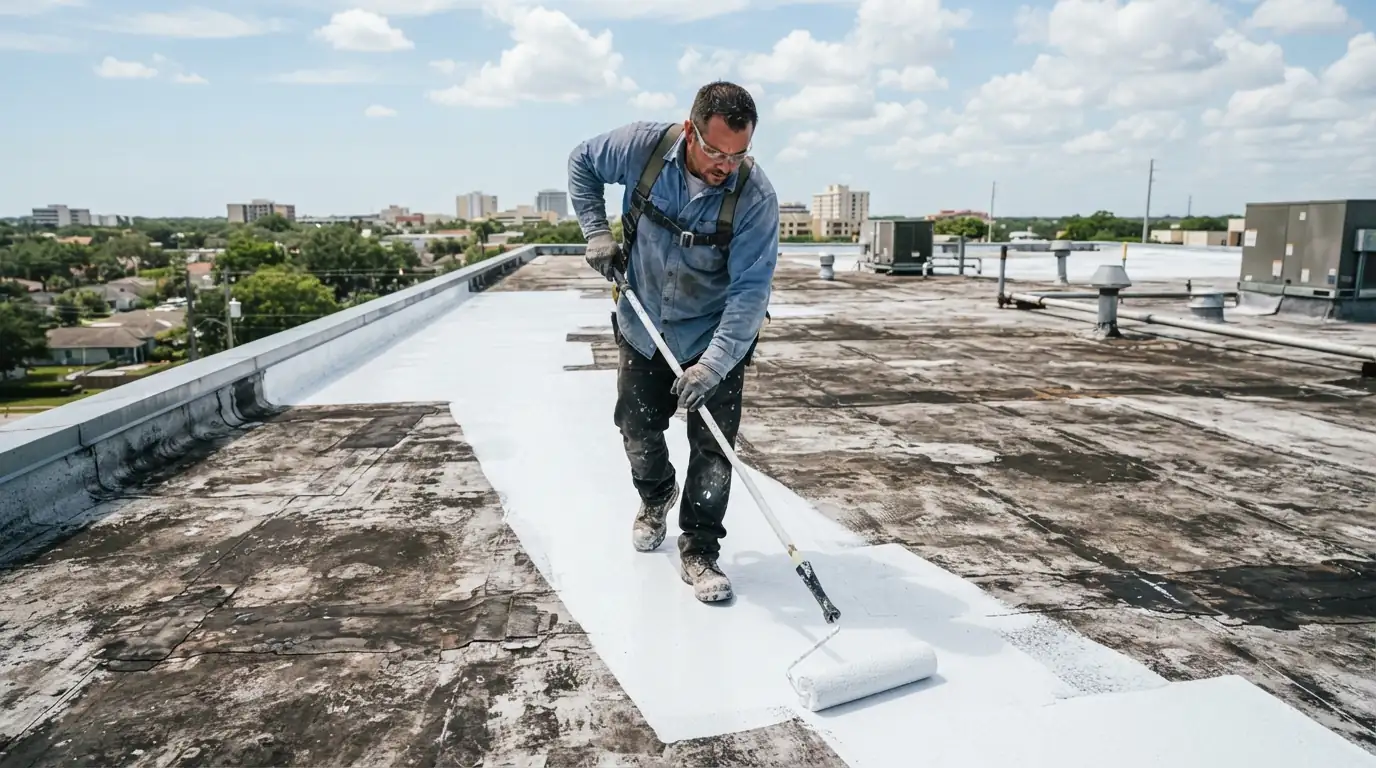
Silicone is the usual choice on flat and low-slope roofs because it tolerates standing water better than acrylics, and most flat roofs have somewhere water sits after a Florida downpour. It goes on over a cleaned, repaired membrane, with reinforcing fabric at seams and penetrations, in one or two passes to the manufacturer's thickness.
The trade-offs: silicone collects dirt, which lowers its reflectivity over time, and very little sticks to it later except more silicone, which narrows future repair options.
Roof Coating
Elastomeric coatings
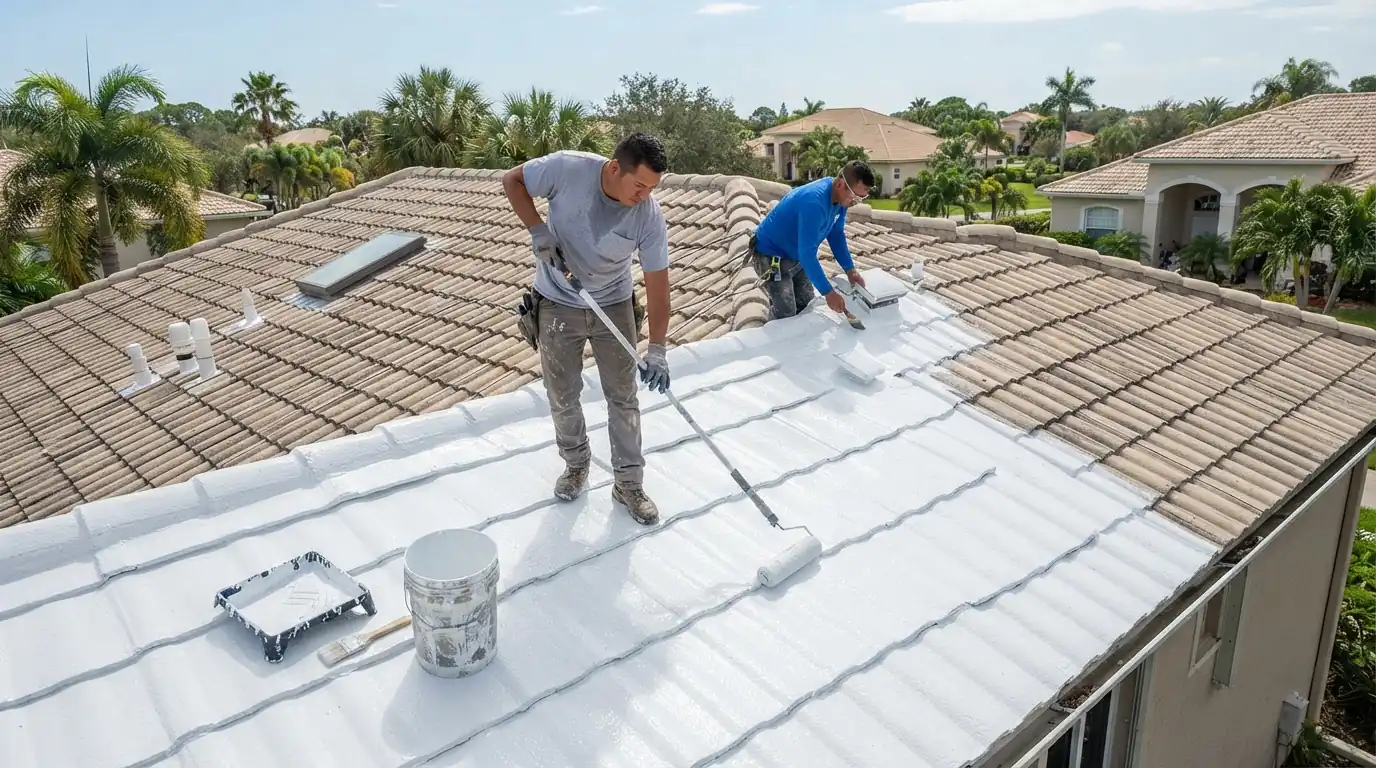
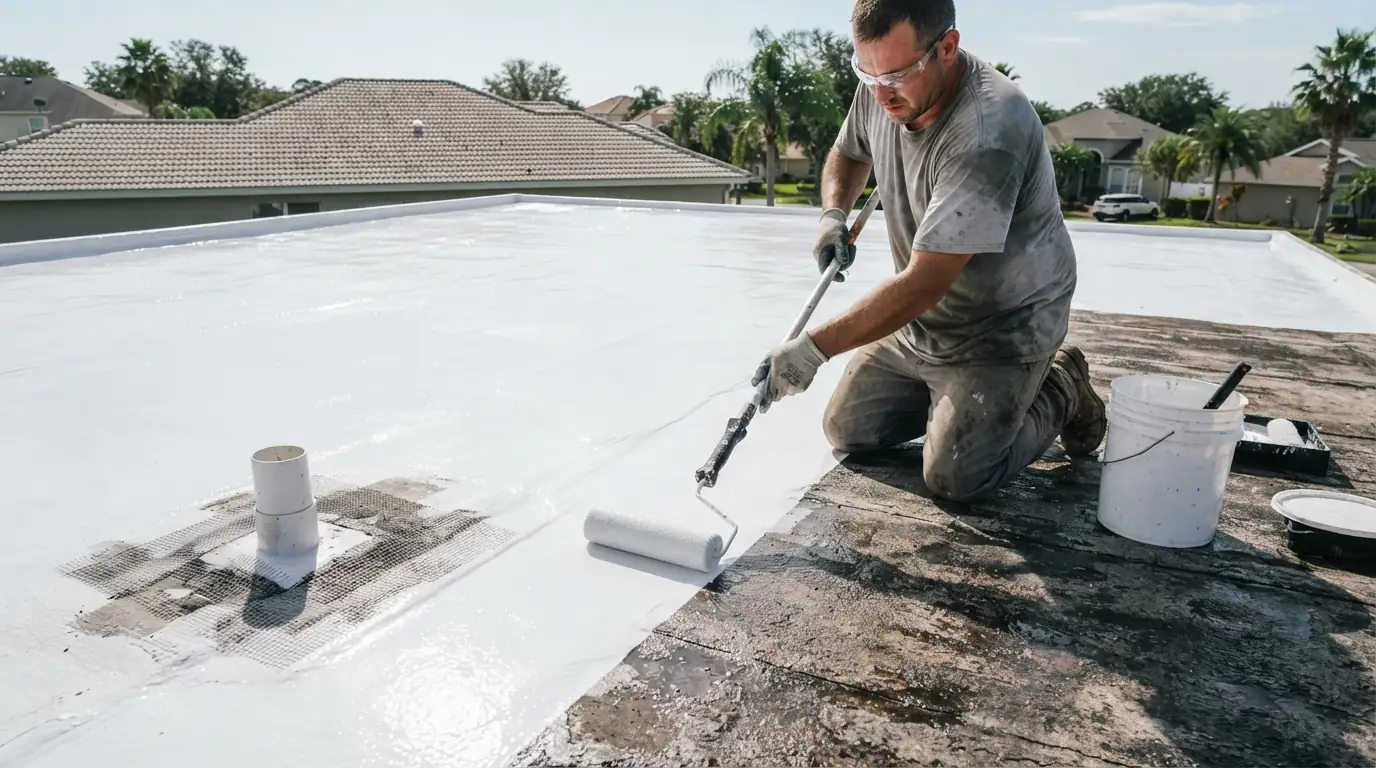
Acrylic elastomeric coatings are water-based, stay flexible as the roof moves, and reflect sunlight well when new. They suit roofs that drain properly, including many metal roofs and flat roofs with good slope, and they are easier to recoat later than silicone. Their weakness is ponding water; an acrylic sitting under water for days breaks down faster.
They also need dry weather to cure, which matters in a city where summer afternoons bring rain on most days, so an acrylic job is scheduled around the forecast.
Roof Coating
Metal roof coating and seam sealing
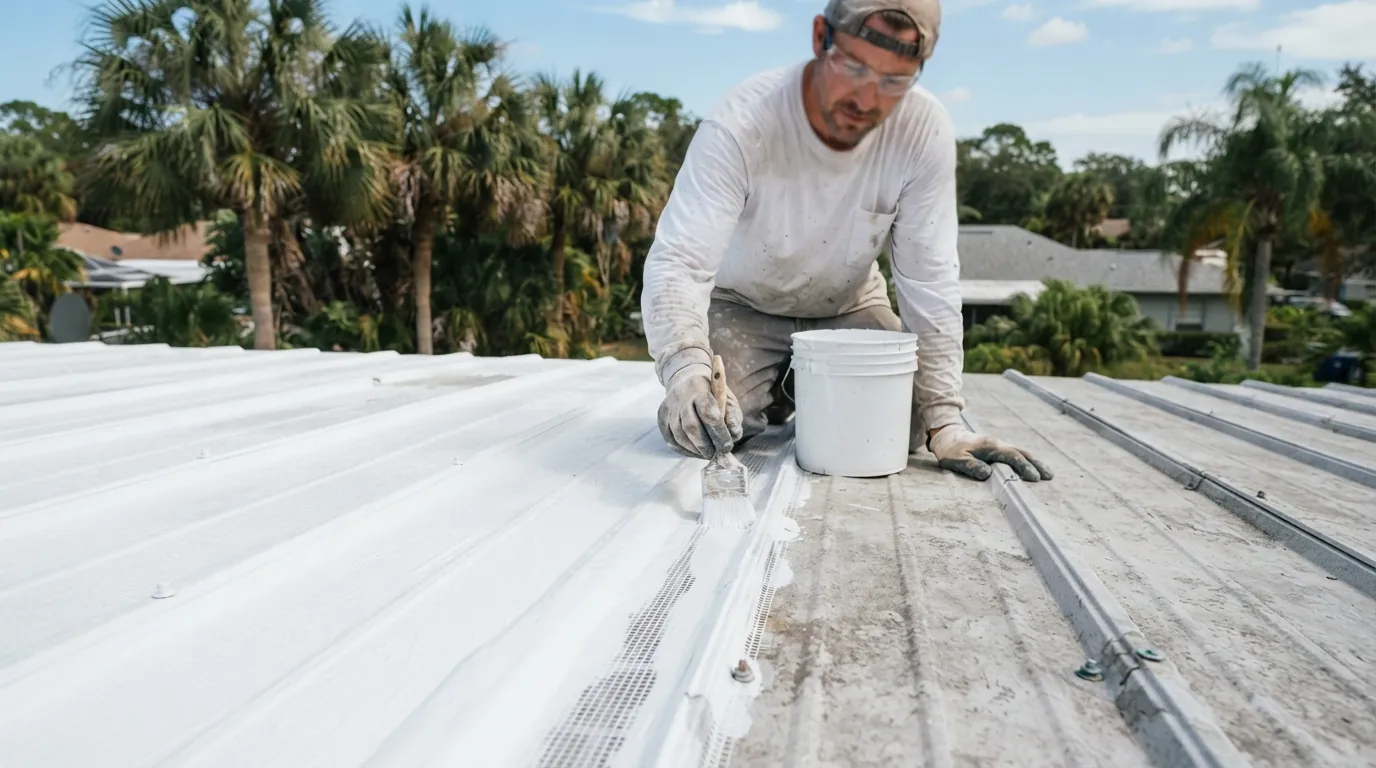
On metal roofs the coating system starts with the fasteners and seams. Every screw is checked and replaced where the washer has failed, rust is cleaned and primed, and seams, laps and fastener heads get a reinforced seam sealer before the field coat goes on. The field coat then covers the whole roof and ties those details together.
Done right, it seals the parts that leak and adds a reflective surface. Sprayed quickly over loose screws, it fails at the same places the roof was already failing.
Roofing in Jacksonville
Why coating in Jacksonville is a weather-scheduling job
Coatings need a dry, clean surface to bond and time without rain to cure, and Jacksonville does not give much of either in summer. NWS Jacksonville's normals put 21.25 inches of rain in June, July and August alone, out of about 51 inches for the year. That is why we schedule coating work around the forecast, favor the drier months when a job can wait, and choose silicone where a roof will see standing water.
Step by step
How a roof coating job runs
- 1
Moisture check
Roof probed and inspected for wet areas and failed seams.
- 2
Repairs first
Wet sections replaced, seams and fasteners fixed.
- 3
Clean the surface
Washed and dried, with primer where the product needs it.
- 4
Detail work
Reinforced sealer at seams, laps, fasteners and penetrations.
- 5
Field coat
Applied in passes to the specified thickness in dry weather.
- 6
Check and photograph
Thickness spot-checked and the finished roof photographed.
Cost factors
What a roof coating costs depends on
Roof condition
Repairs, seam reinforcement and wet-area replacement come before any coating.
Coating type
Silicone and acrylic elastomeric differ in material cost and number of coats.
Specified thickness
The manufacturer's warranty terms set how much product goes on.
Metal fastener work
On metal roofs, replacing failed screws is part of the job, not an extra.
We price coatings after checking the roof for moisture. A roof that needs replacing gets a replacement quote, not a coating one.
Your options
Silicone, acrylic, or replace the roof
| Silicone | Acrylic elastomeric | Replace instead | |
|---|---|---|---|
| Best on | Flat roofs that hold some water | Metal and well-drained flat roofs | Wet, rotted or split roofs |
| Standing water | Tolerates it | Breaks down under it | Fixed by rebuilding the slope |
| Recoating later | Only silicone sticks to it | Easy to recoat | Not applicable |
| Dirt and reflectivity | Collects dirt, dulls over time | Stays cleaner | Depends on the new membrane |
If the roof is saturated or the deck is soft, the right answer is [[flat-roof-installation|a new flat roof]], not a coating.
Timing
How long a coating takes, and how long it lasts
A coating job is several steps with waiting in between: cleaning and drying, repairs and detail work, then the field coat in one or more passes, each needing dry weather to cure. The calendar is set as much by the forecast as by the size of the roof. How long the coating then lasts depends on the product, the thickness applied and the roof beneath it, which is why the specified thickness matters more than the brand name.
We install and repair the lines Northeast Florida suppliers stock, from GAF, Owens Corning and CertainTeed shingles to Eagle concrete tile and Carlisle TPO.
- GAF
- Owens Corning
- CertainTeed
- TAMKO
- Atlas Roofing
- IKO
- Gulf Coast Supply
- Eagle Roofing Products
- Westlake Royal
- Polyglass
- Carlisle
- Johns Manville
- Englert
- VELUX
Questions we hear
Roof coating questions
If the leaks come from seams, fasteners or a weathered surface on an otherwise sound roof, yes, with the repairs done first. If the roof is wet underneath, no coating will fix it.
Silicone where water ponds after rain; acrylic elastomeric where the roof drains well and future recoating matters.
We do not recommend it. Coatings are made for flat and metal roofs; shingles need to shed water and breathe as designed.
A white reflective coating reduces the heat the roof absorbs, which can help top-floor comfort. How much depends on the building and its insulation.
Yes. Keep drains clear, inspect after major storms, and plan to recoat the surface at the end of its life rather than tear off.
Related work
Other flat and commercial roofing we do in Jacksonville
Flat Roof Repair
Covers ponding water and drain problems, blisters and split seams, scupper and parapet flashing leaks.
See how it worksFlat Roof Installation
Covers tpo membrane roofs, modified bitumen roofs, tapered insulation for drainage.
Read the detailsCommercial Roofing
Covers commercial leak response, commercial reroofing, retail, office and warehouse roofs.
Learn moreFind out if your roof is a coating candidate
Call any hour. We coat and seal flat and metal roofs across Jacksonville and answer 24/7.