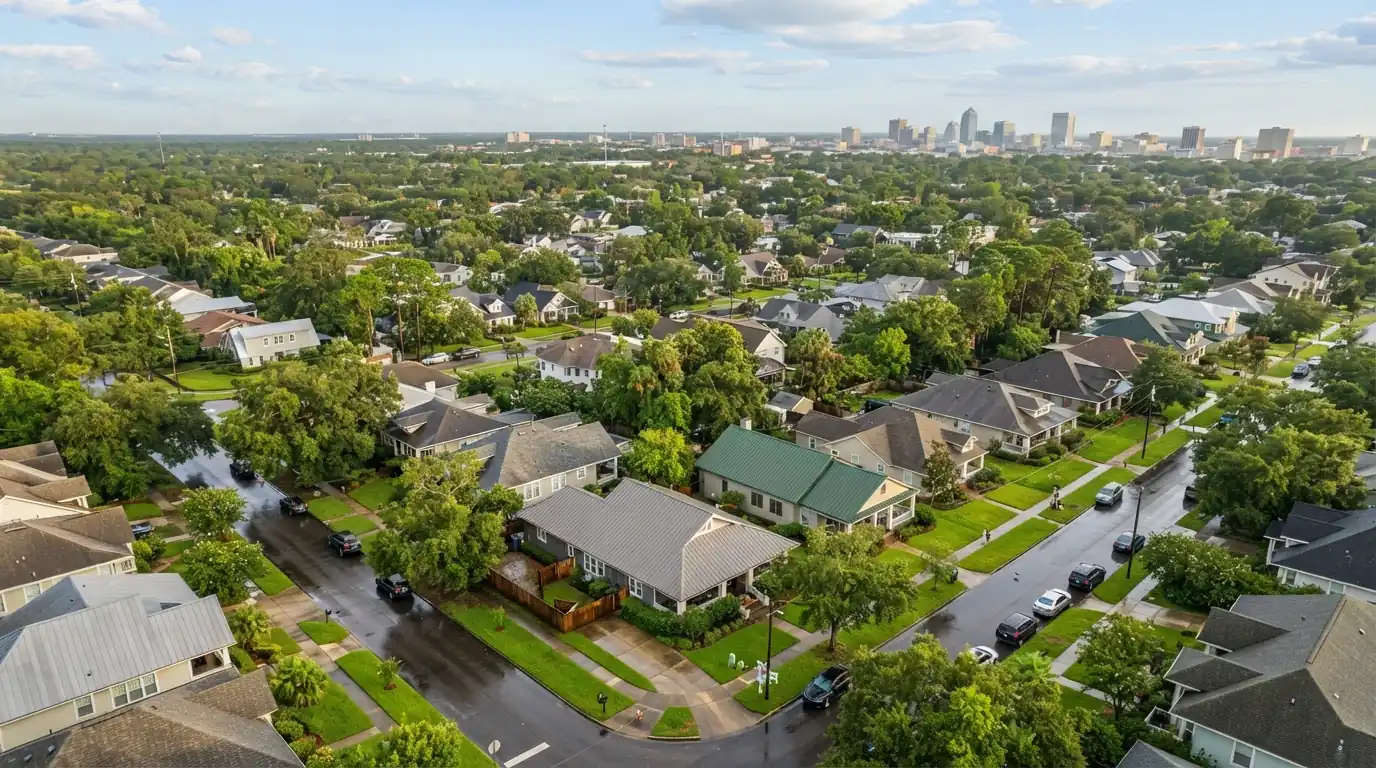
Jacksonville, FL · Storm & Emergency
Emergency roof tarping in Jacksonville
Updated September 2026
A hole in the roof does not wait for business hours. We dry in the damage with a battened tarp or shrink wrap so the rain stays out while the repair and any claim get sorted.
- Calls answered 24/7
- Tarp and batten or shrink wrap
- Photos before we cover anything
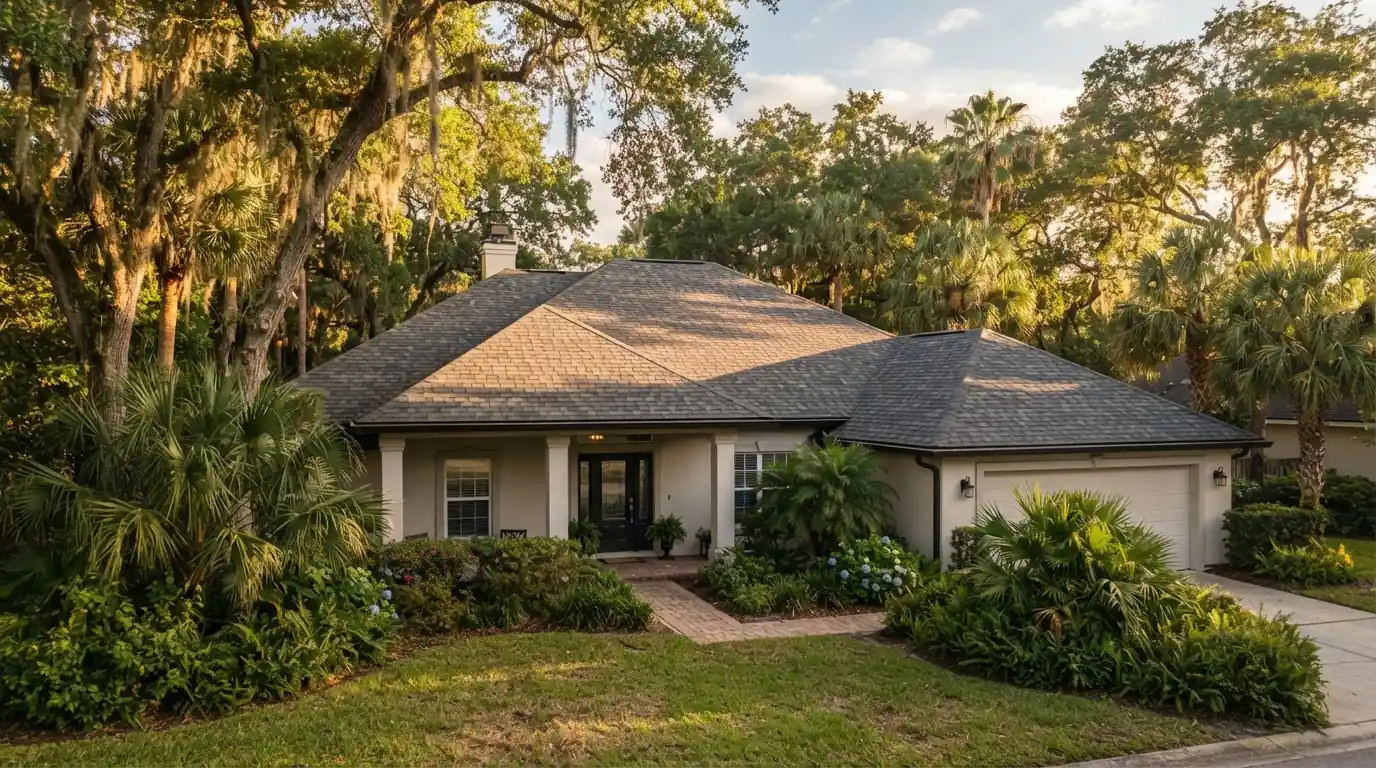
Emergency roof tarping in Jacksonville, FL is a temporary dry-in: a reinforced tarp battened with furring strips, or a heat-shrunk wrap for larger openings, installed once the wind drops enough to climb safely. The damage is photographed first so the tarp never hides what the adjuster needs to see.
What to look for
When you need a tarp tonight, not a repair next week
Daylight through the attic
If you can see sky from inside, water is already getting in.
A limb on the roof
Even without a visible hole, a limb strike usually cracked shingles and sometimes decking.
A patch of missing shingles
Bare underlayment sheds light rain. A wind-driven downpour goes through the seams.
A ceiling that drips, not just stains
A stain is a slow leak. A drip means water is moving now.
Lifted ridge or hip caps
Once caps peel back, every gust pulls the next course loose.
Step by step
How an emergency tarp call runs
- 1
Call, any hour
Tell us where the water is coming in and whether anything came through the roof.
- 2
Safety check
We climb once lightning has cleared and wind allows.
- 3
Photos of the damage
Every damaged area is photographed in place before it is covered.
- 4
Tarp or wrap installed
Battened tarp on most damage, shrink wrap on large openings.
- 5
Loose debris cleared
Limbs and shingle pieces come off so the tarp drains.
- 6
Permanent repair scheduled
You get the photos and a written scope for the fix and your adjuster.
Timing
How long a tarp lasts in Florida sun
A quality battened tarp is good for a few weeks in Jacksonville, a couple of months if the weather is kind. Cheap blue tarps turn brittle in summer sun faster than that. Shrink wrap holds longer, which is why it goes on jobs waiting for a claim decision or a materials order. Either way, we book the permanent repair before we leave.
The honest version
What a tarp does, and what it does not
A tarp stops the next rain from reaching the drywall. That is the whole job. It does not fix anything, the fasteners holding it down add holes, and left up for months it chalks and tears at the battens. Treat it as the first step of a storm damage repair, not as the repair.
We photograph the open section before the tarp goes on. Once it is covered nobody can see the creased shingles or cracked decking underneath, and that record is what your claim will be judged on.
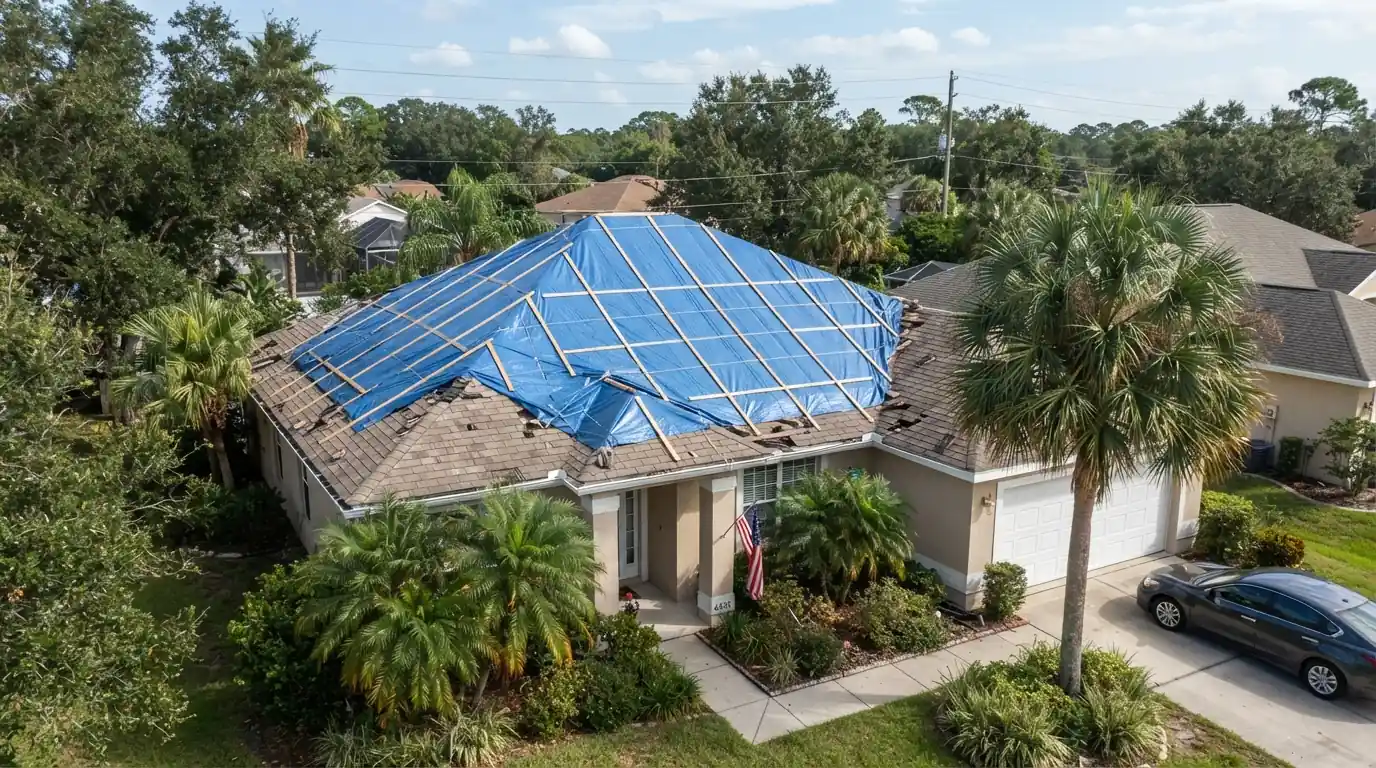
Emergency Roof Tarping
Tarp and batten dry-in
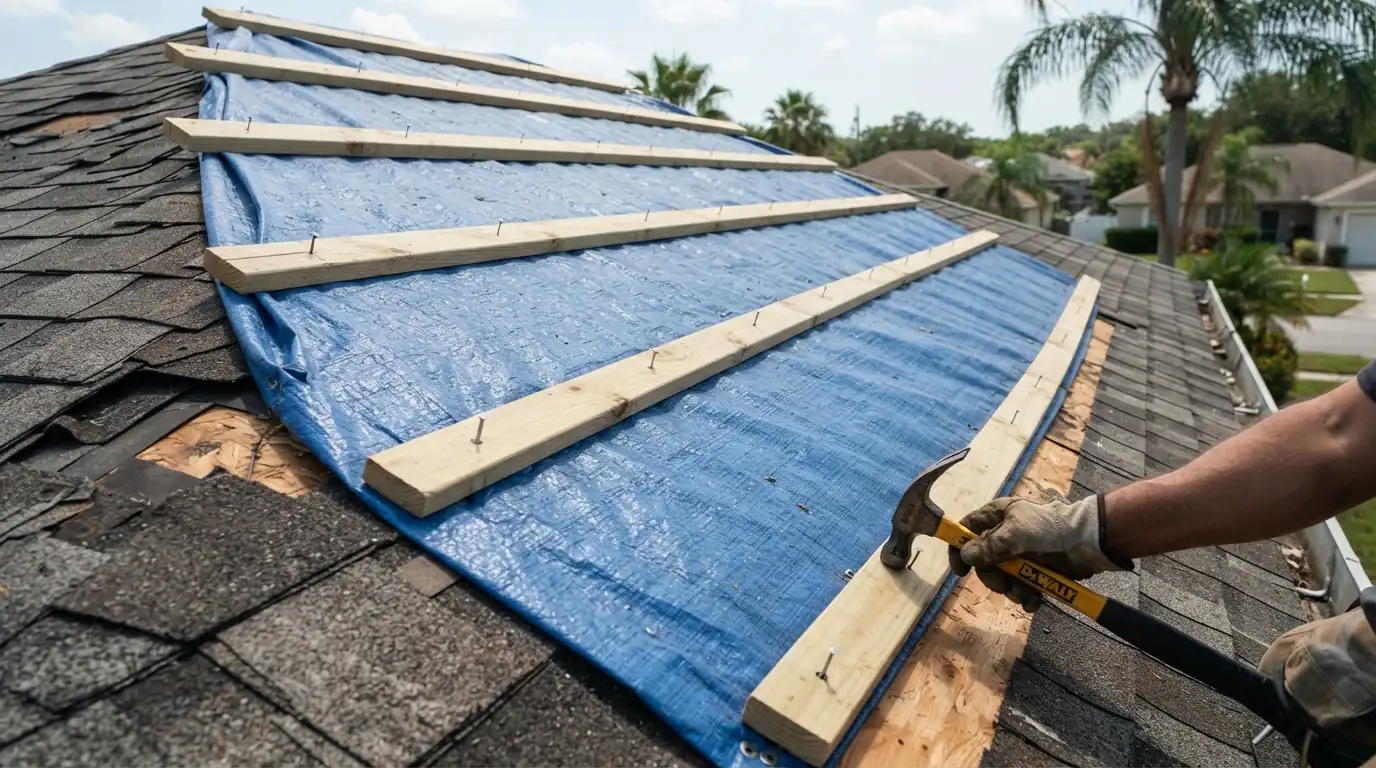
The standard emergency dry-in. A heavy woven tarp runs from the ridge down past the damage, and the edges are pinned with 1x3 furring strips nailed into the decking. Battening is what separates a tarp that survives an afternoon thunderstorm from one that is in the neighbor's yard by morning. It works on shingle and flat roofs and most metal. The strips leave nail holes that the permanent work closes, which is why we run them over the area being replaced whenever the layout allows.
Emergency Roof Tarping
Roof shrink wrap
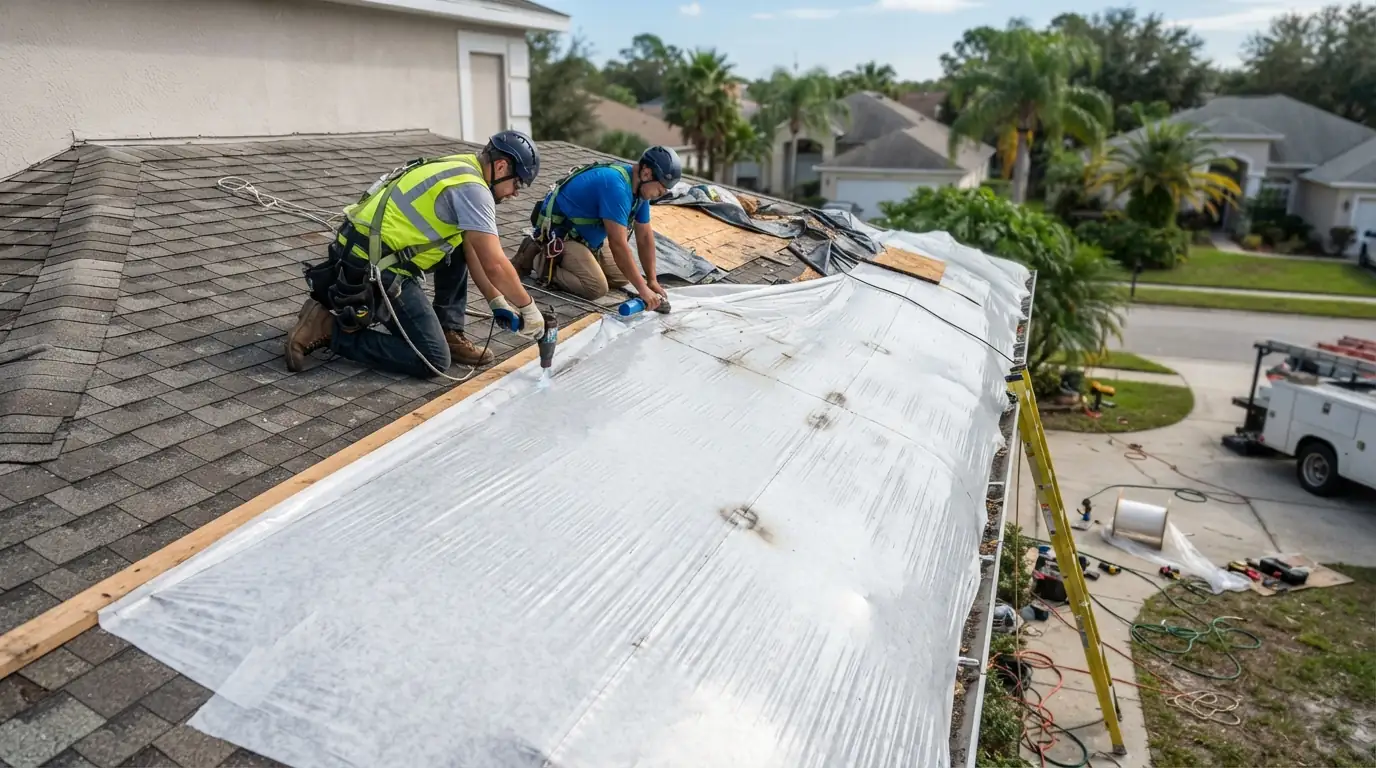
When a tree has taken out a whole slope, or a tarp keeps tearing in exposed wind, shrink wrap is the better hold. A heavy film is laid over the section and heat-shrunk tight, sealed to itself rather than pinned, so there is no edge for wind to catch and far fewer holes. It costs more and takes longer, so it earns its place on big openings, waterfront homes where the wind never stops, and roofs that will wait weeks for materials or a claim decision.
Emergency Roof Tarping
Interior water catch and containment
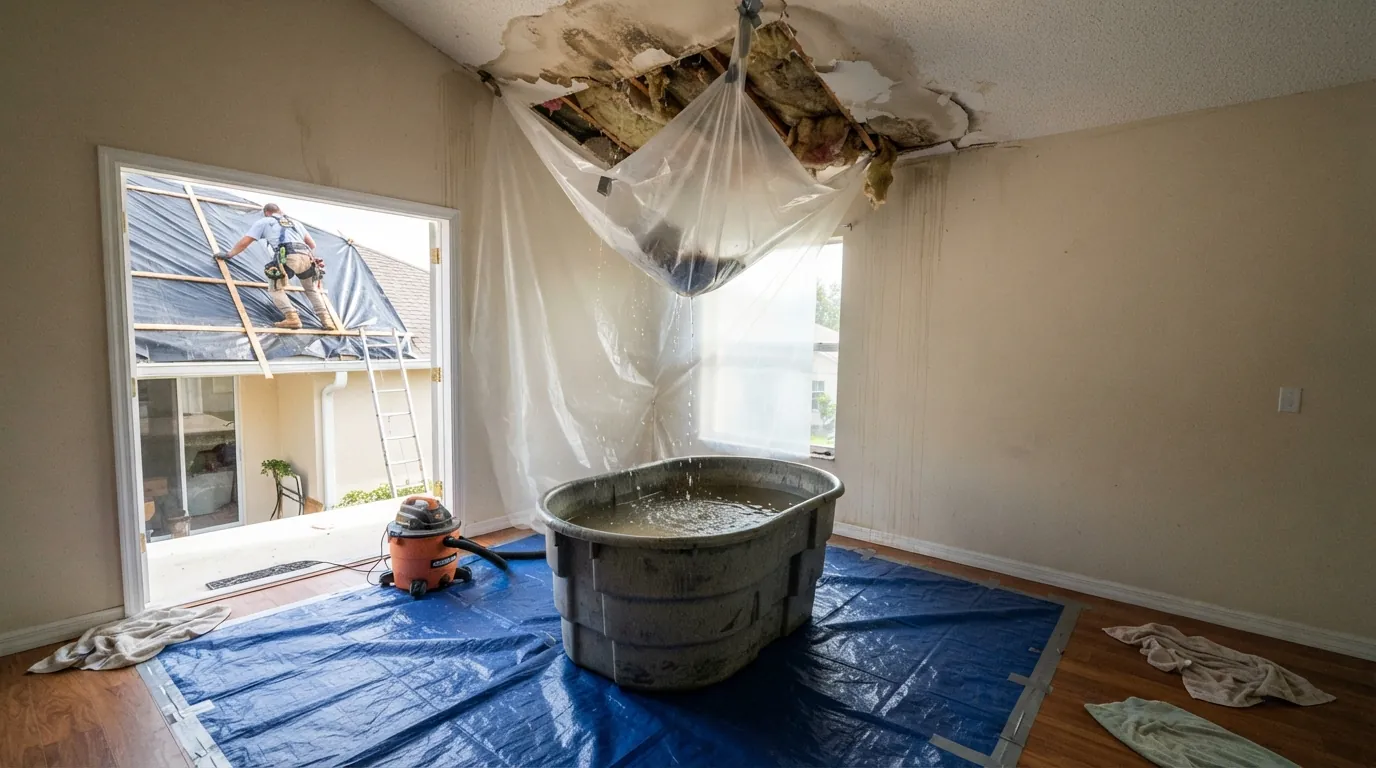
Sometimes the roof cannot be climbed yet because lightning is still in the area or the wind is above what a ladder can take. We still help by phone, and in person once the road is passable: puncturing a bulging ceiling so it drains into a bucket instead of collapsing, moving water away from the walls, and getting fans on wet drywall. Then we go up the moment it is safe. A dripping ceiling is less of a hazard than a roofer in a lightning storm, and we will say so on the phone.
Roofing in Jacksonville
Why tarps get tested hard in Jacksonville
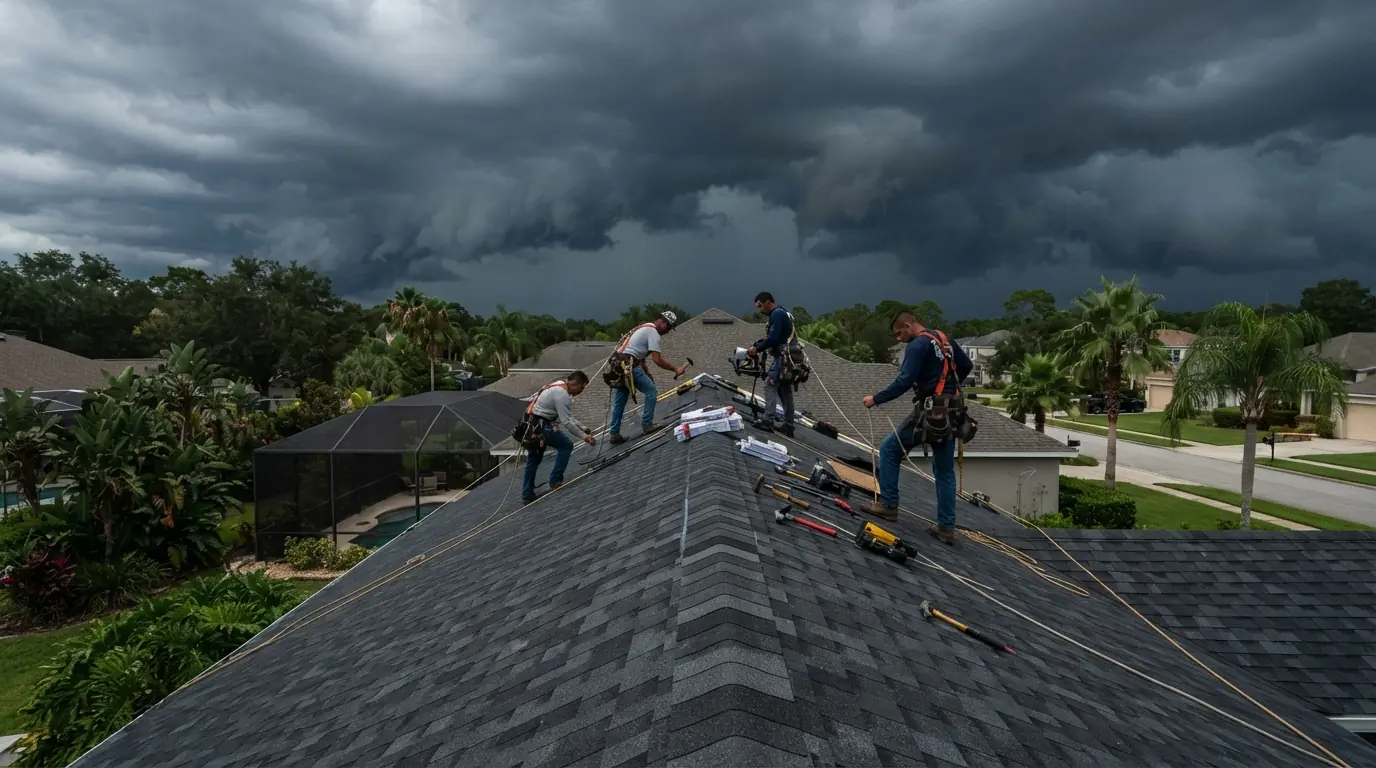
A Jacksonville tarp is not sitting under a calm sky. One NWS Jacksonville seasonal report counted thunderstorms on 60 days of a single June to August stretch, so a tarp installed in July will be hit by wind and heavy rain again and again before permanent work begins. During Hurricane Irma the Weather Service logged gusts of 69 to 74 mph at Mayport and NAS Jacksonville, and a roof came off entirely in Sans Souci. That is why we batten every edge and switch to shrink wrap on big openings and riverfront homes.
Roof open right now?
Call. We will talk you through the next hour and get a crew up as soon as the weather lets us.
Cost factors
What decides the cost of an emergency dry-in
Size of the opening
A single tarp over a limb strike is a short job. Wrapping a whole slope after a tree comes down is a crew and a day.
Tarp or shrink wrap
Shrink wrap costs more but holds through weather a tarp will not.
Roof pitch and height
Steep or two-story roofs need more anchoring, so the same hole costs more to cover.
Timing
Night, weekend and post-storm calls carry a premium because crews and materials are stretched after a big storm.
Keep the invoice and the photos; both go into the claim file.
Questions we hear
Emergency tarping questions
We answer at any hour and go up as soon as it is safe. A night call in lightning sometimes becomes a first-light install with phone help in between.
The invoice and the photos taken before the tarp went on. They are the record of the damage and of what was done to stop it; questions about what a policy covers are for your insurer or agent.
You can. The risks are a fall from a wet roof and an unbattened tarp that becomes a sail in the next storm. If you do it, nail furring strips over every edge.
The batten nails leave holes. We place strips over the section being replaced whenever we can, and the permanent repair closes the rest.
Usually within days for a repair. A replacement after a tree strike depends on the claim and material delivery.
Related work
After the tarp: the repair work
Emergency Roof Repair
Covers after-hours leak response, tree and limb impact repair, wind-torn shingle and panel repair.
See how it worksStorm Damage Roof Repair
Covers hurricane and tropical storm wind damage, hail bruising and granule loss, lightning strike damage.
See how it worksRoof Leak Repair
Covers ceiling stain leak tracing, valley leak repair, pipe boot and vent leak repair.
See how it worksGet the roof covered before the next storm
One call. We answer 24/7 and dry in Jacksonville roofs as soon as the weather clears.