Jacksonville, FL · Replacement & Installation
Mobile and manufactured home roofing in Jacksonville
Updated September 2026
A mobile home roof is thin, low-pitched and fastened to light framing, and it takes a Florida summer harder than a site-built roof. The lasting fix is often not a patch but a roof-over: a new roof system built over the old one, with better drainage and far fewer seams.
- Calls answered 24/7
- Metal roof-overs
- Membrane roofs and leak repair
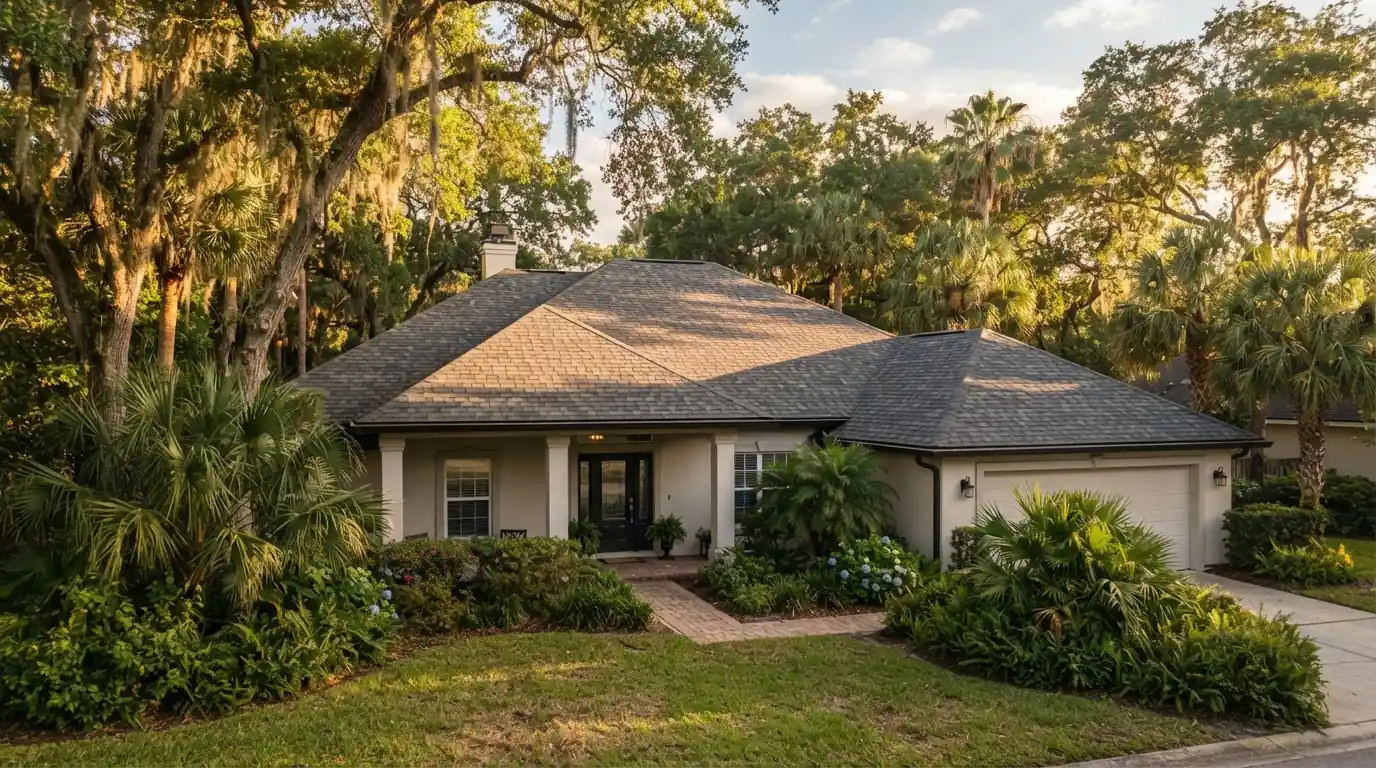
Mobile home roofing in Jacksonville, FL usually means one of three jobs: a roof-over, where a new pitched metal roof system is built over the existing one; a membrane roof such as TPO over the original metal or rolled roof; or leak repair at seams, vents and edges. Coatings can extend a sound roof, but they do not fix a failing one.
Thin roof, hard climate
Why mobile home roofs struggle in Florida
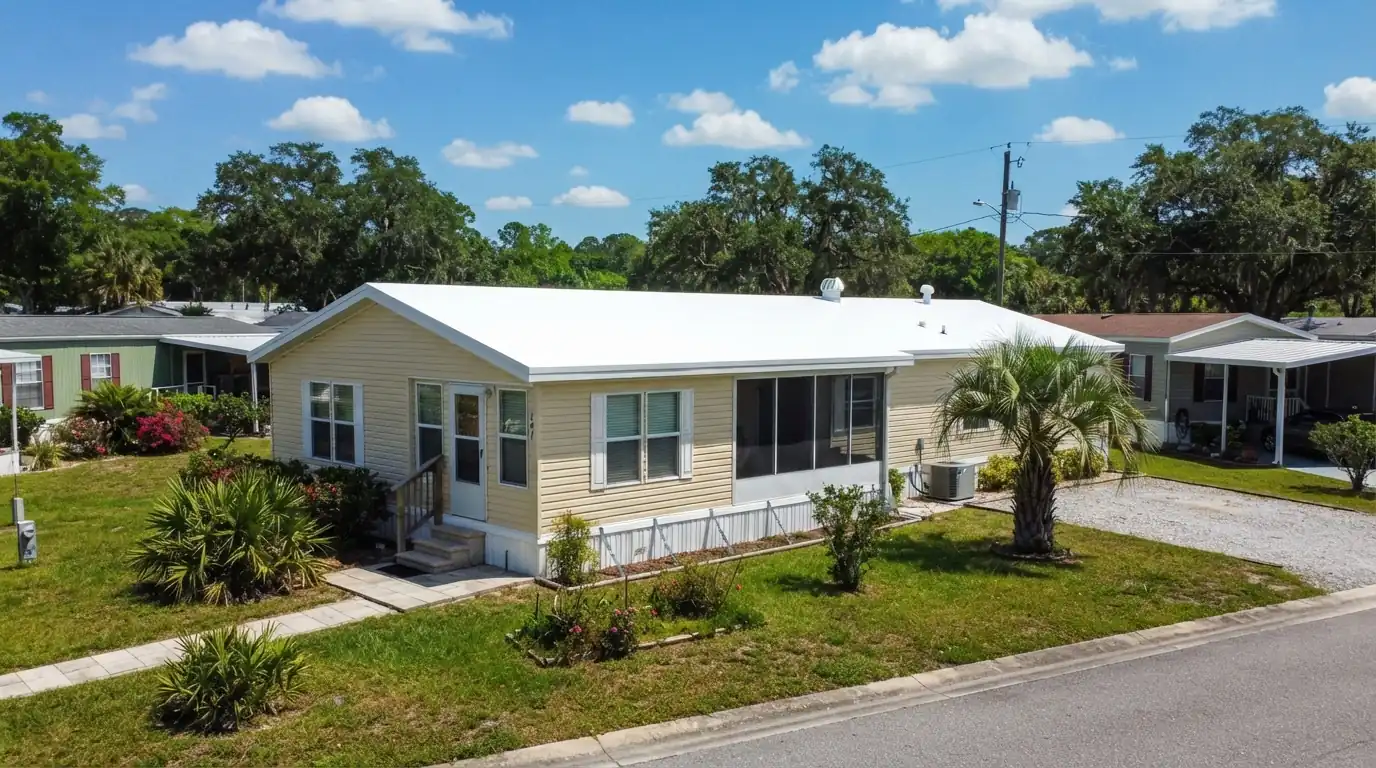
Many manufactured homes came with a thin metal or rolled roof on a very low pitch. Water drains slowly, seams and fasteners carry most of the load, and heat expands the roof every afternoon. After enough summers, leaks show up at seams, around vents and along the edges.
Repeated coatings buy time, but each adds weight and hides what is underneath. When the roof has leaked in several places, a roof-over or a membrane system is usually the more lasting fix than chasing leaks one at a time.
Cost factors
What decides the cost of a mobile home roof
Roof-over or membrane
A framed metal roof-over is more material than a membrane system.
Home size
Single-wide and double-wide homes differ in area and in the seam down the middle.
Add-ons
Porch, carport and addition roofs tied into the home add detail work.
Condition underneath
Wet insulation or damaged framing is repaired before anything goes on top.
We price mobile home roofs after seeing the roof and checking inside for past leaks.
Mobile Home Roofing
Mobile home roof-over systems
A roof-over builds a new roof on top of the existing one: framing or insulation panels set over the old roof to create pitch, then metal panels fastened to them, with new trim at the edges. The added pitch sheds water quickly, the metal carries far fewer seams, and the insulation layer helps with heat. Fastening follows the system manufacturer's requirements and the wind requirements for the home.
Before building on top, we check that the home's framing can carry the new roof and that the old roof is dry.
Mobile Home Roofing
Membrane roofs for manufactured homes
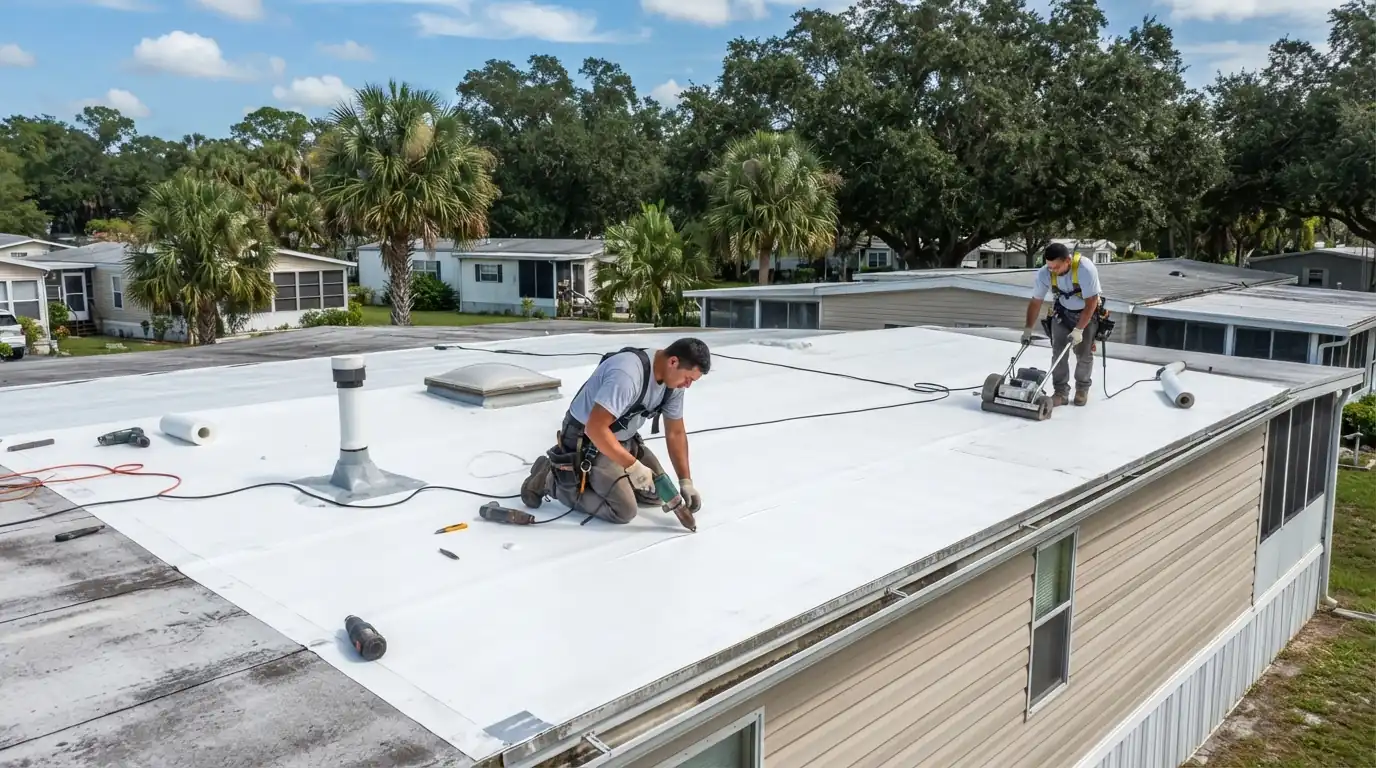
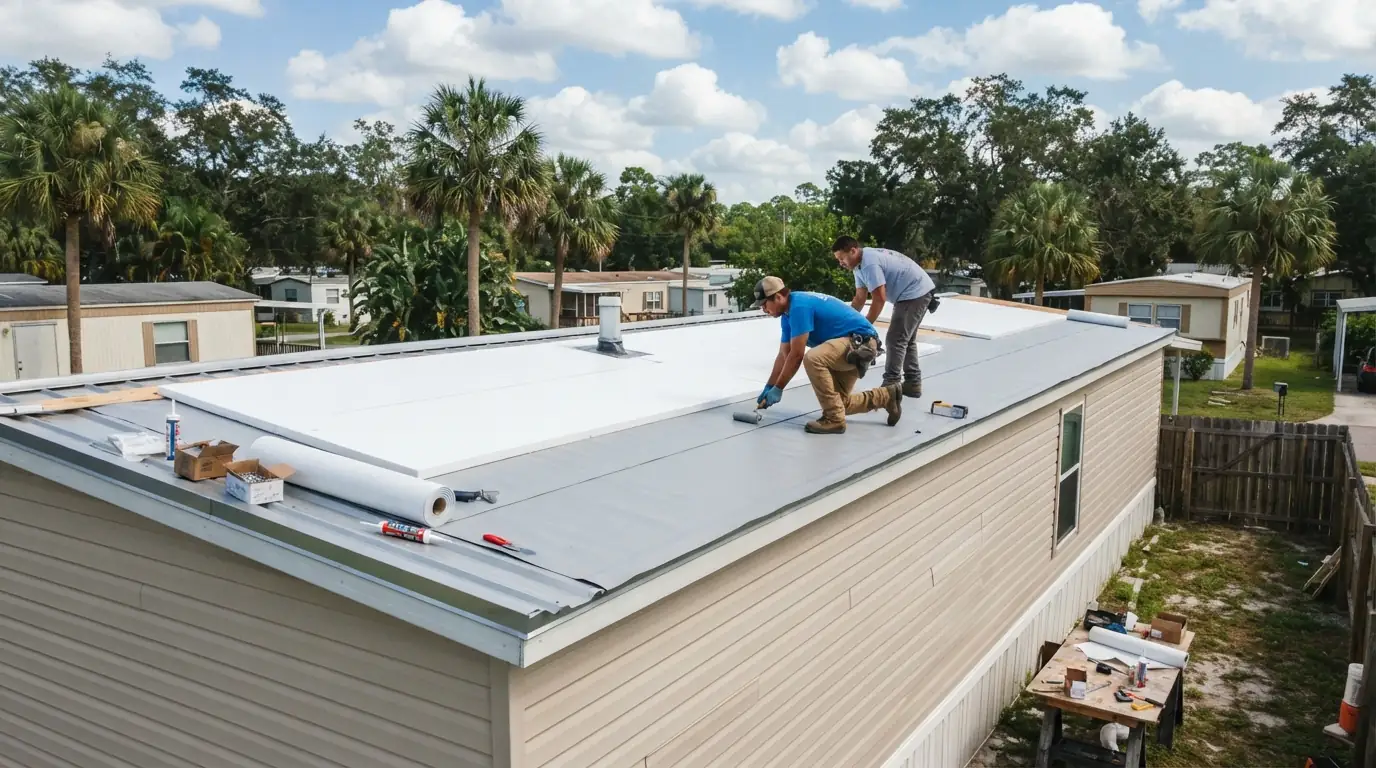
Where a pitched roof-over is not wanted, a membrane system goes directly over the existing roof: insulation board to even out the surface, then TPO or a similar single-ply membrane, flashed at vents and edges. It stays low-profile, reflects sun, and removes most of the old seams from the equation.
It still depends on the roof draining, so low spots are shimmed or tapered before the membrane goes down. See flat roof installation for how the membrane itself is built.
Mobile Home Roofing
Mobile home roof leak repair
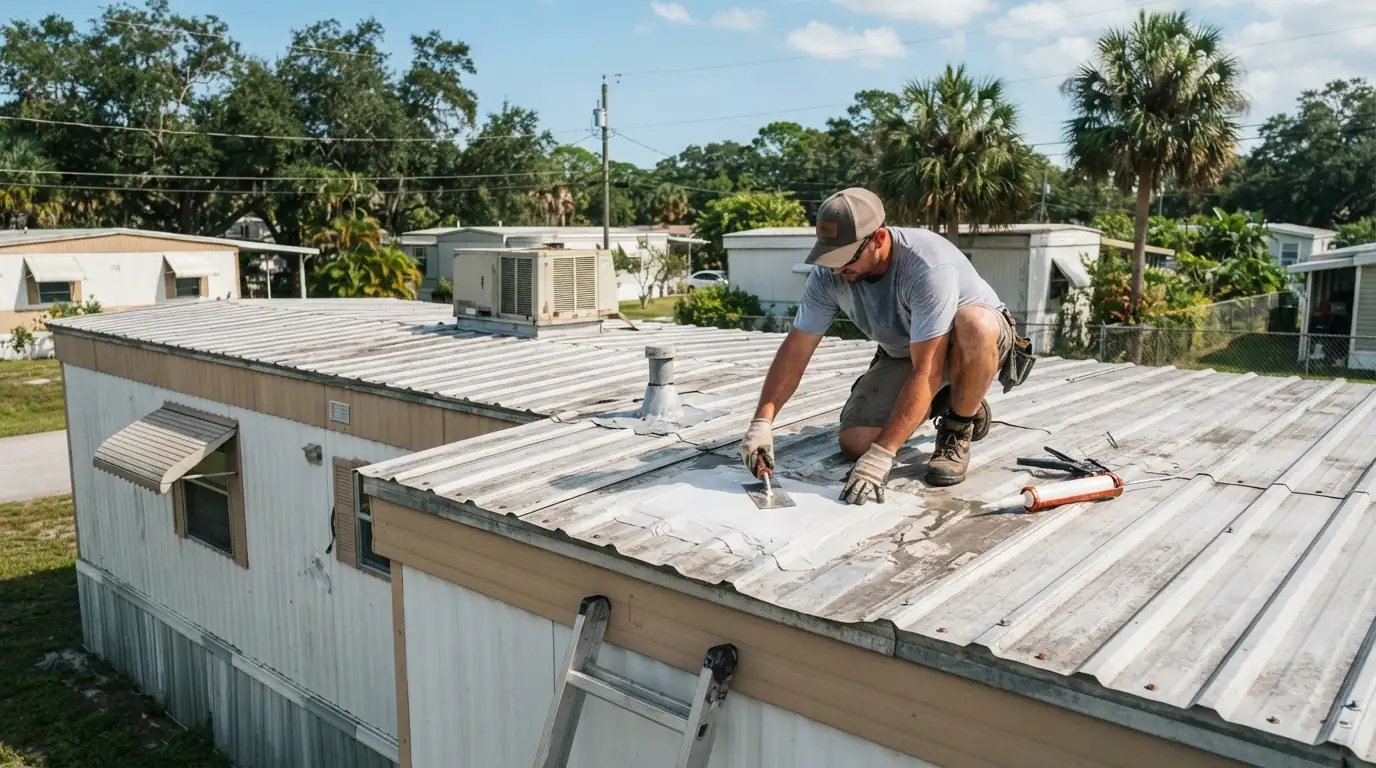
Most mobile home leaks start at the same few places: seams between roof sections, fasteners along the edges, vent and stack flashings, and the joint where an added porch or carport roof meets the home. We find the entry point, reseal or reflash it with materials compatible with the existing roof, and replace loose or rusted fasteners.
If the roof has been coated several times already, we check how well those old layers are bonded before adding anything to them.
Your options
Coating, membrane or roof-over
| Coating | Membrane | Roof-over | |
|---|---|---|---|
| Best for | A sound roof that needs sealing | A worn roof that should stay low-profile | A leaking roof that needs pitch and fewer seams |
| Drainage | Unchanged | Improved with tapered insulation | Much better with added pitch |
| Weight added | Light, but builds up with each coat | Light | More; framing is checked first |
| What it fixes | Surface wear | Most seams and surface wear | Seams, drainage and heat gain |
Coating a roof that already leaks in several places usually just hides the leaks. See [[roof-coating|roof coatings]] for when coating does fit.
Step by step
How a mobile home roof job runs
- 1
Inspect roof and ceilings
Seams, vents, edges and interior stains checked.
- 2
Choose the fix
Repair, membrane or roof-over, with the reasons.
- 3
Permit where required
Filed with the city or county that covers the home.
- 4
Prepare the roof
Loose material removed; low spots and framing addressed.
- 5
Install
Membrane or roof-over fastened to the system's requirements.
- 6
Final check
Edges, vents and add-on tie-ins checked and photographed.
Roofing in Jacksonville
Mobile homes, Florida wind and the Marion County side
Lightweight roofs feel storms first. The National Hurricane Center's report on Hurricane Irma records hurricane-force gusts and embedded tornadoes causing structural damage across northeast Florida, the kind of wind that finds loose edges and lifted seams on a manufactured home. Our head office in Ocala covers Marion County, where roofing permits run through the Marion County Building Department or the City of Ocala Building Division, while work in Duval County is permitted through Jacksonville.
Do it yourself?
What owners can do, and what to leave to us
| Task | Owner can | Leave to us |
|---|---|---|
| Clearing debris and gutters | Yes, from a ladder at the edge | Walking a thin roof |
| Resealing around a vent | A temporary seal with a compatible sealant | The permanent flashing repair |
| Recoating the roof | Not before the old coats' bond is checked | Coating over a sound, clean surface |
| Walking the roof | Avoid it; thin roofs dent and the framing is light | Inspections and repairs |
Many manufactured-home roofs cannot carry a person's weight between the framing members. Stay off unless you know where the framing is.
Questions we hear
Mobile home roofing questions
A new roof system built over the existing one, usually metal on framing or insulation panels that add pitch, so water sheds quickly and the old seams stop mattering.
For a roof that already leaks in several places, usually yes. Coating suits a sound roof that only needs sealing.
Both, including the center seam on double-wides and add-on porch and carport roofs.
Roofing permits run through the city or county that covers the home: JaxEPICS in Jacksonville, and the Marion County or City of Ocala building offices around Ocala.
Yes. That joint is a common leak point, and it is reflashed rather than caulked.
Related work
Other replacement and installation work
Roof Replacement
Covers full tear-off reroof, two-layer tear-off, reroof for insurance renewal.
Read the detailsShingle Roof Installation
Covers architectural shingle roofs, high-wind rated shingle systems, impact-rated shingles.
Read the detailsMetal Roof Installation
Covers standing seam metal roofs, 5v crimp and exposed fastener panels, stone-coated steel.
Read the detailsGive the mobile home a roof that sheds water
Call any hour. We roof and repair mobile and manufactured homes across Jacksonville and Marion County and answer 24/7.