Jacksonville, FL · Roof Repairs
Metal roof repair in Jacksonville, screw by screw
Updated September 2026
Most metal roof leaks are not the metal. They are the fasteners, washers, seams and flashing that hold it together, and they fail on a schedule the Florida sun sets. We find which one and fix it properly.
- Calls answered 24/7
- 5V crimp, R-panel and standing seam
- Coastal fastener upgrades
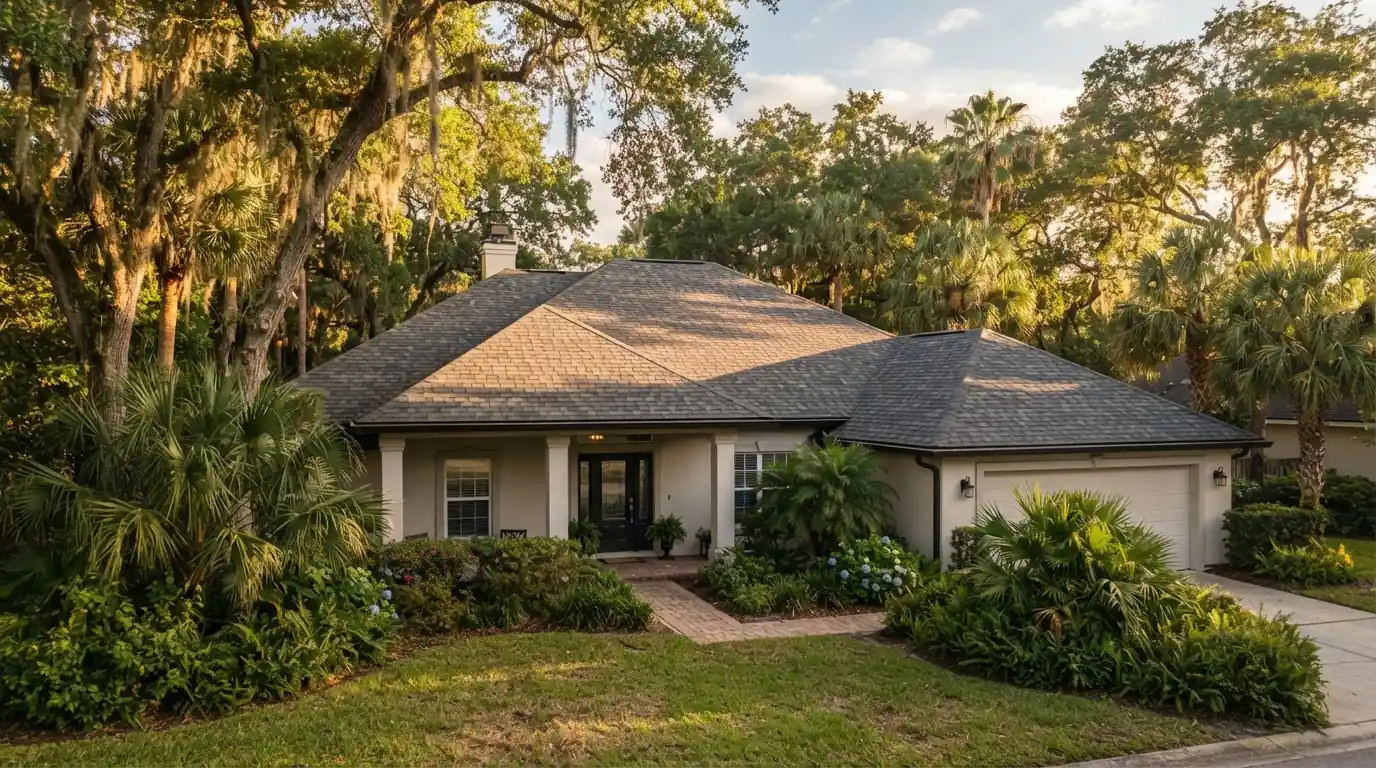
Metal roof repair in Jacksonville, FL usually means replacing fasteners whose rubber washers have cracked, re-crimping or resealing standing seam laps, treating rust at cut edges and fasteners, and replacing dented or corroded panels. On exposed-fastener roofs such as 5V crimp and R-panel, leaks come from the screws far more often than from the panels.
What to look for
Signs a metal roof needs repair
Screws standing proud of the panel
A backed-out screw is a leak waiting for wind-driven rain.
Cracked or flattened washers
Once the rubber splits, water follows the screw thread.
Rust at panel ends or fasteners
Coating failure spreads from cut edges and screw holes.
Drips along a rafter line
Water tracking along a fastener row shows up in straight lines.
A seam that looks open or bent
Stepped-on or wind-worked seams let water under the panel.
Step by step
How a metal roof repair runs
- 1
Call and describe the leak
Where it shows, and in what kind of rain, narrows it down.
- 2
Walk every fastener run
Washers, screws, seams and laps checked, not just the spot above the stain.
- 3
Check flashing and penetrations
Wall flashing, pipe boots and ridge closures inspected.
- 4
Repair the cause
Fasteners replaced, seams re-crimped, panels swapped or rust treated.
- 5
Hose test
The repaired area is water-tested before we leave.
- 6
Photos and notes
What we found, what we fixed, and what to watch.
Fasteners first
Why metal roofs leak at the screws
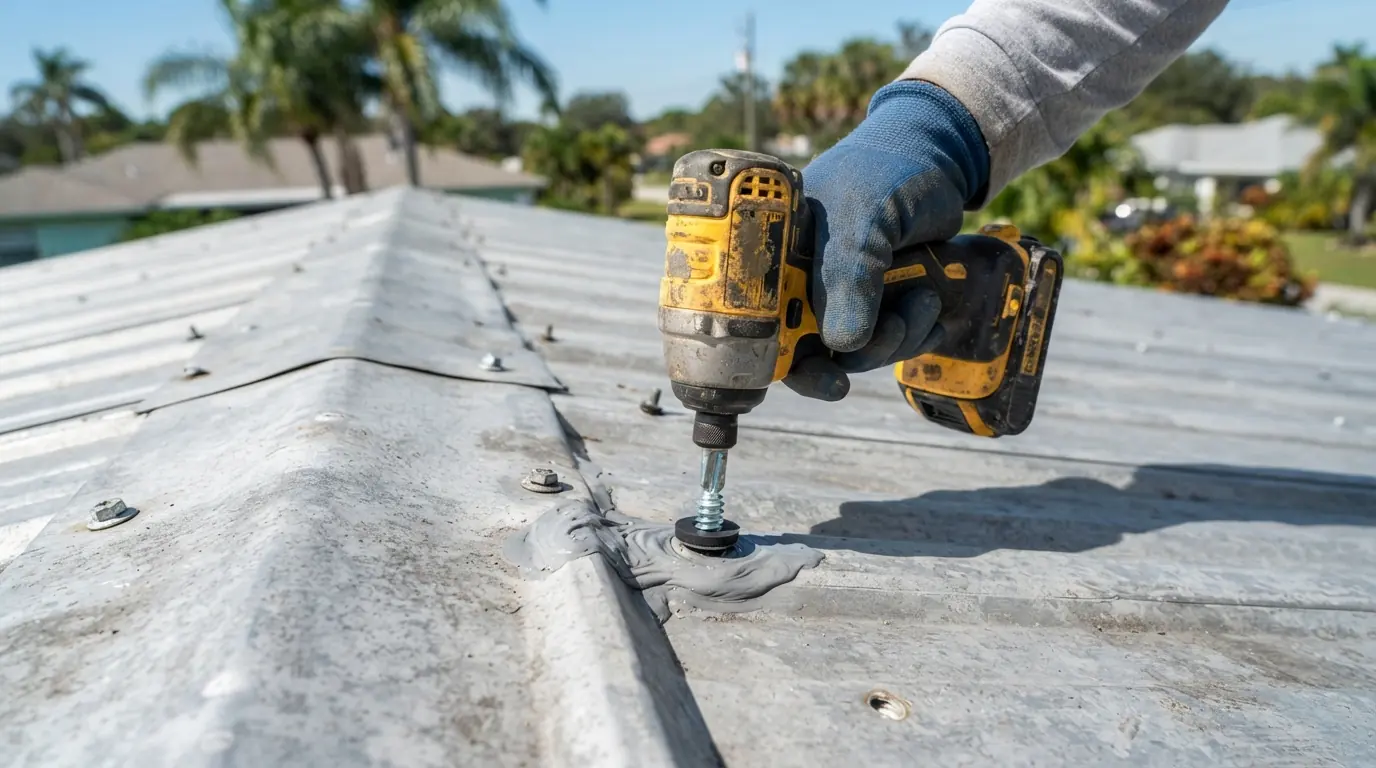
An exposed-fastener metal roof is held down by thousands of screws, each sealed by a small rubber washer. Metal expands in the afternoon sun and contracts at night, and every cycle works those screws slightly loose while the sun hardens the washers. After enough years the washers crack, the screws back out, and water follows the thread into the deck.
Standing seam roofs hide their fasteners under the seams, so their leaks come from seam laps, panel ends and flashing at walls and penetrations. Either way, the fix starts with finding which part failed, not with a coat of sealant over everything.
Metal Roof Repair
Backed-out fastener and washer replacement
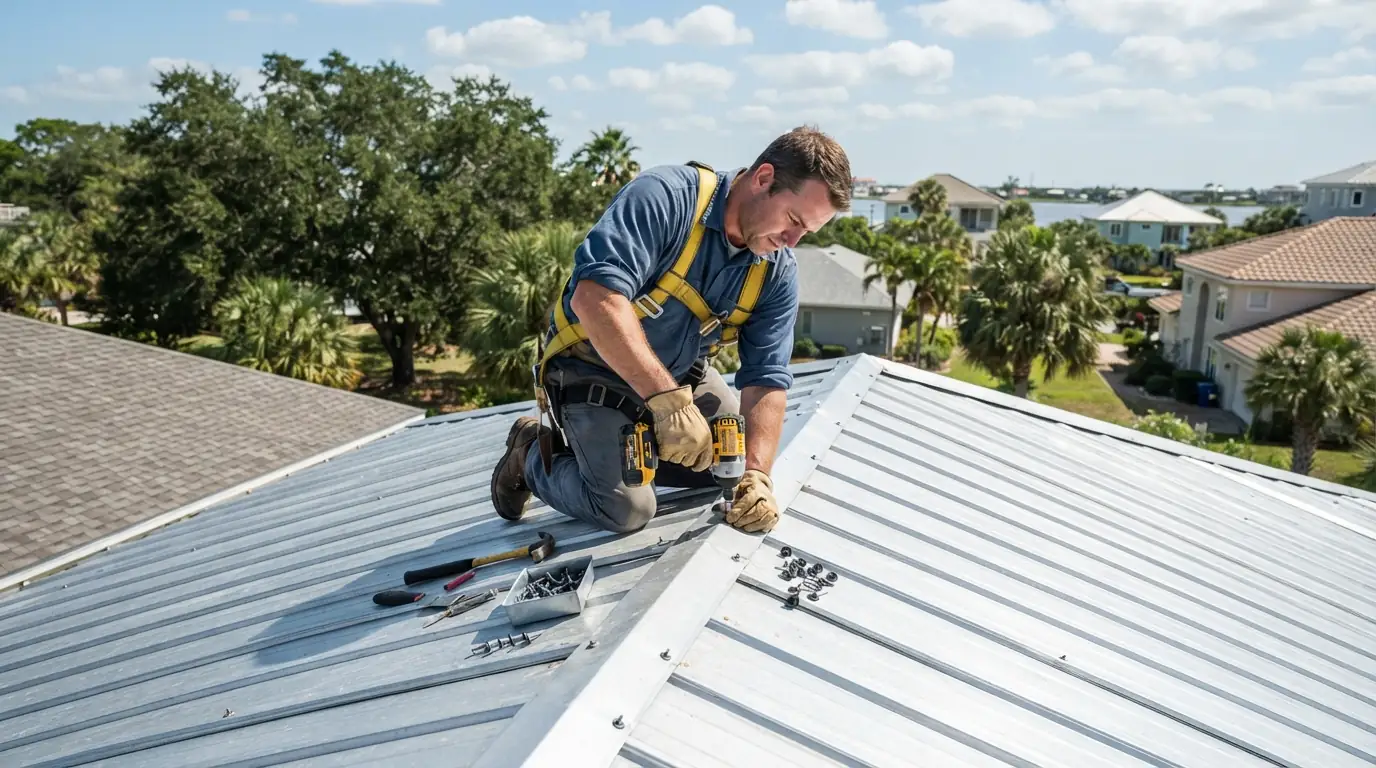
The most common metal roof repair in Florida. We walk every run of screws, back out the ones with cracked or flattened washers, and replace them with new fasteners one size up where the old hole has wallowed out, so the new screw bites fresh metal and wood. Overdriven screws that crushed their washers get the same treatment, and so do underdriven ones that never sealed.
On coastal roofs we switch to fasteners rated for salt exposure, because a standard screw near the ocean rusts before its washer fails.
Metal Roof Repair
Standing seam leak repair
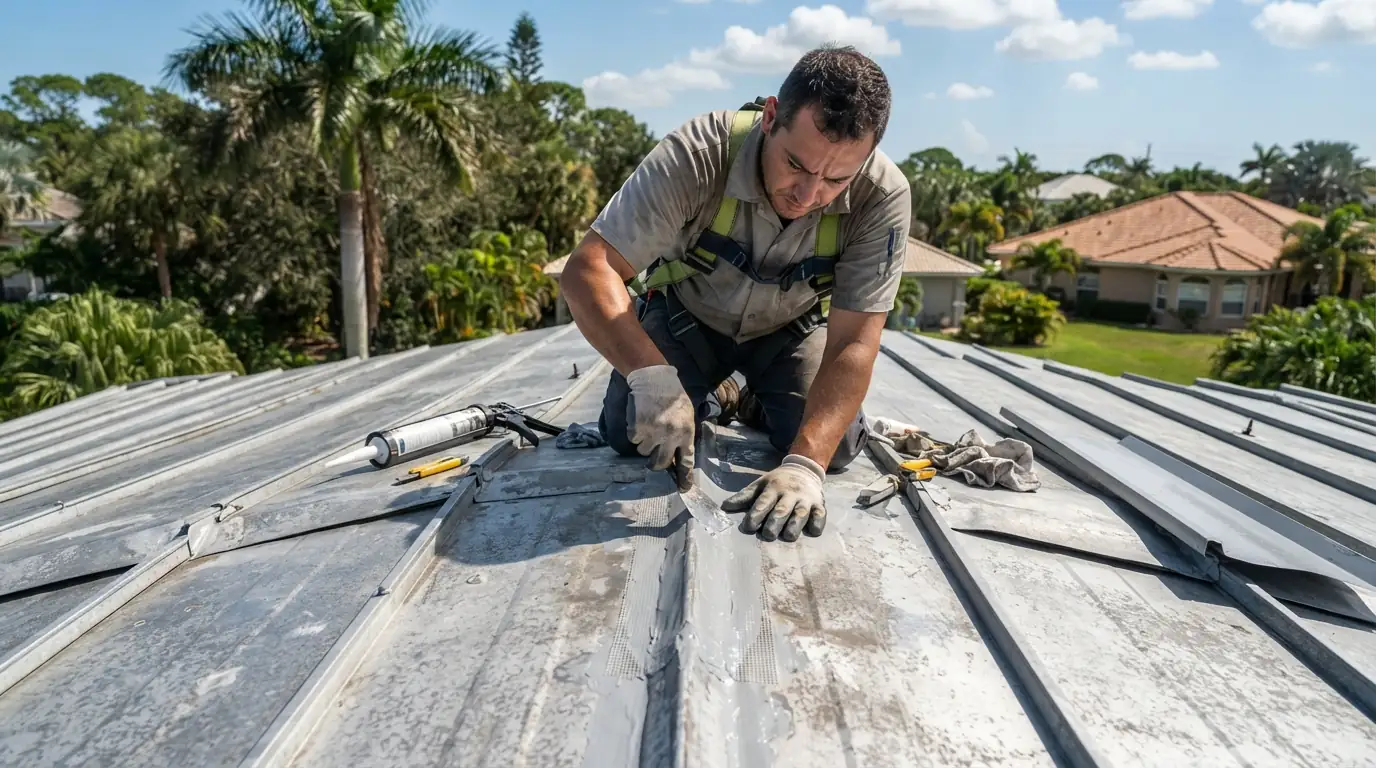
Standing seam panels lock together at raised seams with clips hidden underneath. Leaks show up at seams that were never fully crimped, at panel ends where the closure or sealant tape has failed, and where a seam has been stepped on and bent open. We re-crimp or re-seam with the right tool for the profile, replace failed end closures, and reseal at the ridge and eave with sealant made for metal.
What we do not do is smear caulk down a seam; it traps water and hides the failure.
Metal Roof Repair
Rust and coating failure
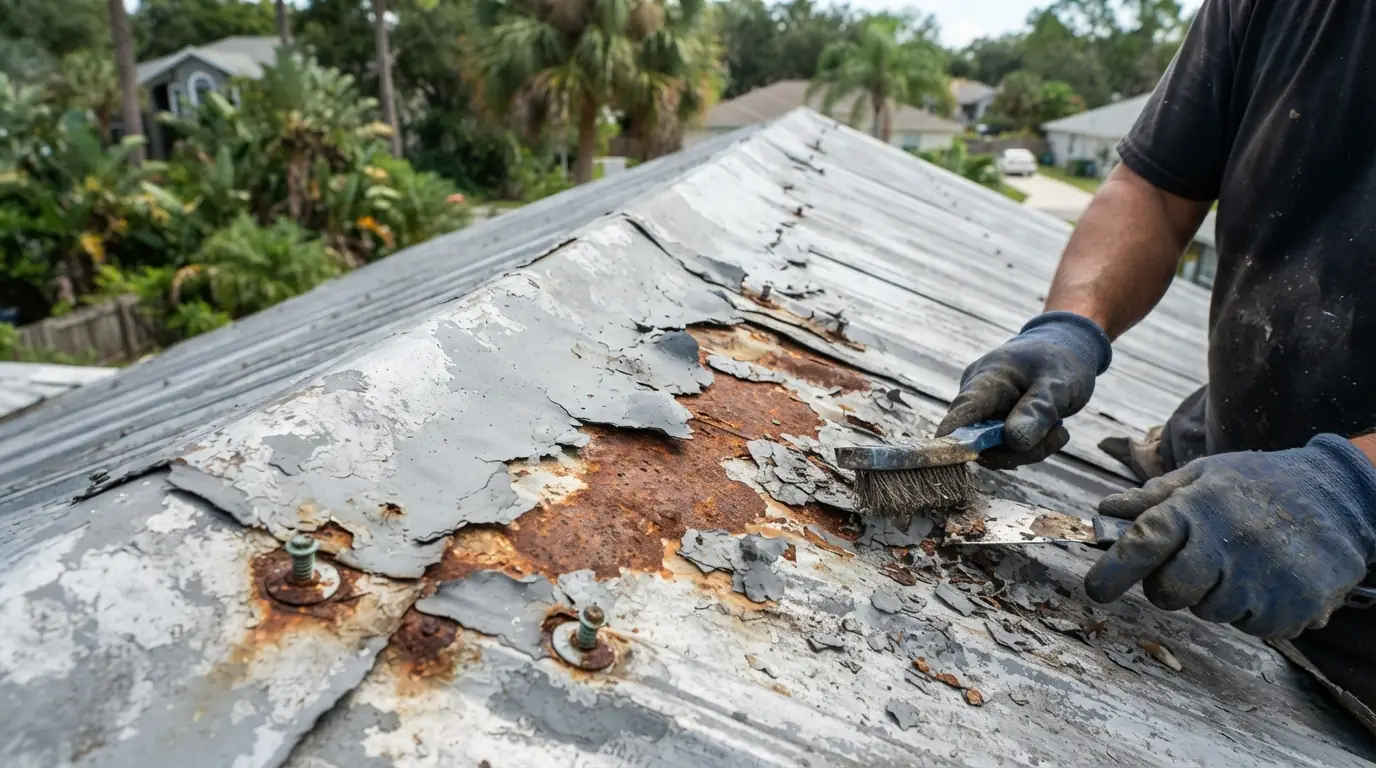
Galvalume and painted steel are protected by a metallic coating and a paint system. Once that is scratched, cut or worn through, rust starts at the exposed edge, and it starts fastest at cut panel ends, around fasteners and where debris sits wet in a valley. Surface rust is cleaned, primed and coated. Rust that has perforated the panel means the panel, or at least that section, gets replaced.
Mixed metals cause their own rust: copper or bare steel in contact with galvalume corrodes it, so we match the metals.
Metal Roof Repair
Panel replacement
A panel dented by a limb, creased by wind or rusted through is replaced whole, not patched. On exposed-fastener roofs the damaged panel's screws come out, the panel slides free from under its neighbor, and a new one of the same profile and gauge goes in with fresh fasteners. Standing seam panels are unseamed on both sides and re-seamed once the new panel is set.
Color matching an older, faded panel is the hard part; a close match on a rear slope is often the practical answer.
Roofing in Jacksonville
Why metal roofs near the beaches need more fastener attention
Metal is especially popular at Jacksonville Beach and Atlantic Beach, which is also where it works hardest. Salt air attacks standard fasteners and cut edges first, so a coastal metal roof usually needs its screws looked at sooner than one inland. Heat does the rest: the National Weather Service normal is 60 days at 90 degrees or hotter between June and August, and each of those days expands the panels and works the fasteners.
Do it yourself?
Tighten it yourself or call a roofer?
| Task | Reasonable for a homeowner | Leave to a roofer |
|---|---|---|
| Spotting loose screws | Yes, with binoculars from the ground | Walking the roof to check them |
| Replacing a few screws | Only on a low, dry, single-story roof with fall protection | Anything steep, wet or two stories up |
| Sealing a seam | No | Always; caulk over a seam traps water |
| Treating rust | No | Surface prep and the right coating matter |
Metal roofs are slippery even when dry, and morning dew makes them worse. Most homeowners should stay on the ground.
We install and repair the lines Northeast Florida suppliers stock, from GAF, Owens Corning and CertainTeed shingles to Eagle concrete tile and Carlisle TPO.
- GAF
- Owens Corning
- CertainTeed
- TAMKO
- Atlas Roofing
- IKO
- Gulf Coast Supply
- Eagle Roofing Products
- Westlake Royal
- Polyglass
- Carlisle
- Johns Manville
- Englert
- VELUX
Cost factors
What decides the cost of a metal roof repair
Roof type
Exposed-fastener repairs are quick per screw; standing seam work takes seaming tools and more time.
How many fasteners
A few failed screws is a short visit; a whole-roof re-screw is much bigger.
Panel availability
Current profiles and colors are easy; older or faded panels take longer to match.
Rust extent
Surface rust is cleaned and coated; perforated sections mean new panels.
The range above is a published Jacksonville figure for roof repairs in general, not our quote for your metal roof.
Questions we hear
Metal roof repair questions
Sometimes that is exactly the right repair, when washers are failing across the roof. If only a few runs have backed out, we replace those and leave sound fasteners alone.
Not reliably. Sealant over a failed washer or an open seam hides the problem for a season; the screw, washer or seam has to be fixed.
Both: 5V crimp, R-panel and other exposed-fastener profiles, and snap-lock or mechanically seamed standing seam.
The washers are rubber and the panels are steel. Sun, salt and daily expansion wear the washers out long before the metal.
If the panels are sound but the fasteners and seams are tired, metal roof coating and seam sealing can be the right next step.
Related work
Other roof repairs we handle in Jacksonville
Shingle Roof Repair
Covers missing and blown-off shingle replacement, lifted and creased shingle repair, ridge cap repair.
Learn moreTile Roof Repair
Covers cracked and slipped tile replacement, underlayment failure under tile, ridge and hip mortar repair.
See how it worksRoof Flashing Repair
Covers chimney flashing and cricket repair, step and wall flashing repair, drip edge replacement.
See how it worksGet the leaking fasteners found and fixed
Call any hour. We repair 5V crimp, R-panel and standing seam metal roofs across Jacksonville and answer 24/7.