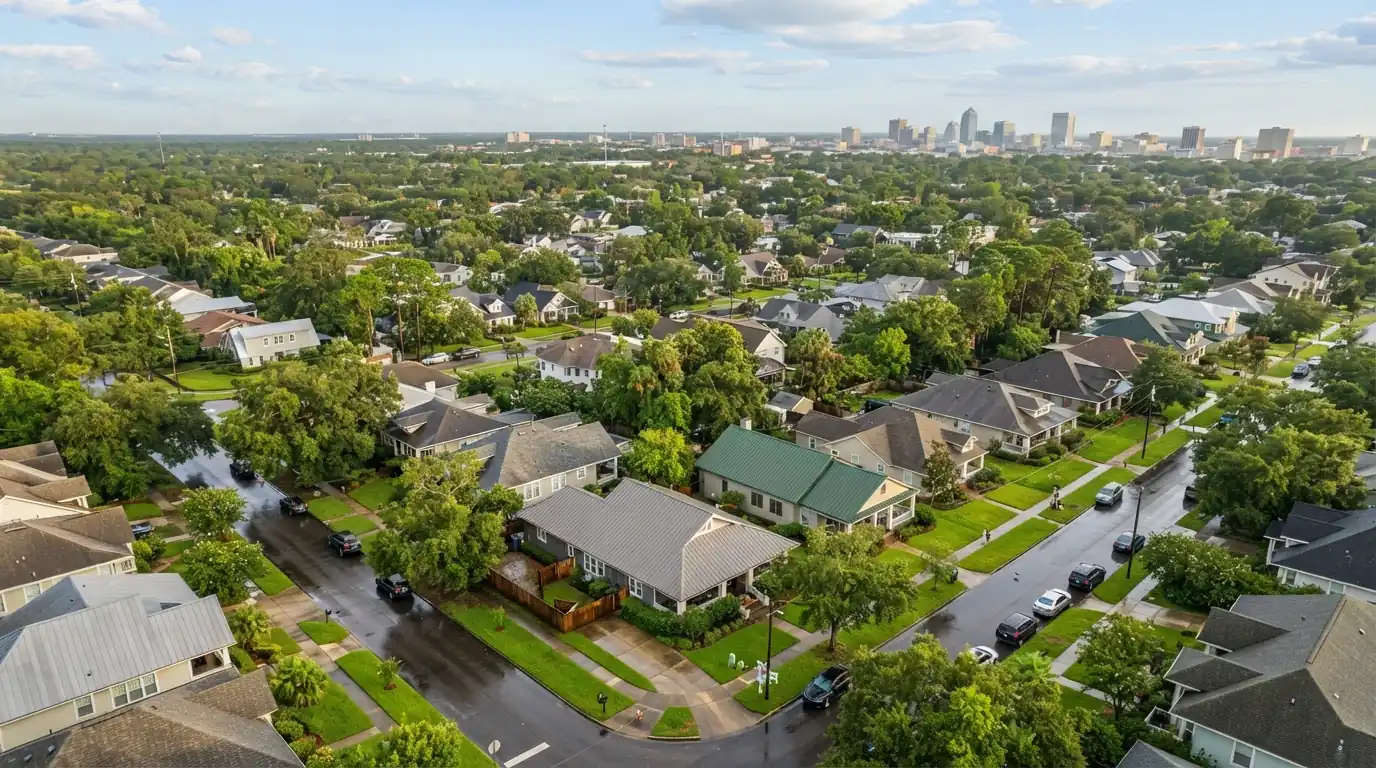
Jacksonville, FL · Inspection & Protection
Roof maintenance for Jacksonville homes, before storm season
Updated September 2026
Most roof failures start small: a cracked pipe boot, a valley packed with oak leaves, a backed-out screw. A maintenance visit catches those while they are still cheap to fix.
- Calls answered 24/7
- Photos of every slope
- Shingle, metal, tile and flat
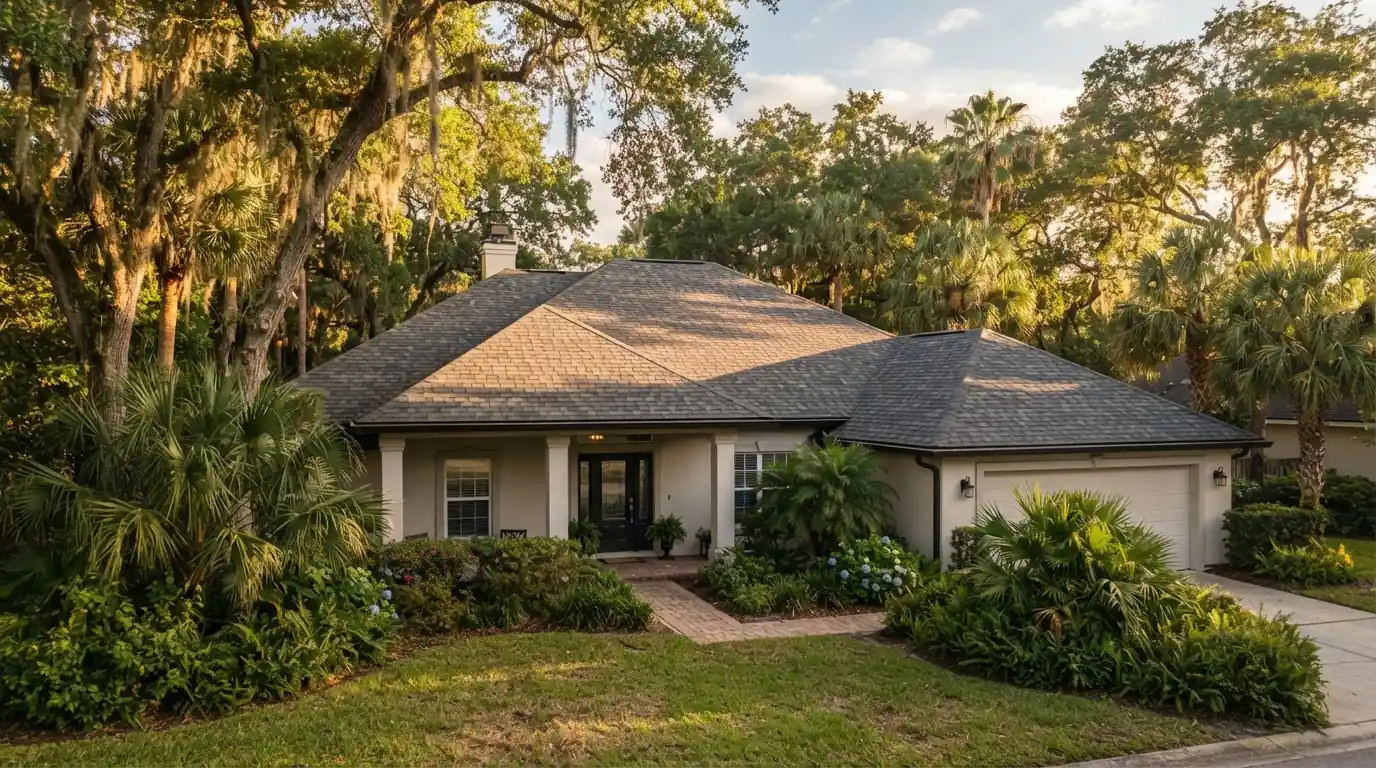
Roof maintenance in Jacksonville, FL is a scheduled visit, best in spring before hurricane season opens on June 1, that clears valleys and gutters, renews failing sealant and fasteners, secures loose shingles or tiles, and photographs every slope. It costs far less than the leak it prevents and leaves you a dated record of the roof's condition.
Small parts first
What maintenance actually does for a roof
A roof does not wear evenly. The shingle field may have ten good years left while the pipe boots, sealant beads and valley edges are already failing, and those small parts are where most leaks begin. Maintenance works on them before they let water in.
The visit ends with photos of every slope and a short list: what we fixed, what to watch, and whether anything needs a real repair. That dated record also helps when an insurer asks about the roof at renewal.
What is included
What a maintenance visit includes
- Photos of every slope, before and after
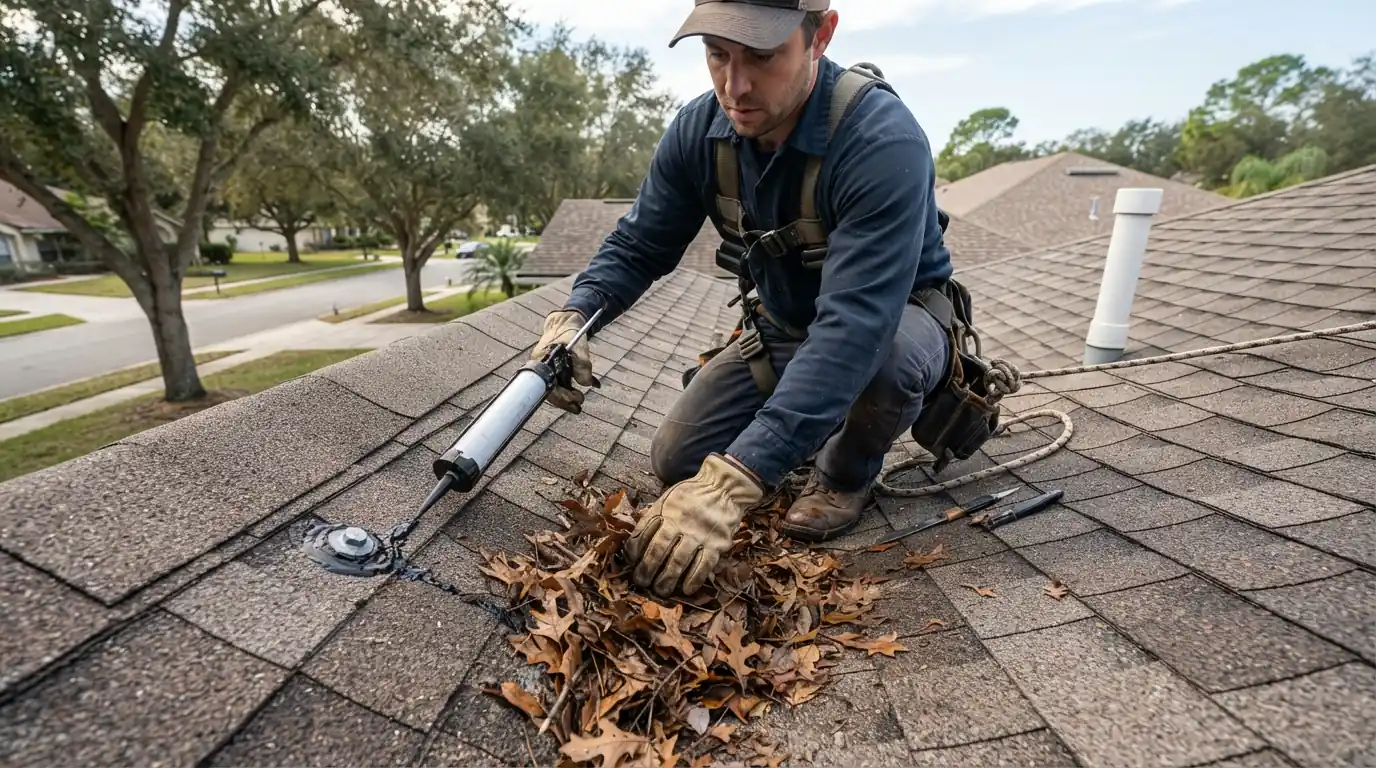
- Valleys and roof field cleared of leaves and needles
- Gutters and downspouts checked and cleared
- Pipe boots and vent collars checked, resealed or replaced
- Flashing at walls, chimneys and skylights checked for fastening
- Loose shingles, tiles and ridge caps secured
- Exposed fasteners and washers renewed on metal roofs
- Drains and scuppers cleared on flat sections
- A dated written summary for your records
Roof Maintenance
Pre-hurricane season tune-up
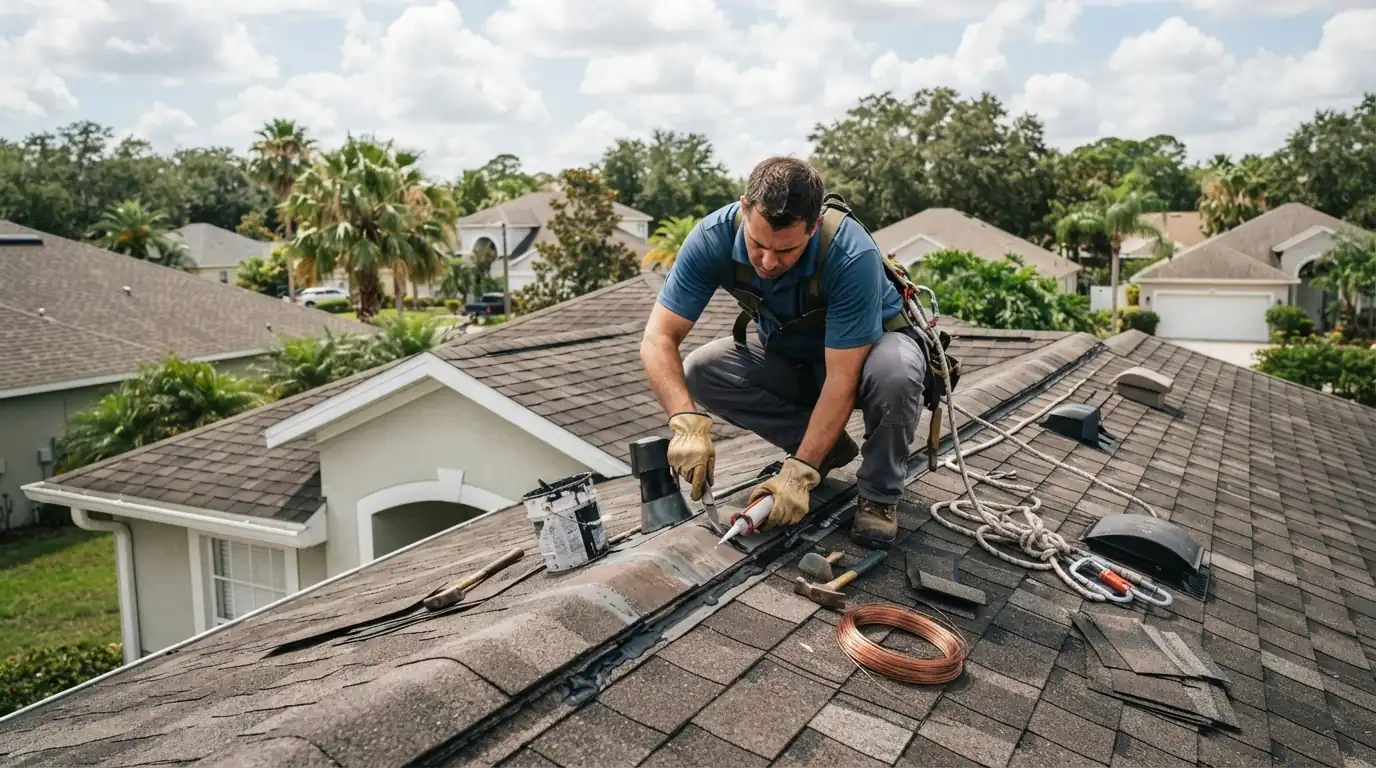
Timed for spring, before the June 1 start of the Atlantic season. We secure loose shingles and ridge caps, reseal or replace cracked pipe boots, check that flashing at walls and chimneys is fastened tight, and remove anything on the roof that could turn into debris in high wind, like loose satellite mounts and old antenna brackets.
Dead limbs over the eaves get flagged for your tree service. The goal is a roof that meets the season with no weak spots you know about.
Roof Maintenance
Valley and debris clearing
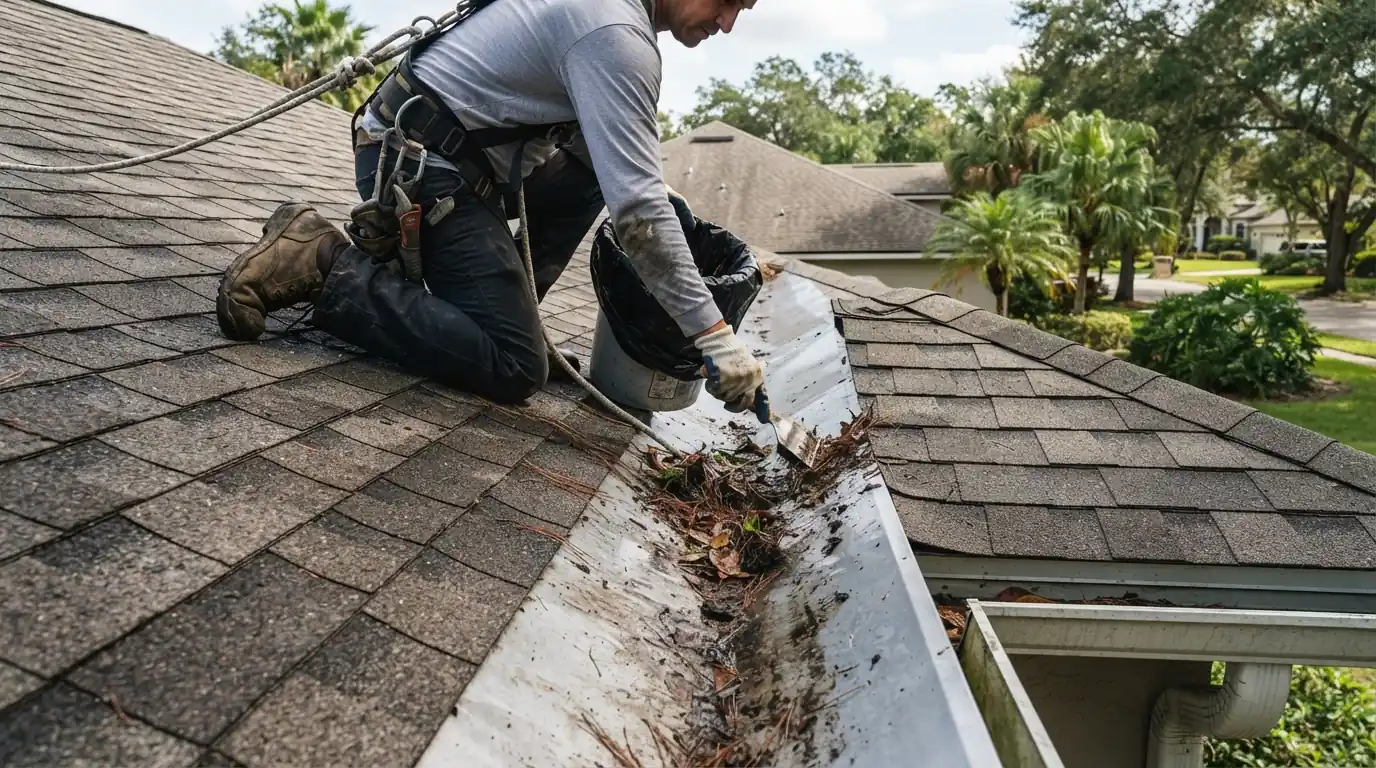
Valleys carry more water than any other part of the roof, and under oaks and pines they fill with leaves and needles that hold moisture against the shingles. Packed debris also pushes water sideways under the edges in a downpour. We clear valleys, the roof field and the gutters that drain them, and check the valley metal or woven shingles underneath for wear.
On flat and low-slope sections the same visit clears drains and scuppers, where one clog can pond water across the roof.
Roof Maintenance
Sealant and fastener renewal
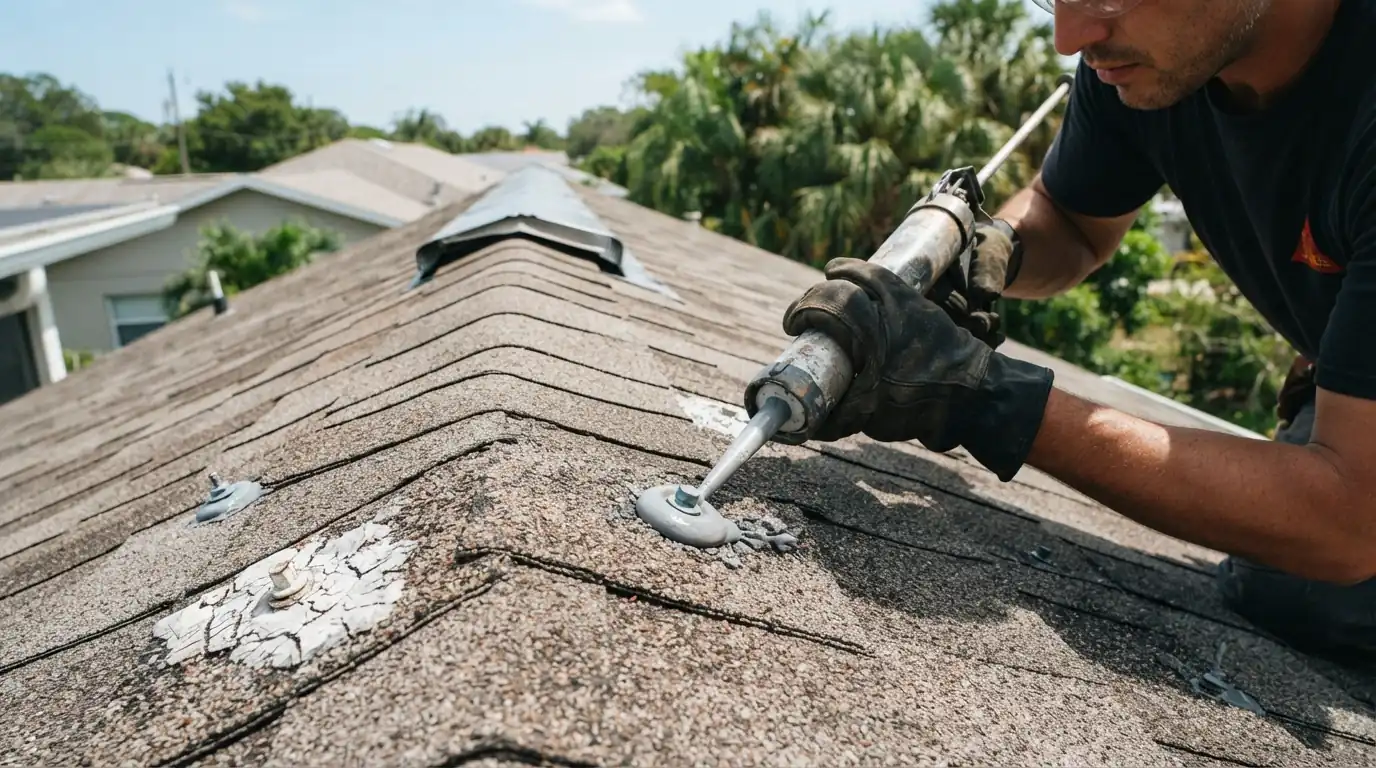
Sealant around vents, skylights and flashing laps dries and cracks in the Florida sun long before the roof is worn. On metal roofs, the rubber washers under exposed screws harden and split, and screws back out as panels expand and contract every day. We replace failed sealant with compatible products and swap or re-seat fasteners with new washers.
On tile roofs we also check the foam or mortar at hips and ridges. Small parts, but they are the first thing a wind-driven rain finds.
Roofing in Jacksonville
What maintenance means at the beaches and inland
Hurricane season runs June 1 to November 30, so the useful window for a tune-up in Jacksonville is spring. Location changes the list. At Atlantic Beach and Jacksonville Beach, coastal storms are behind much of the wind-uplift shingle loss and membrane damage, so fastening and edge metal get the most attention there. Inland, shaded roofs under big oaks grow algae that speeds granule loss, and the visit leans toward clearing debris and checking the shingle surface.
Step by step
How a maintenance visit runs
- 1
Book before June
Spring leaves time to fix anything the visit finds before storm season.
- 2
Walk and photograph
Every slope, flashing and penetration, plus the attic where accessible.
- 3
Clear and secure
Valleys, gutters and drains cleared; loose shingles, tiles and caps secured.
- 4
Renew small parts
Failed sealant, washers and fasteners replaced.
- 5
Flag bigger problems
Anything needing a real repair is photographed and priced separately.
- 6
Written summary
What was done, what to watch, and the dated photos.
Cost factors
What a maintenance visit costs depends on
Roof size and pitch
More slopes and a steeper pitch mean more time on the roof.
Roof type
Tile needs careful walking, metal needs fastener work, flat roofs need drain clearing.
What the visit finds
Sealant and fastener renewal is part of the visit; a failed boot or cracked tile is a small added repair.
Time since the last visit
A roof cleared every year takes less time than one untouched for five.
We price maintenance after seeing the roof, and we show you the photo before adding any repair.
Do it yourself?
What you can do yourself, and what to leave to us
| Task | From the ground or a ladder | On the roof |
|---|---|---|
| Clearing gutters | Yes, from a stable ladder | Not needed for most gutters |
| Spotting missing shingles | Yes, with binoculars after storms | Leave to a roofer |
| Clearing valleys | No | A fall risk, worst on a wet or steep roof; leave it to us |
| Resealing boots and flashing | No | The wrong sealant can trap water; leave it to us |
| Watching ceilings after storms | Yes, and call if a stain appears | Not needed |
Stay off tile and metal roofs entirely. Both are slippery, and tile breaks underfoot.
Questions we hear
Roof maintenance questions
Once a year in spring suits most roofs, plus a look after any major storm. Older roofs and roofs under heavy tree cover benefit from more frequent visits.
Yes. Newer roofs still collect debris, and their sealant and boots age faster than the shingles. The dated photos help later with insurance.
Small work is part of the visit: resealing, re-fastening, securing loose pieces. A cracked boot or broken tile is replaced at the visit where possible, and larger repairs are priced separately with photos.
It can. A dated condition record is useful when an insurer asks about a roof at renewal, and for roofs 15 years or older a certification inspection is the formal version.
Yes. Metal gets fastener and washer work, tile gets careful walking and ridge checks, and flat roofs get drain and seam checks.
Related work
Other inspection and protection work
Roof Inspection
Covers annual roof checkup, pre-purchase roof inspection, post-storm inspection.
Read the detailsRoof Certification for Insurance
Covers roofs 15 years and older, remaining useful life letters, condition repairs before certification.
Learn moreWind Mitigation Roof Upgrades
Covers roof deck re-nailing, secondary water barrier, roof-to-wall connections.
See how it worksBook the spring tune-up before the season starts
Call any hour to schedule. We maintain shingle, metal, tile and flat roofs across Jacksonville and answer 24/7.