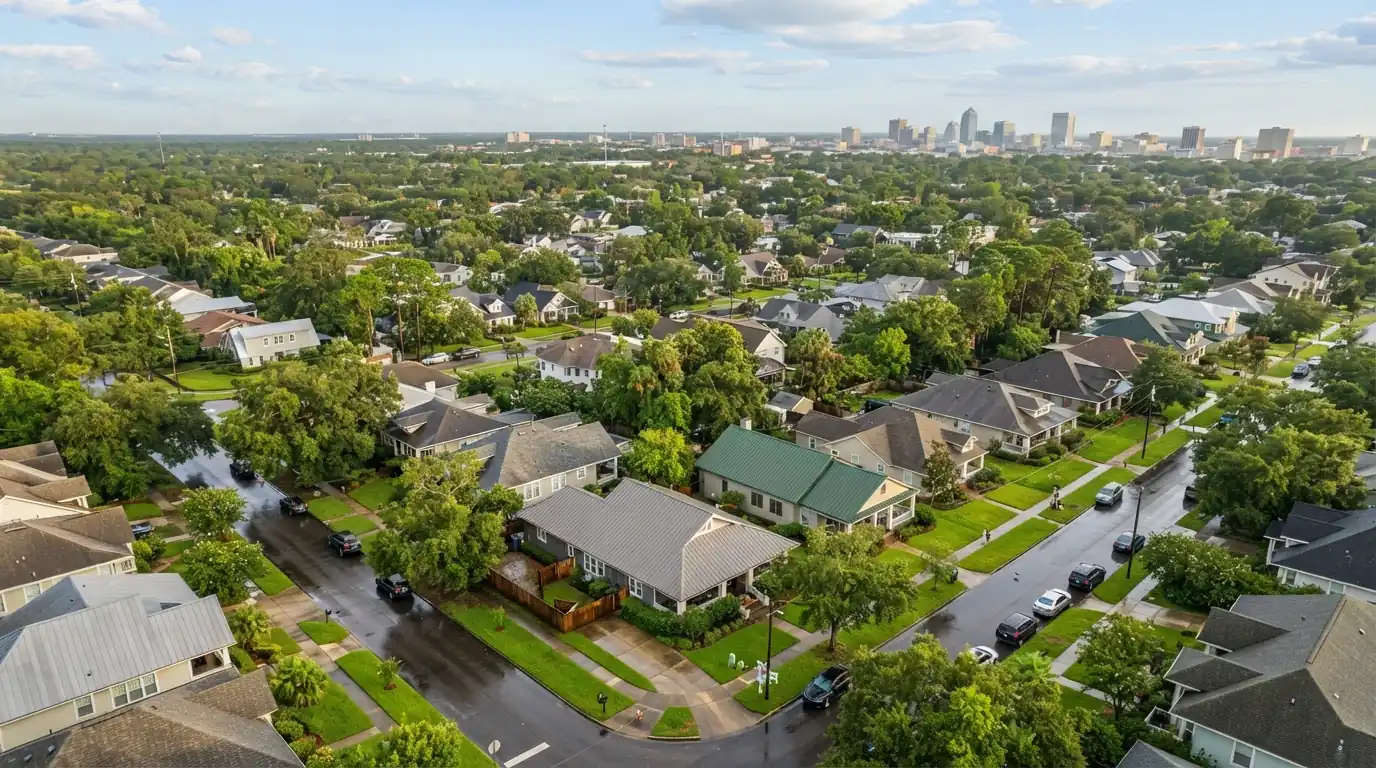
Jacksonville, FL · Storm & Emergency
Roof leak repair in Jacksonville, traced to the source
Updated September 2026
The stain on the ceiling is rarely under the hole in the roof. Water runs along rafters and decking before it drops. We trace it back to where it gets in and fix that, not the spot that happens to be wet.
- Calls answered 24/7
- Traced from the attic and the roof
- Hose-tested before we leave
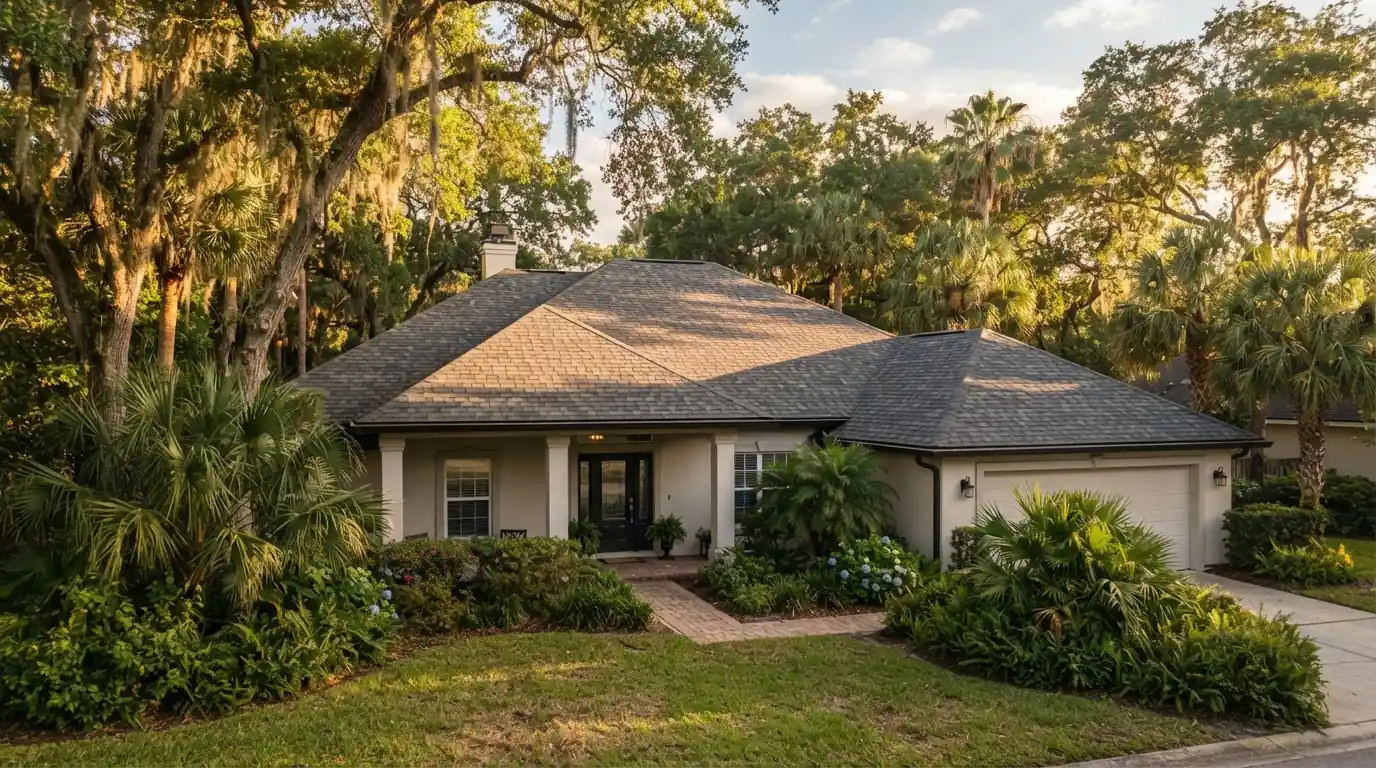
Roof leak repair in Jacksonville, FL starts with tracing: following the water from the ceiling stain through the attic to where it enters the roof, usually a pipe boot, a valley, a flashing joint or a backed-out nail. That entry point is repaired with matching materials, the area is water-tested, and wet decking or insulation found on the way is dealt with.
What to look for
Signs you have a roof leak
A new or growing ceiling stain
Brown rings mean water has soaked through more than once.
Drips during or after rain
Active water; call before the drywall gives.
Musty smell in the attic
Wet insulation or decking that has not dried out.
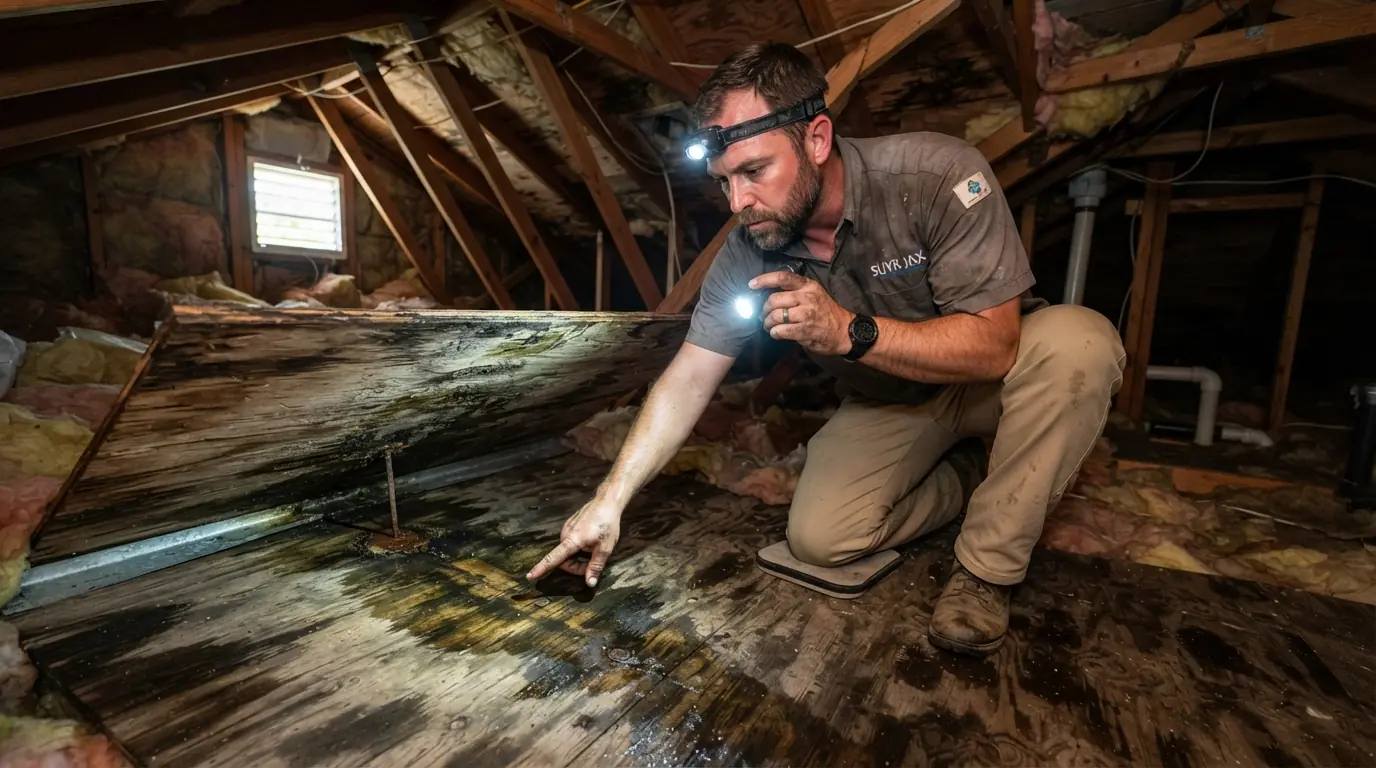
Stained or dark decking in the attic
Shows the water's path from where it entered.
Peeling paint high on walls or ceilings
Moisture behind the finish, often from a slow leak.
Step by step
How a leak repair call runs
- 1
Describe the leak
Where it shows and in what weather.
- 2
Attic first
Stains and wet wood followed uphill to the source.
- 3
Roof above
Flashing, boots, valleys and fasteners checked.
- 4
Repair the entry point
New boot, flashing or valley section; nails reset.
- 5
Hose test
The repaired area is tested before we leave.
- 6
Photos and notes
The source, the fix and anything else to watch.
Timing
How long leak repair takes
Most of the time goes into finding the leak, not fixing it. A leak that shows in every rain is quick to trace; one that appears only in wind-driven storms may need a controlled hose test to reproduce. Once the entry point is found, the repair itself is often done the same visit when matching materials are at hand, and anything that needs ordering is dried in until it arrives.
Follow the water
Why the stain is not where the leak is
Water that gets through a roof lands on the deck, then runs along the underside of the plywood or down a rafter until it finds a low point or a nail to drip from. By the time it stains a ceiling, it can be several feet from where it entered, sometimes on the other side of a wall.
So we trace from both sides. In the attic we follow the stains and wet wood uphill to the source; on the roof we check the flashing, boots, valleys and fasteners above that point. Only then do we repair, and a hose test on the suspect area confirms the fix before we leave.
Roof Leak Repair
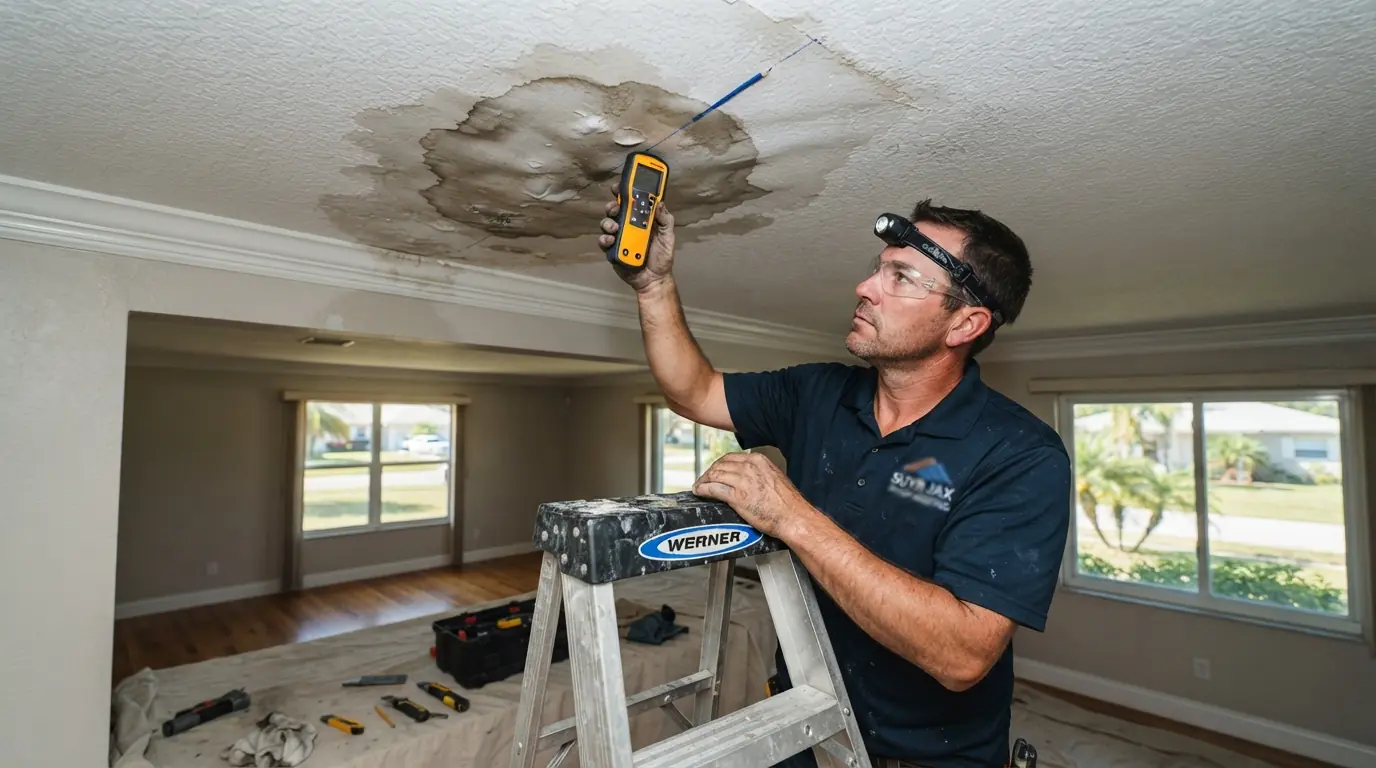
Ceiling stain leak tracing
A fresh stain, a drip after rain or a bubbling ceiling each tell us something. Stains that grow only in heavy, wind-driven rain point to flashing or vents; stains after any rain point to a hole or a failed boot; stains with no rain at all may be condensation or plumbing, not the roof. We check the attic first, mark the wet path, then go to the roof above it.
If the source turns out to be an HVAC line or a plumbing vent inside the attic, we tell you, so you call the right trade.
Roof Leak Repair
Valley leak repair
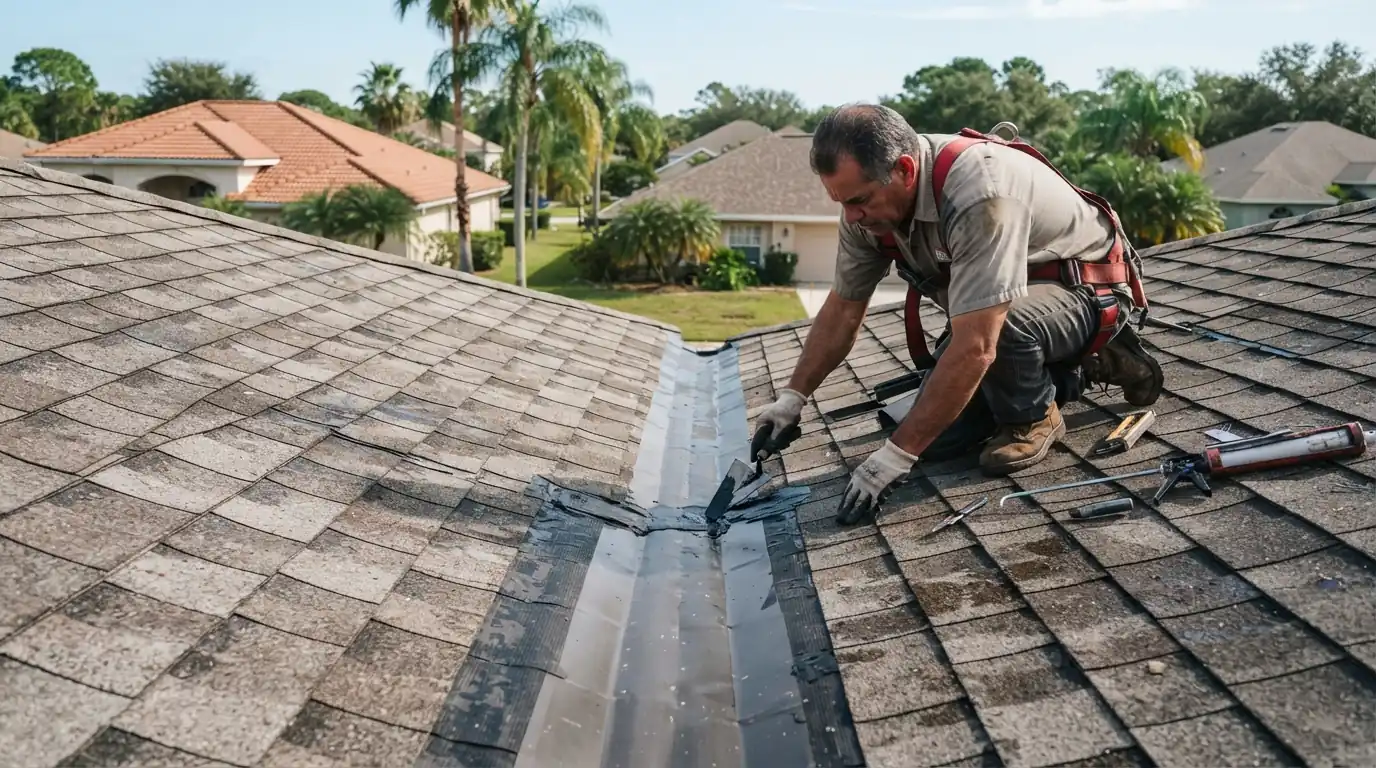
Valleys carry the water of two roof slopes and are one of the most common leak points. Debris dams them, shingles cut too short expose the valley center, and old metal rusts through. We clear the valley, check the metal or woven shingles, and replace the damaged section, lapping it correctly into the courses above and below.
Valleys under oak and pine cover need clearing more often, and a valley that has leaked repeatedly usually needs the underlayment beneath it replaced as well, which we check before closing up.
Typical market range for leak requiring flashing replacement: $500 to $1,500 (source). A planning figure, not a quote.
Roof Leak Repair
Pipe boot and vent leak repair
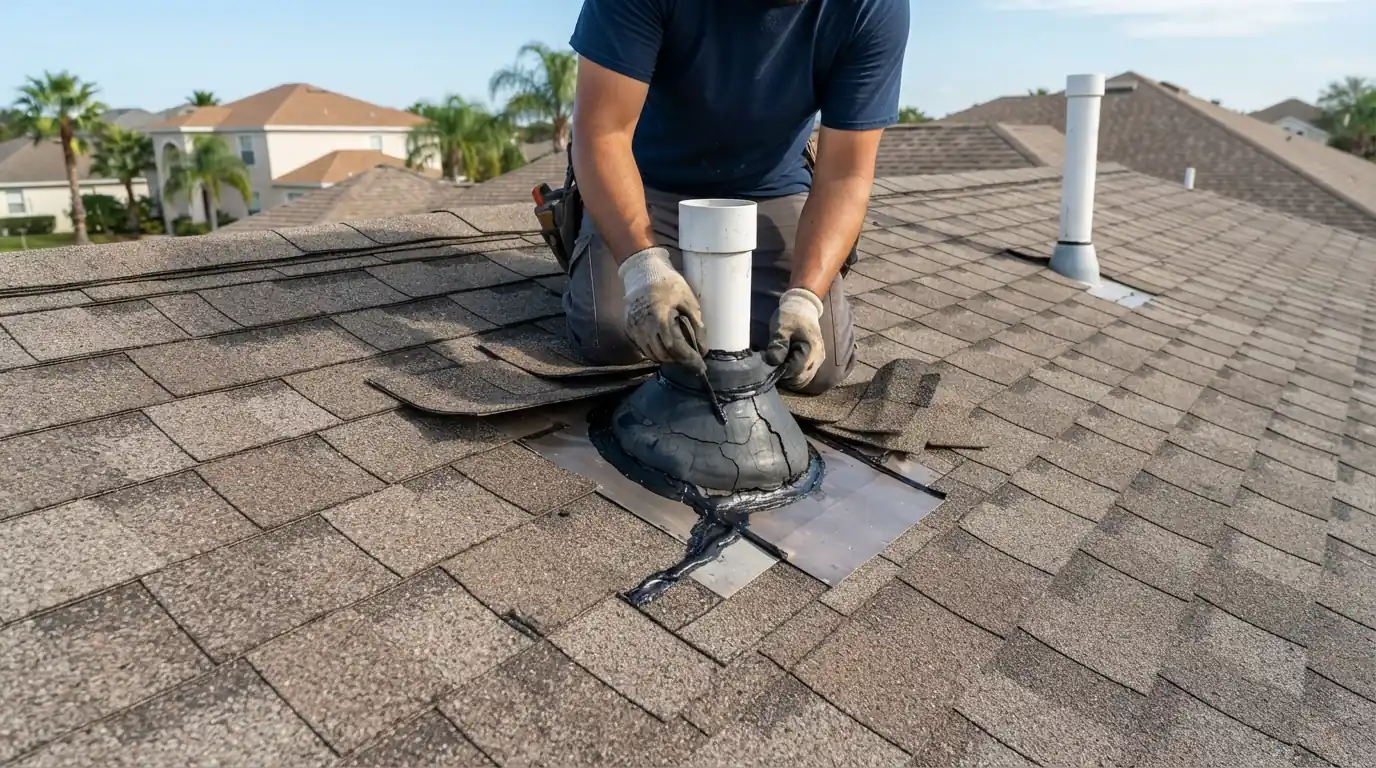
Rubber pipe boots crack in the Florida sun and are a common source of shingle roof leaks. The fix is a new boot, not sealant around the old one: the shingles above are lifted, the old boot comes out, and a new one slides under the upper course and over the lower. Box vents, turbine vents and exhaust caps get the same treatment when their flashing has lifted or cracked.
Where boots keep failing, a longer-life lead or silicone boot is worth the small extra cost.
Typical market range for simple seal repair: $150 to $400 (source). A planning figure, not a quote.
Roof Leak Repair
Nail pop and fastener leak repair
Nails that back out of the deck push up through the shingle above them, opening a small hole that leaks in heavy rain. It happens where nails missed the framing, where the deck swells and shrinks with attic moisture, or on roofs nailed too high. We pull the popped nails, fasten the shingle properly beside the old hole, seal the hole, and look for the cause in the attic.
On metal roofs the equivalent is backed-out screws; see metal roof repair.
Roofing in Jacksonville
Where leaks start depends on the roof you have
In Jacksonville the likely leak source changes with the roof. On the Mediterranean revival homes of San Marco, which frequently call for clay or concrete tile, a leak usually means the underlayment under the tile has failed, not a broken tile. At Jacksonville Beach and Atlantic Beach, where metal roofing is especially popular, the first suspects are fasteners and their washers. On the shingle roofs that cover most of the city, pipe boots, valleys and flashing come first.
Stain spreading on the ceiling?
Call now. We trace it from the attic and the roof and stop it at the source.
Cost factors
What decides the cost of a leak repair
How hard it is to find
Intermittent, wind-driven leaks take longer to trace than constant ones.
What failed
A pipe boot is a small part; a valley or chimney flashing is more work.
Damage found on the way
Wet decking or insulation is replaced before the roof is closed.
Roof type
Tile, metal and flat roofs each take different repair materials.
Ranges shown are published figures, not our quote. The repair is priced once the entry point is found.
Questions we hear
Roof leak questions
Wind direction matters. Driven rain gets under flashing and vents that shed normal rain, so the leak appears only when the wind comes from one side.
Usually. Most leaks come from one failed part, such as a boot, a valley or a flashing joint.
If it drips without rain, check the AC condensate line and plumbing first. We tell you if what we find is not a roof leak.
No. Call when you see it; we answer any hour and dry it in once it is safe to climb.
Move things out from under it, puncture the lowest point over a bucket to drain it, and call. See emergency roof repair.
Related work
Other storm and emergency work we do in Jacksonville
Emergency Roof Repair
Covers after-hours leak response, tree and limb impact repair, wind-torn shingle and panel repair.
See how it worksEmergency Roof Tarping
Covers tarp and batten dry-in, roof shrink wrap, interior water catch and containment.
See how it worksStorm Damage Roof Repair
Covers hurricane and tropical storm wind damage, hail bruising and granule loss, lightning strike damage.
Read the detailsFind the leak, not just the stain
Call any hour. We trace and repair roof leaks across Jacksonville and answer 24/7.