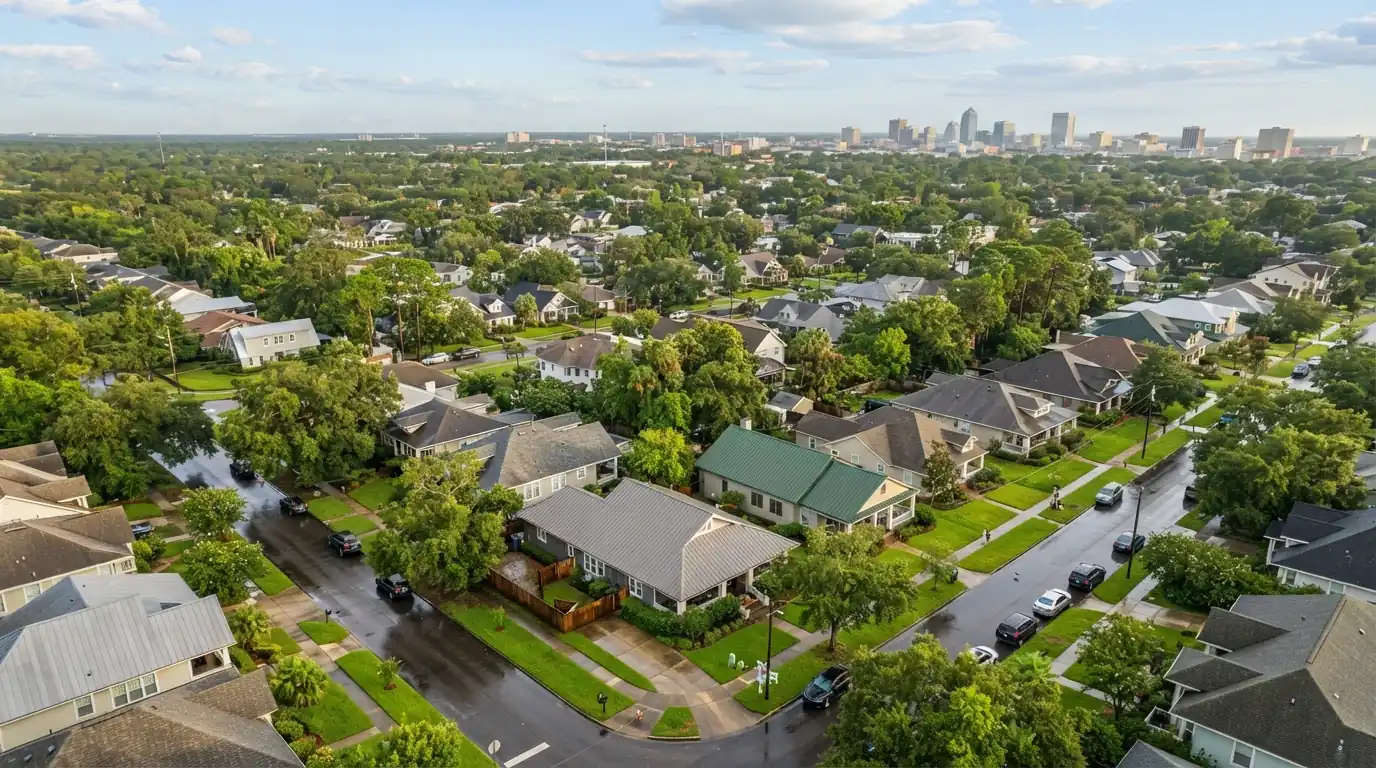
Jacksonville, FL · Flat & Commercial
Flat and low-slope roof repair in Jacksonville
Updated September 2026
Flat roofs leak differently. Water does not run off; it sits, finds a seam or a failed drain, and travels under the membrane before it shows inside. We find where it actually enters and repair the membrane that is there.
- Calls answered 24/7
- TPO, mod bit and built-up
- Drains and scuppers cleared
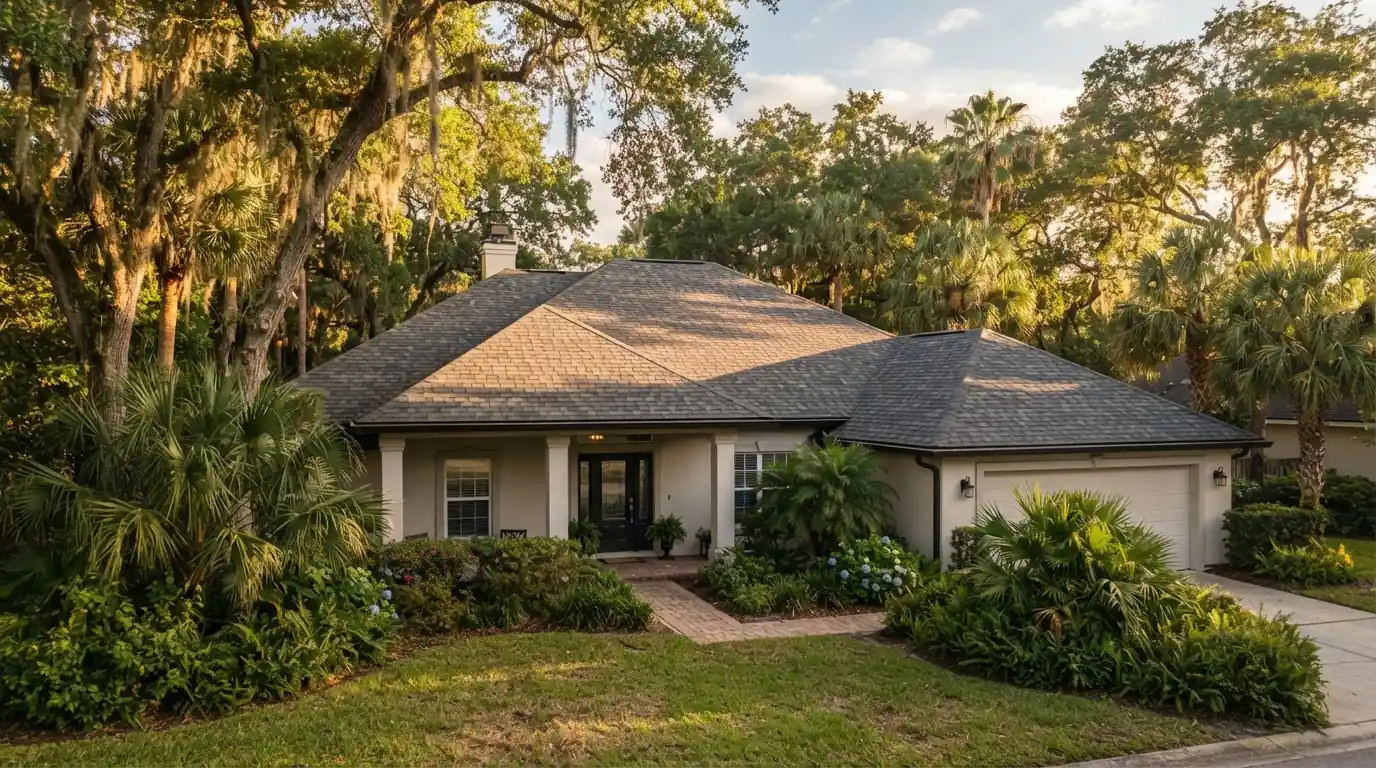
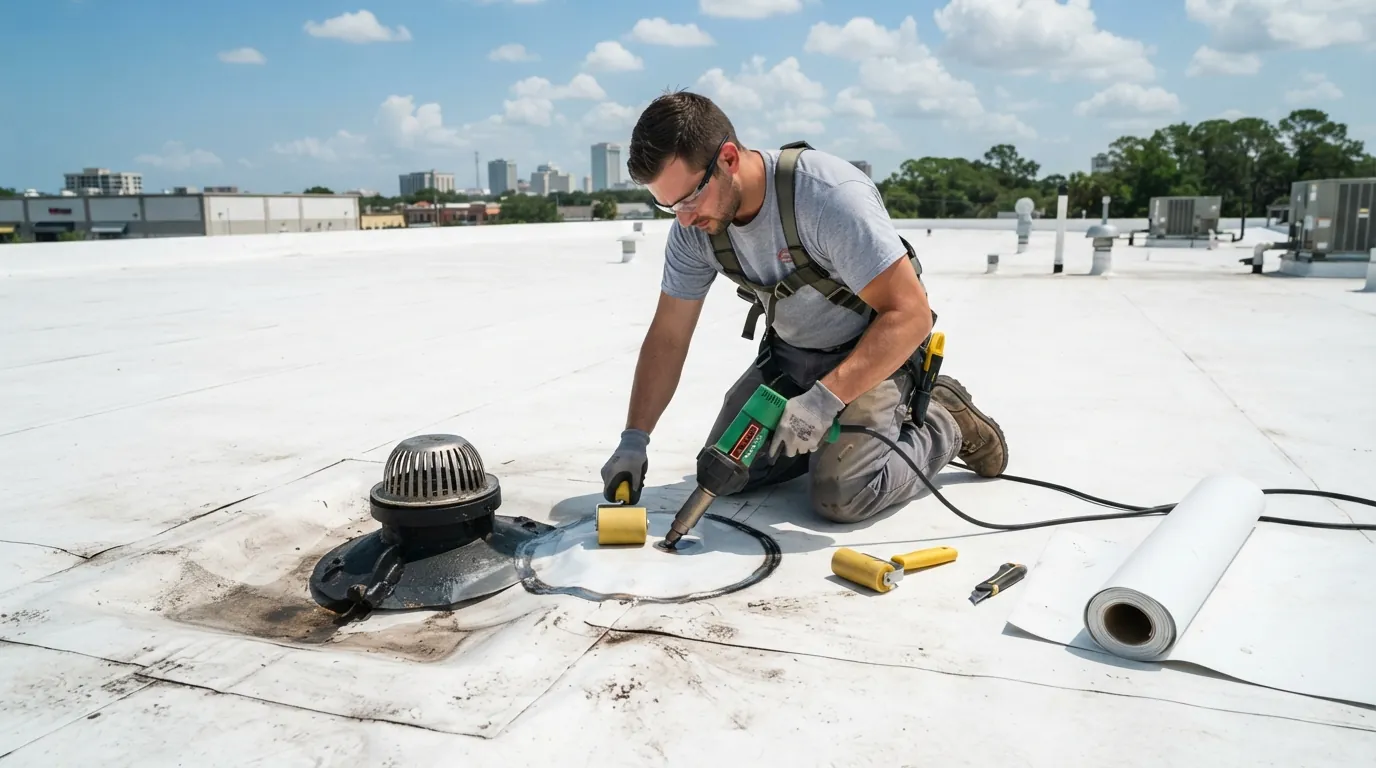
Flat roof repair in Jacksonville, FL means finding the real entry point on a membrane that does not shed water like a pitched roof, usually a split seam, a blister, a clogged drain or a failed scupper or parapet flashing, and repairing it with the same membrane type: heat-welded TPO, torched or cold-applied modified bitumen, or built-up patching.
What to look for
Signs a flat roof needs repair
Water standing two days after rain
Ponding speeds up membrane aging and finds weak seams.
Bubbles or blisters in the membrane
Trapped moisture that can split open in the sun.
Seams lifting at the edges
An open seam is a direct path under the membrane.
Stains away from any obvious cause
Water travels under a flat roof before it shows inside.
Rust or gaps at scuppers and wall caps
Where membrane meets metal is where many leaks begin.
Step by step
How a flat roof leak call runs
- 1
Call and describe it
Where it shows, and after what kind of rain, tells us a lot.
- 2
Roof-side inspection
Seams probed, drains checked, edges and walls examined.
- 3
Find the entry point
Traced on the roof, often far from the ceiling stain.
- 4
Temporary seal if needed
Water stopped the same visit when the weather allows.
- 5
Permanent repair
Welded, torched or cold-applied to match the existing membrane.
- 6
Water test and photos
The repair is tested and photographed before we leave.
Water that stays put
Why flat roofs leak where they do
A flat roof is really a low-slope roof, and the slope is so small that anything slowing the water becomes a problem. Leaves in a drain, a deck that has sagged, a seam that has lifted, a parapet cap letting water behind the membrane: each one lets water sit, and standing water finds every weakness.
Leaks also travel. Water entering at a seam can run under the membrane and across the insulation before it shows on a ceiling well away from the cause, so we trace from the roof side, not from the stain.
Flat Roof Repair
Ponding water and drain problems
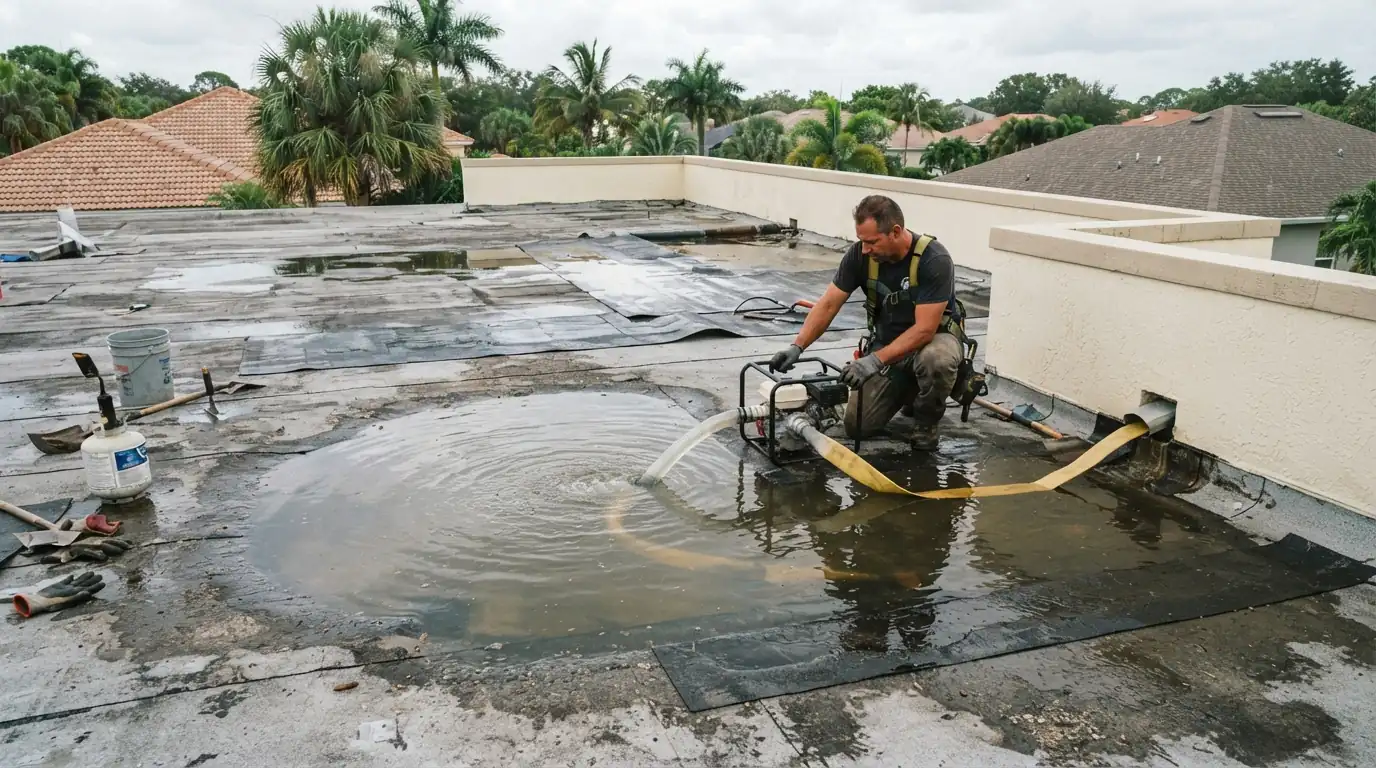
Water still standing on a flat roof 48 hours after rain is ponding, and it ages membranes fast. The causes are clogged drains and scuppers, a deck that has sagged between joists, or a roof built with too little slope. We clear drains first, then decide whether the fix is a new or relocated drain, tapered crickets that push water toward it, or deck repair under the low spot.
A description of where the water sits after a heavy rain tells us a lot before we climb.
Typical market range for flat roof drain or scupper retrofit: $300 to $450 per drain (source). A planning figure, not a quote.
Flat Roof Repair
Blisters and split seams
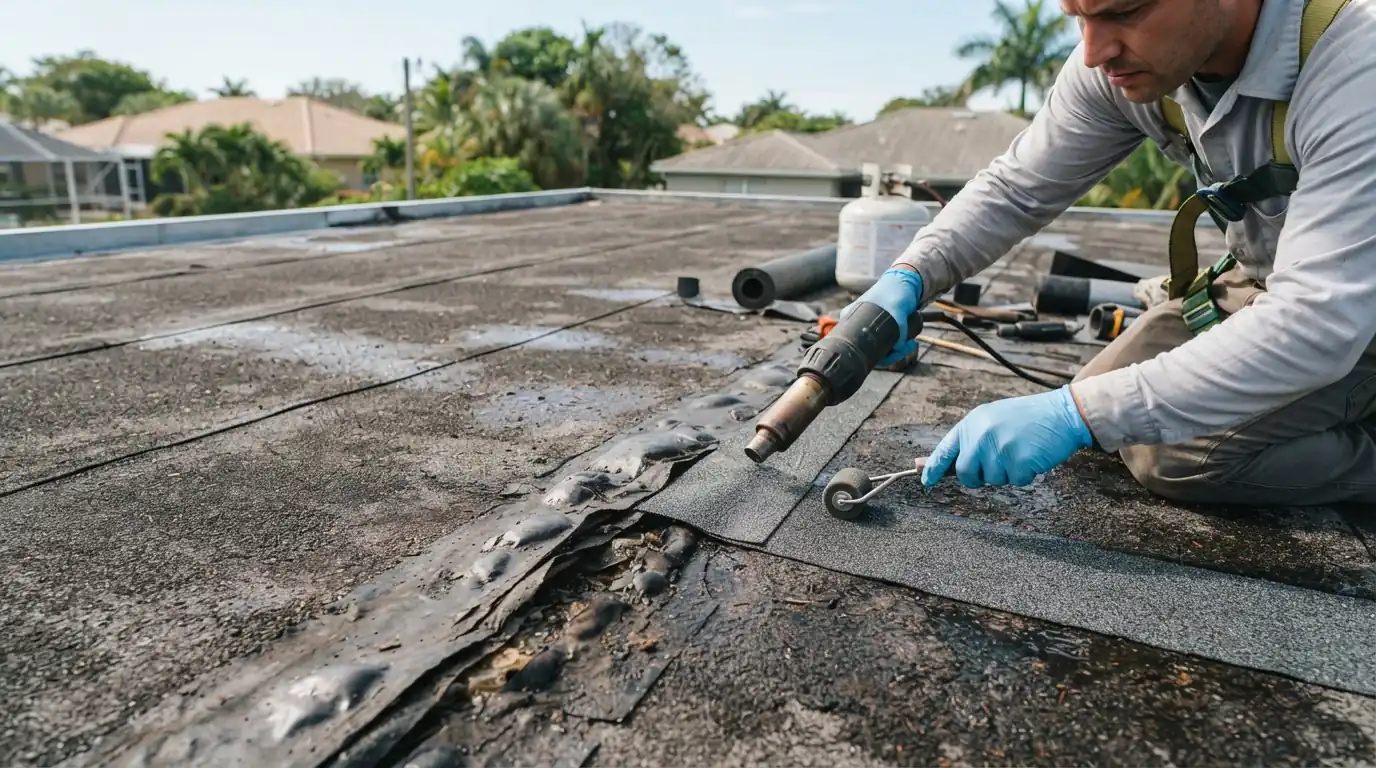
Blisters are pockets of trapped moisture or air under the membrane, common on modified bitumen and built-up roofs in strong sun. Small, intact blisters are often left and watched; broken or growing ones are cut, dried and patched. Seams are the other weak point: TPO seams are heat-welded, and a seam that was under-welded or has aged can open along its edge.
We probe seams across the roof, not just at the leak, and re-weld or strip-patch the ones that fail.
Flat Roof Repair
Scupper and parapet flashing leaks
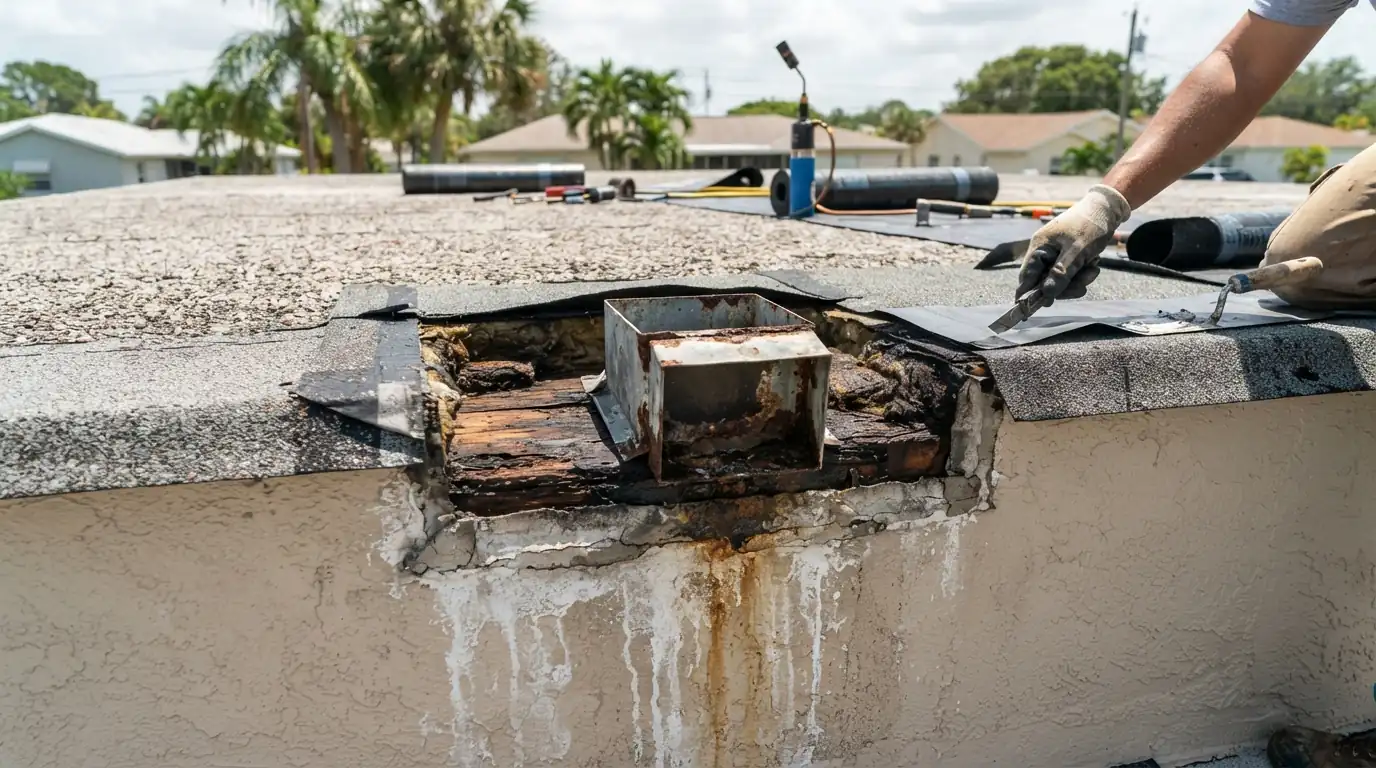
Parapet walls and scuppers are where many flat-roof leaks start on commercial buildings and older homes with low walls. The membrane turns up the wall under a metal cap or counterflashing, and when that cap loosens or its sealant fails, water gets behind the membrane from the top. Scuppers, the openings that drain water through the wall, rust or separate from the membrane around their edges.
Repairs range from resealing and re-fastening the cap to rebuilding the scupper box with new flashing.
Flat Roof Repair
Low-slope porch and addition roofs
Many Jacksonville homes have a low-slope section over a porch, carport or addition tied into a pitched main roof. These often got shingles they were never pitched for, or rolled roofing that has since cracked, and the tie-in to the main roof is a classic leak point. We repair the membrane or replace the section with a proper low-slope system, and reflash the joint where it meets the wall or the shingles above.
Shingles need a minimum pitch to shed water; below it, a membrane is the right material.
Roofing in Jacksonville
What Jacksonville rain and coastal wind do to flat roofs
Flat roofs are tested by volume. NWS Jacksonville's normals put 21.25 inches of rain in June, July and August alone, and a drain that clogs in that season can leave a roof holding water between storms. Near the ocean the test is wind: at Atlantic Beach and Jacksonville Beach, coastal storms are a common cause of membrane damage and lifted edges, so edge metal, seams and fastening get the closest look on buildings there.
Do it yourself?
Patch it yourself or call a roofer?
| Situation | A homeowner can | Call a roofer |
|---|---|---|
| A clogged drain or scupper | Clear leaves by hand from a safe access point | If water keeps standing after clearing |
| A small puncture in TPO | Cover it temporarily to keep water out | TPO needs a heat-welded patch; cement and caulk do not bond to it |
| Blisters | Watch and photograph them | If one breaks or keeps growing |
| Leak at a wall or parapet | Nothing safe from the roof edge | Always; the cap and flashing have to come apart |
Roof cement does not bond to a single-ply membrane, and it makes the proper heat-welded repair harder later.
We install and repair the lines Northeast Florida suppliers stock, from GAF, Owens Corning and CertainTeed shingles to Eagle concrete tile and Carlisle TPO.
- GAF
- Owens Corning
- CertainTeed
- TAMKO
- Atlas Roofing
- IKO
- Gulf Coast Supply
- Eagle Roofing Products
- Westlake Royal
- Polyglass
- Carlisle
- Johns Manville
- Englert
- VELUX
Cost factors
What a flat roof repair costs depends on
Membrane type
TPO, modified bitumen and built-up roofs each take different materials and tools.
Where the leak is
Field patches are quick; parapet caps and scuppers take more metal and carpentry.
Drainage fixes
Adding or relocating a drain, or building crickets, is bigger than a patch.
Wet insulation
Saturated insulation under the membrane has to be cut out and replaced.
Where a drain retrofit is needed, the range in the ponding section above is a published figure, not our quote.
Questions we hear
Flat roof repair questions
If water still stands 48 hours after rain, it is ponding. Note where it sits and describe it when you call.
Usually, when the problem is local: a seam, a blister, a drain or a wall flashing. When the membrane is brittle or the insulation below is saturated across the roof, replacement is the honest answer.
All three, plus the low-slope membranes common on porches and additions.
Water enters at one point and travels under the membrane or along the deck, which is why we trace from the roof side.
If water is coming in, yes; call any hour. A temporary seal can usually go on the same visit once the rain stops.
Related work
Other flat and commercial roofing we do in Jacksonville
Flat Roof Installation
Covers tpo membrane roofs, modified bitumen roofs, tapered insulation for drainage.
Read the detailsCommercial Roofing
Covers commercial leak response, commercial reroofing, retail, office and warehouse roofs.
Read the detailsMulti-Family & HOA Roofing
Covers condo and townhome reroofing, phased building-by-building scheduling, hoa board reporting.
Learn moreStop the flat roof leak at its source
Call any hour. We repair TPO, modified bitumen and built-up roofs across Jacksonville and answer 24/7.