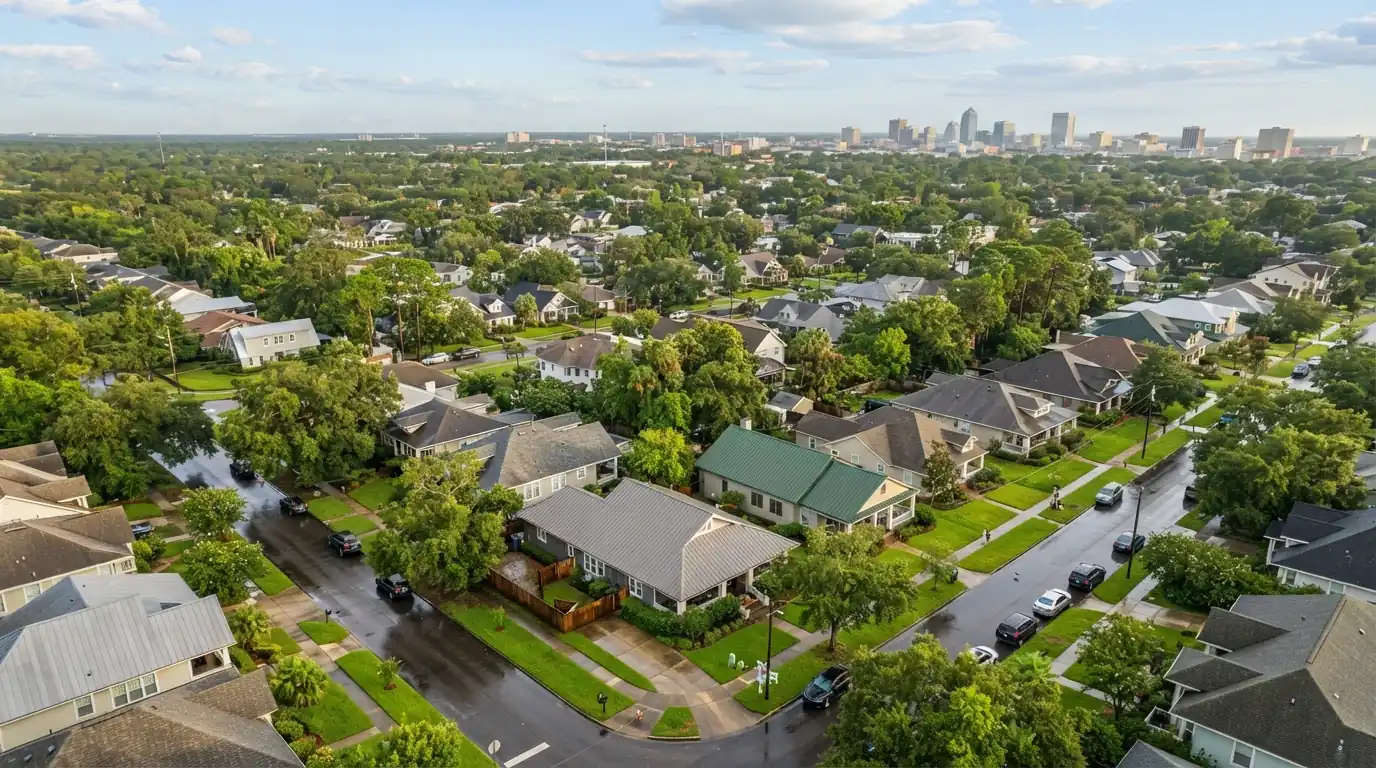
Jacksonville, FL · Storm & Emergency
Storm damage roof repair across Jacksonville
Updated September 2026
After a storm, the damage you can see from the yard is usually only part of it. Creased shingles, lifted flashing and cracked decking hide until the next rain finds them. We check the whole roof, photograph it, and repair what the storm actually did.
- Calls answered 24/7
- Photos before anything is disturbed
- Temporary dry-in the same visit
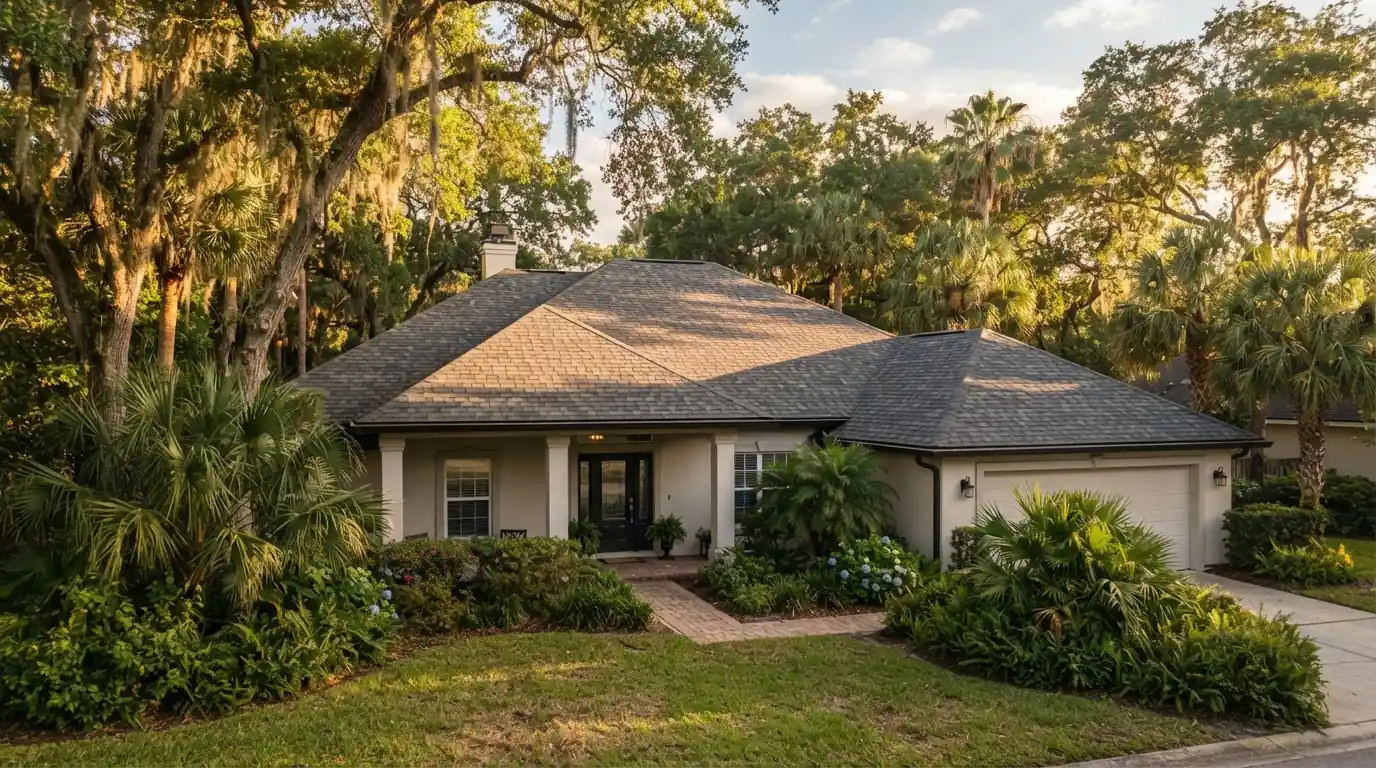
Storm damage roof repair in Jacksonville, FL starts with a full-roof inspection and photos, because wind creases shingles and breaks their seal without tearing them off. Open areas get a temporary dry-in; permanent repairs follow with matching materials and code fastening, and a roof built to the 2007 Florida Building Code or later can be repaired past 25 percent of a section without full replacement.
What to look for
Signs of storm damage you can check from the ground
Shingles in the yard or gutters
Pieces on the ground mean pieces missing from the roof.
Lifted or missing ridge caps
The ridge takes the most wind and fails first.
Granules piling at downspouts
A sudden heap after a storm points to hail or wind scouring.
Dented vents, gutters or flashing
Soft metal shows hail size and where debris hit.
New stains or drips inside
Wind-driven rain found a way in, even if the roof looks intact.
Step by step
How a storm damage call runs
- 1
Call any hour
Tell us what happened and whether water is coming in.
- 2
Make it safe
Temporary dry-in over anything open, once the wind allows.
- 3
Full-roof inspection
Every slope, flashing and vent checked, not just the obvious spot.
- 4
Photos and written scope
Damage photographed in place, with a repair or replacement scope.
- 5
Permanent repair
Matching materials, high-wind fastening, reflashed details.
- 6
Final photos
The finished repair photographed for your records.
Beyond the missing shingles
What storms actually do to a Jacksonville roof
Wind lifts the edge of a shingle, bends it back and drops it. The shingle looks fine from the ground, but it is creased across its width and its sealant strip has let go, so the next gust takes it. Multiply that across a slope and a roof that survived the storm can start shedding shingles weeks later.
Limbs, flying debris and hail add impact damage, and rain driven sideways pushes water under flashing that sheds a vertical downpour without trouble. We look for all of it on every slope, not just the side the wind came from.
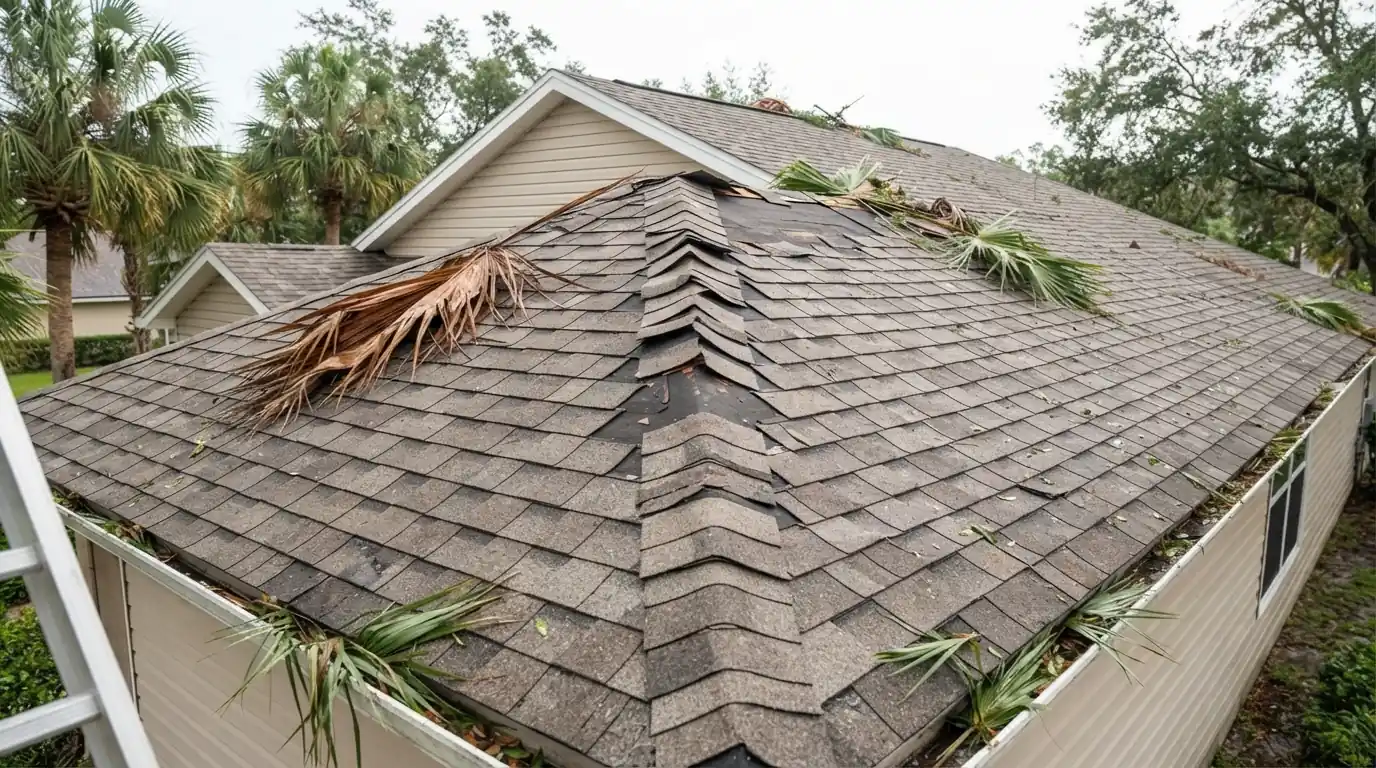
Storm Damage Roof Repair
Hurricane and tropical storm wind damage
Tropical systems bring hours of sustained wind rather than one gust, and that is what peels roofs from the edges in: drip edge, rake shingles and ridge caps first, then whole courses. We replace creased and missing shingles, reset or replace ridge caps, and refasten edge metal, following the high-wind nailing pattern so the repair is stronger than what failed.
Where the deck is exposed, we check it for cracks and pulled fasteners and re-nail it before new underlayment goes down.
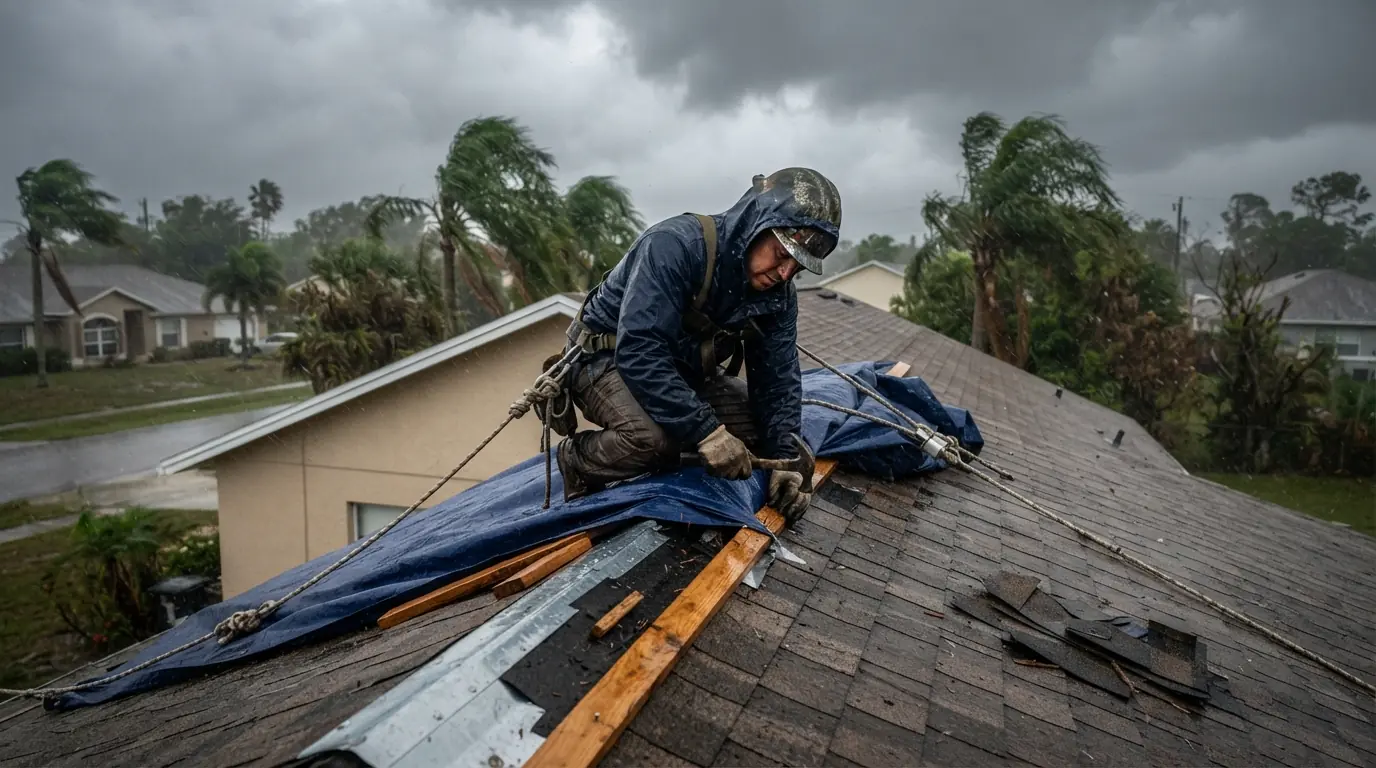
Storm Damage Roof Repair
Hail bruising and granule loss
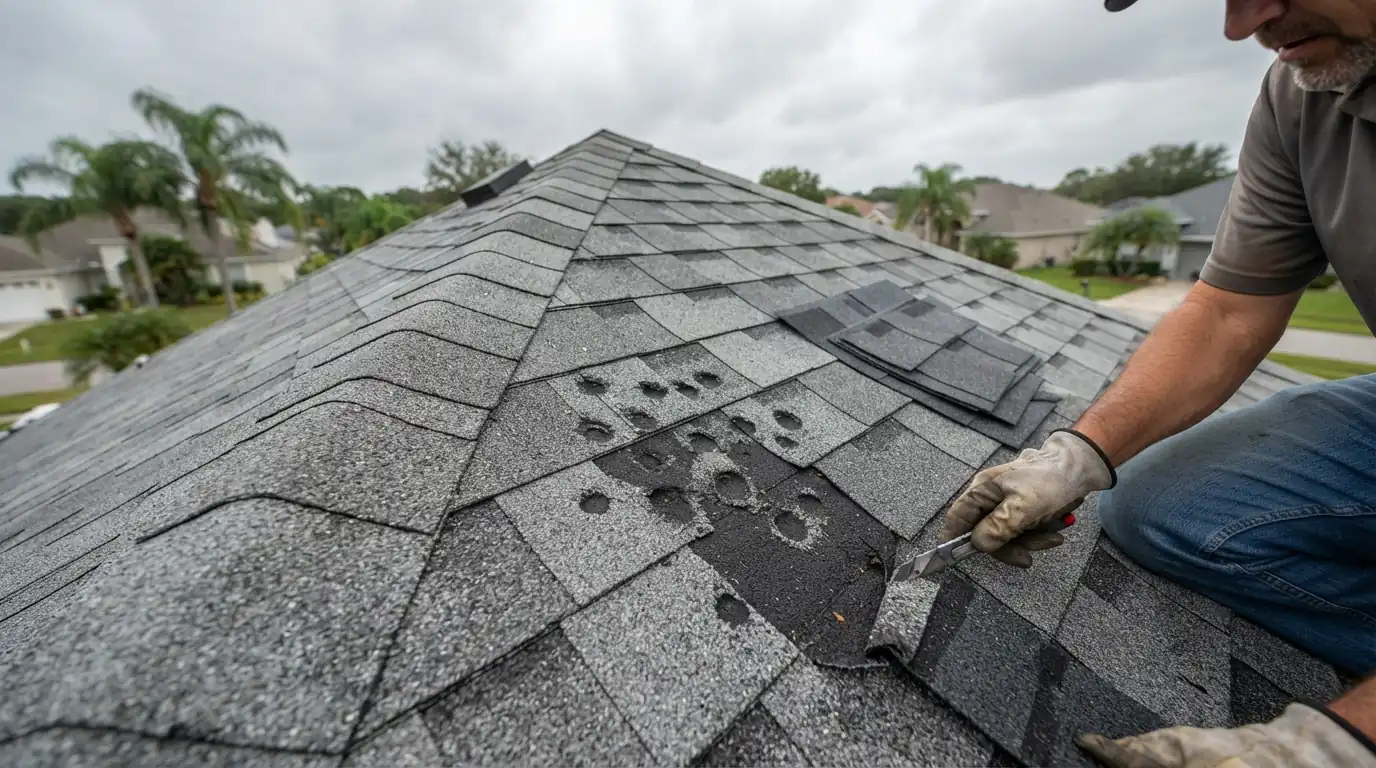
Hail is less common here than wind, but when it falls it bruises shingles, cracking the mat under the granules, and knocks granules loose. From the ground a hail-hit roof often looks normal; up close there are dark spots where granules are gone and soft spots that give under a thumb. Soft metal such as vents, gutters and flashing shows dents that confirm the size of the hail.
We mark and photograph each hit, slope by slope, so the damage is documented before repairs begin.
Storm Damage Roof Repair
Lightning strike damage
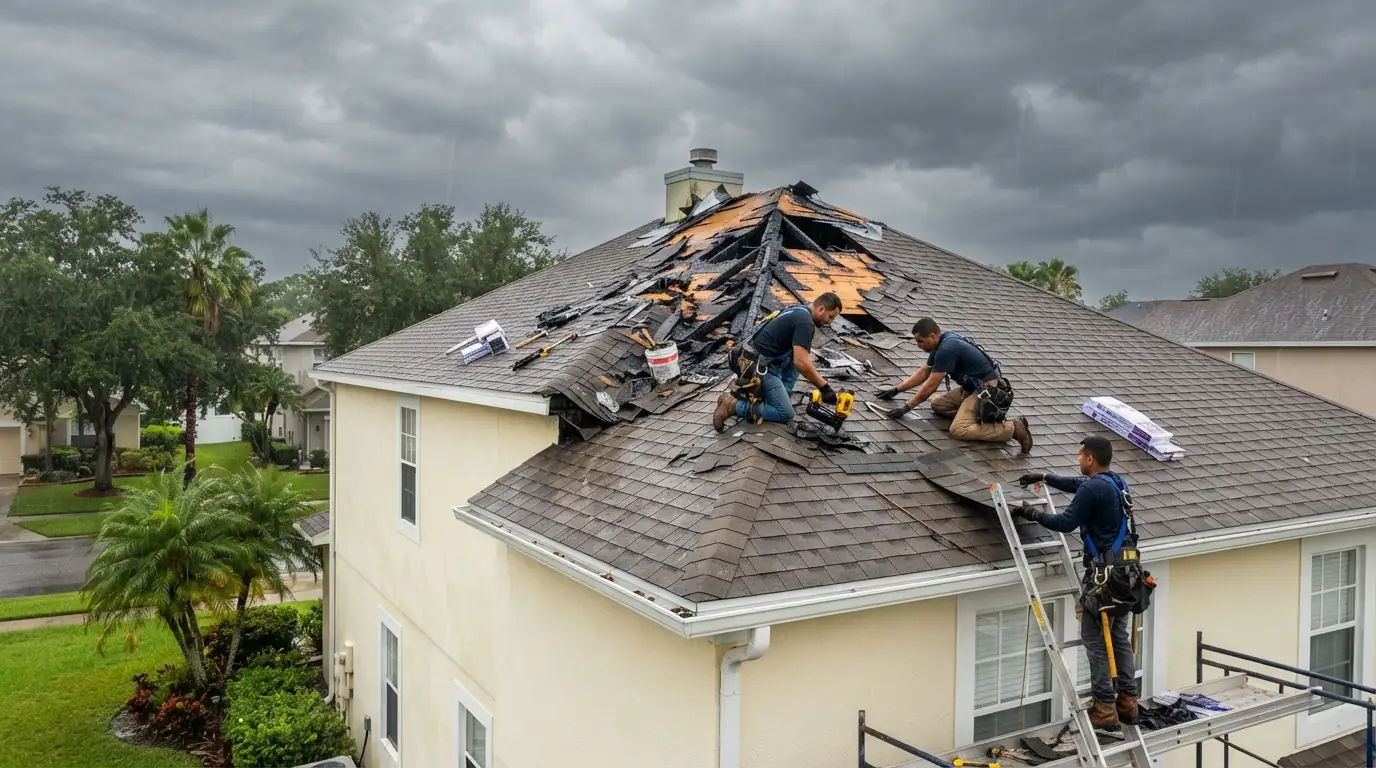
A direct strike can blow a hole through shingles and decking, crack tile, scorch the underside of the deck, and damage the attic around the point of entry. It also travels, so we check nearby flashing, vents and metal for burn marks well away from the obvious hole, and look at the rafters near the entry point from the attic.
Any scorching inside the attic should also be checked by the fire department or an electrician before the roof is closed up.
Storm Damage Roof Repair
Wind-driven rain intrusion
Some storm leaks come from water, not wind damage. Rain driven sideways at high speed gets pushed up under shingle laps, behind step flashing and through ridge and box vents that shed ordinary rain perfectly well. The roof looks undamaged, yet the ceiling stains. We trace these leaks to the flashing or vent that let the water in, then reseal, reflash or replace it with a wind-rated vent where one is available.
A secondary water barrier on the deck is the long-term answer, and it is part of a wind mitigation upgrade.
Roofing in Jacksonville
The storms Jacksonville roofs actually see
Jacksonville does not need a landfall to take roof damage. During Hurricane Milton in October 2024 the Weather Service recorded a 61 mph gust at Naval Station Mayport and a large tree down across Marbon Road in Mandarin, far from where the storm came ashore. Summer does its own work: one NWS Jacksonville seasonal report counted thunderstorms on 60 days of a single June to August stretch, which is why we check for damage after ordinary summer storms too, not only after named ones.
Storm just passed?
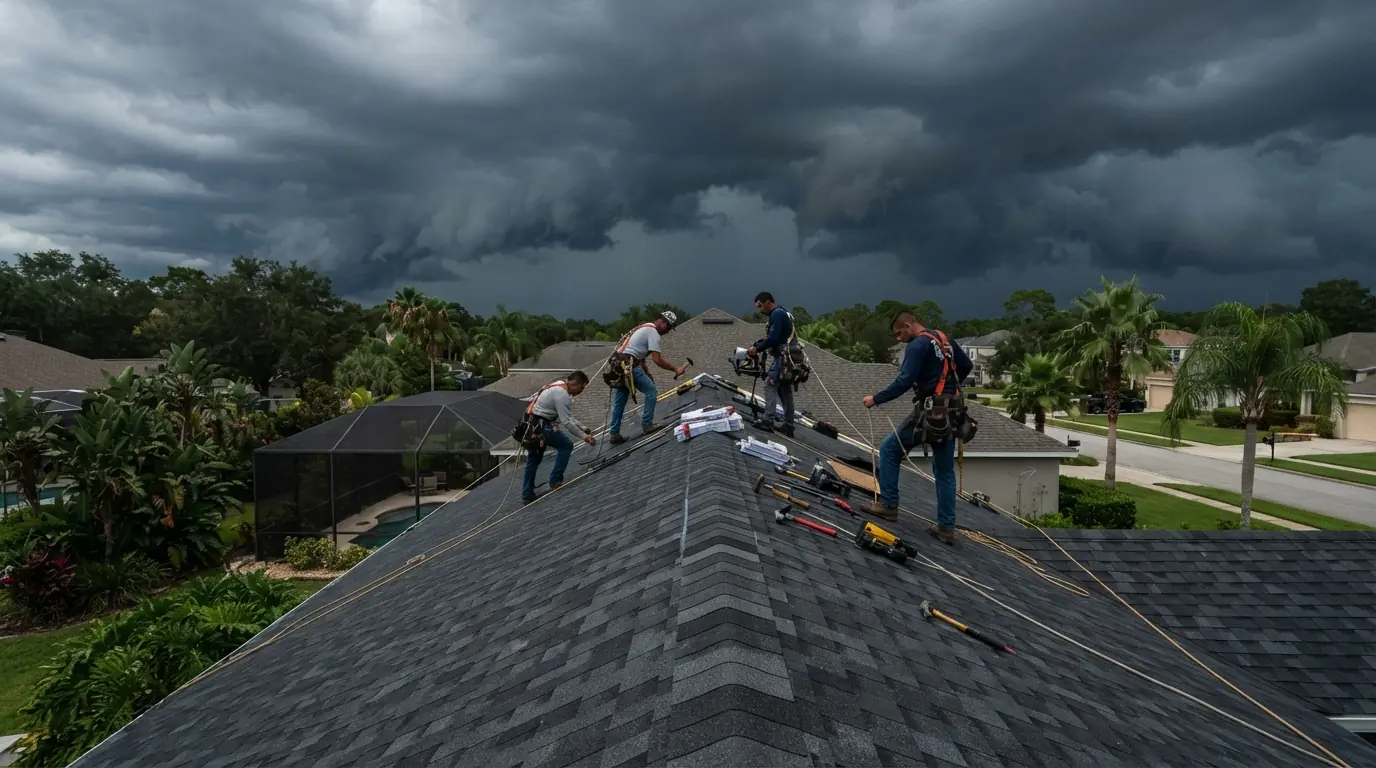
Call now. We photograph the damage before anything is moved and dry in whatever is open.
We install and repair the lines Northeast Florida suppliers stock, from GAF, Owens Corning and CertainTeed shingles to Eagle concrete tile and Carlisle TPO.
- GAF
- Owens Corning
- CertainTeed
- TAMKO
- Atlas Roofing
- IKO
- Gulf Coast Supply
- Eagle Roofing Products
- Westlake Royal
- Polyglass
- Carlisle
- Johns Manville
- Englert
- VELUX
Cost factors
What decides the cost of a storm repair
Extent across the roof
A few shingles is a short repair; damage on every slope may point to replacement.
Material matching
Current shingle lines match easily; discontinued colors take sourcing.
Decking and flashing
Cracked decking and bent flashing add carpentry and metal work.
Timing after a storm
Crews and materials are stretched after a big storm, which affects scheduling.
The range above is a published Jacksonville repair figure, not our quote. Storm repairs are priced after the full-roof inspection.
Questions we hear
Storm damage questions
As soon as it is safe, and before the next rain if you can. Creased shingles and lifted flashing get worse with each storm.
Yes. Wind creases shingles and breaks their seal without tearing them off, and hail bruises can be invisible from the yard.
Not necessarily. Since SB 4-D in 2022, a roof built to the 2007 Florida Building Code or later can have more than 25 percent of a section repaired without replacing the rest.
We answer any hour and dry in as soon as it is safe to climb. See emergency roof tarping.
Yes. Every damaged area is photographed in place before repairs, and you keep the photos and the written scope.
Related work
Other storm and emergency work we do in Jacksonville
Emergency Roof Repair
Covers after-hours leak response, tree and limb impact repair, wind-torn shingle and panel repair.
Read the detailsEmergency Roof Tarping
Covers tarp and batten dry-in, roof shrink wrap, interior water catch and containment.
See how it worksRoof Leak Repair
Covers ceiling stain leak tracing, valley leak repair, pipe boot and vent leak repair.
Learn moreGet the whole roof checked after the storm
Call any hour. We repair wind, hail and lightning damage across Jacksonville and answer 24/7.