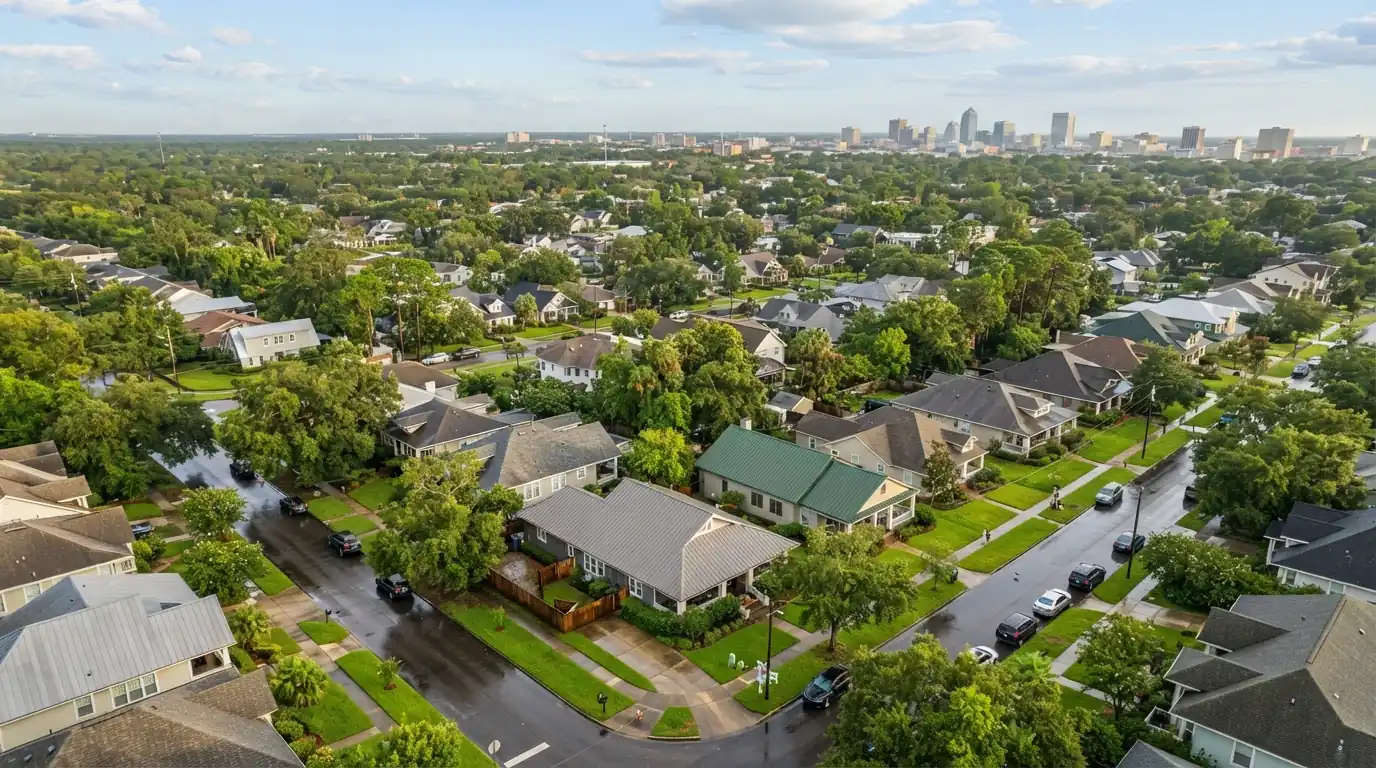
Jacksonville, FL · Roof Repairs
Chimney, wall and valley flashing repair in Jacksonville
Updated September 2026
Flashing is the metal that keeps water out where the roof meets something else: a chimney, a wall, a valley, the edge. It is where most roofs leak first, and where caulk is most often used instead of a real fix.
- Calls answered 24/7
- Metal flashing, not caulk
- Chimney crickets rebuilt
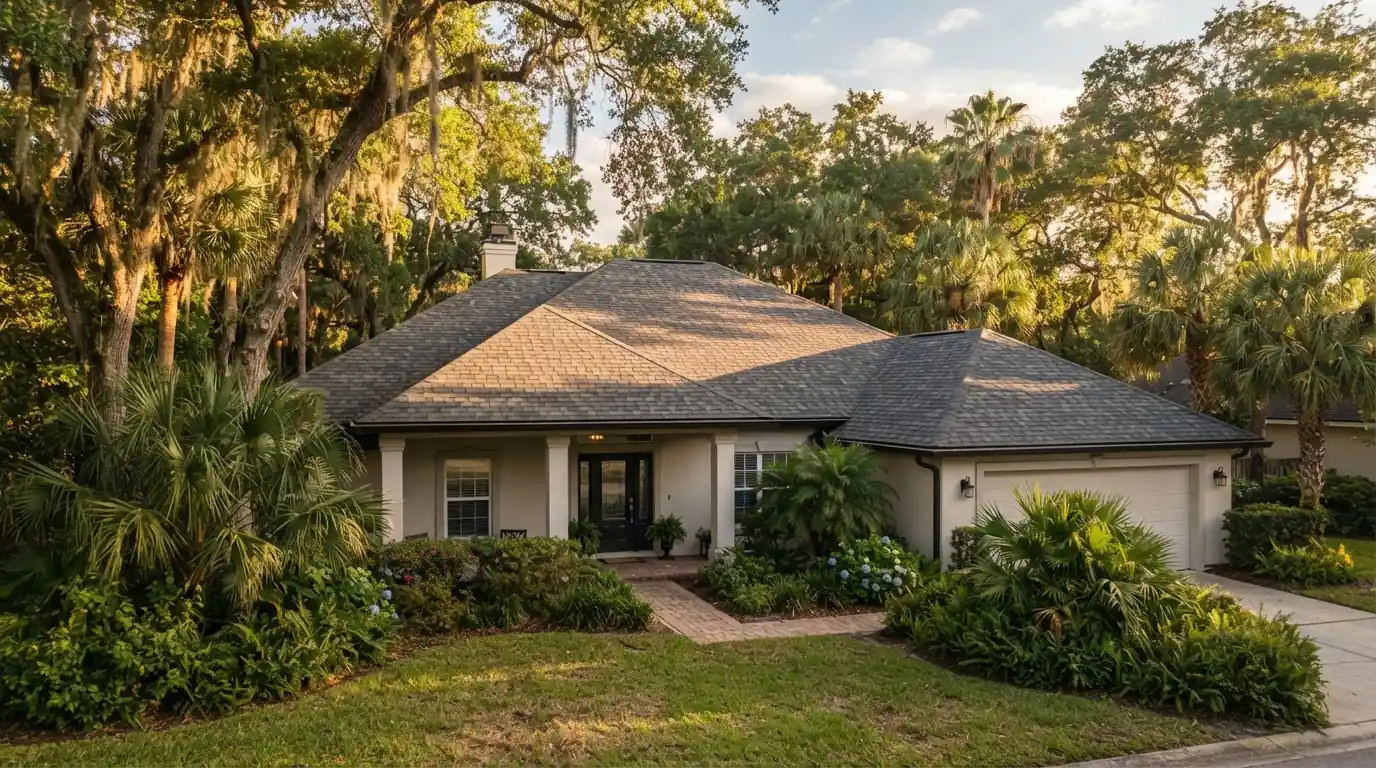
Roof flashing repair in Jacksonville, FL replaces the metal at roof joints that has lifted, rusted or been sealed with caulk: chimney step flashing, counterflashing and crickets, step flashing where the roof meets a wall, drip edge along eaves and rakes, and valley metal. New flashing is lapped so water always runs over the next piece, never into a seam.
What to look for
Signs of flashing trouble
Stains on the ceiling near a chimney
The most common flashing leak point.
Caulk or tar where metal should be
A sign of a past patch instead of a repair.
Rust streaks below metal
Flashing that is rusting through.
Stains on an outside wall below a roof line
Step flashing trouble or a missing kick-out.
Lifted metal at the roof edge
Drip edge that wind can get under.
Step by step
How a flashing repair runs
- 1
Trace the leak
Attic and roof checked at every joint near the stain.
- 2
Photograph the failure
Before anything is removed.
- 3
Open the joint
Shingles, siding or trim removed as needed.
- 4
Rebuild in metal
Step, counter, cricket, valley or drip edge, lapped correctly.
- 5
Close up
Roof covering and siding reset.
- 6
Water test
Hose test at the repaired joint.
Where roof meets wall
Why flashing fails before the roof does
Shingles and panels shed water on an open slope. Wherever the slope meets a chimney, a wall or another slope, metal flashing has to guide the water around the joint. It moves as the house expands and contracts, it rusts, and on many roofs it was never installed right in the first place.
The telltale sign is a bead of caulk or roof cement where metal should be. Sealant works for a season; lapped metal works for the life of the roof. We replace flashing with metal pieces that overlap in the direction water runs, and use sealant only where the manufacturer's detail calls for it.
Roof Flashing Repair
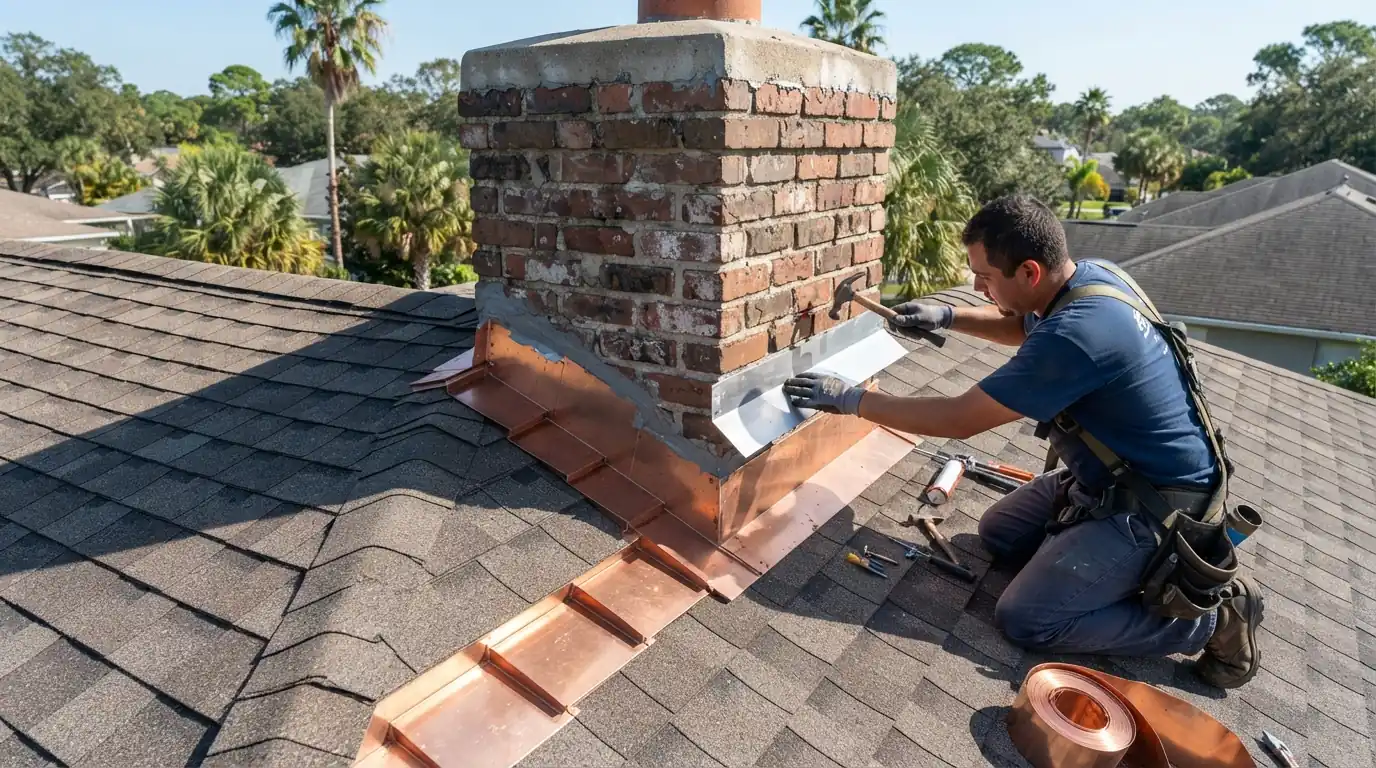
Chimney flashing and cricket repair
A chimney needs step flashing woven into the shingles up both sides, counterflashing set into the mortar joints and lapped over the steps, a front apron, and on wider chimneys a cricket behind it to split the water. We rebuild whichever of those has failed, grind new reglets into the mortar for counterflashing instead of surface-mounting it, and build or replace the cricket with its own flashing.
Cracked chimney crowns and loose masonry are flagged for a mason when we find them.
Typical market range for chimney and skylight flashing repair, Jacksonville: $1,200 to $2,500 (source). A planning figure, not a quote.
Roof Flashing Repair
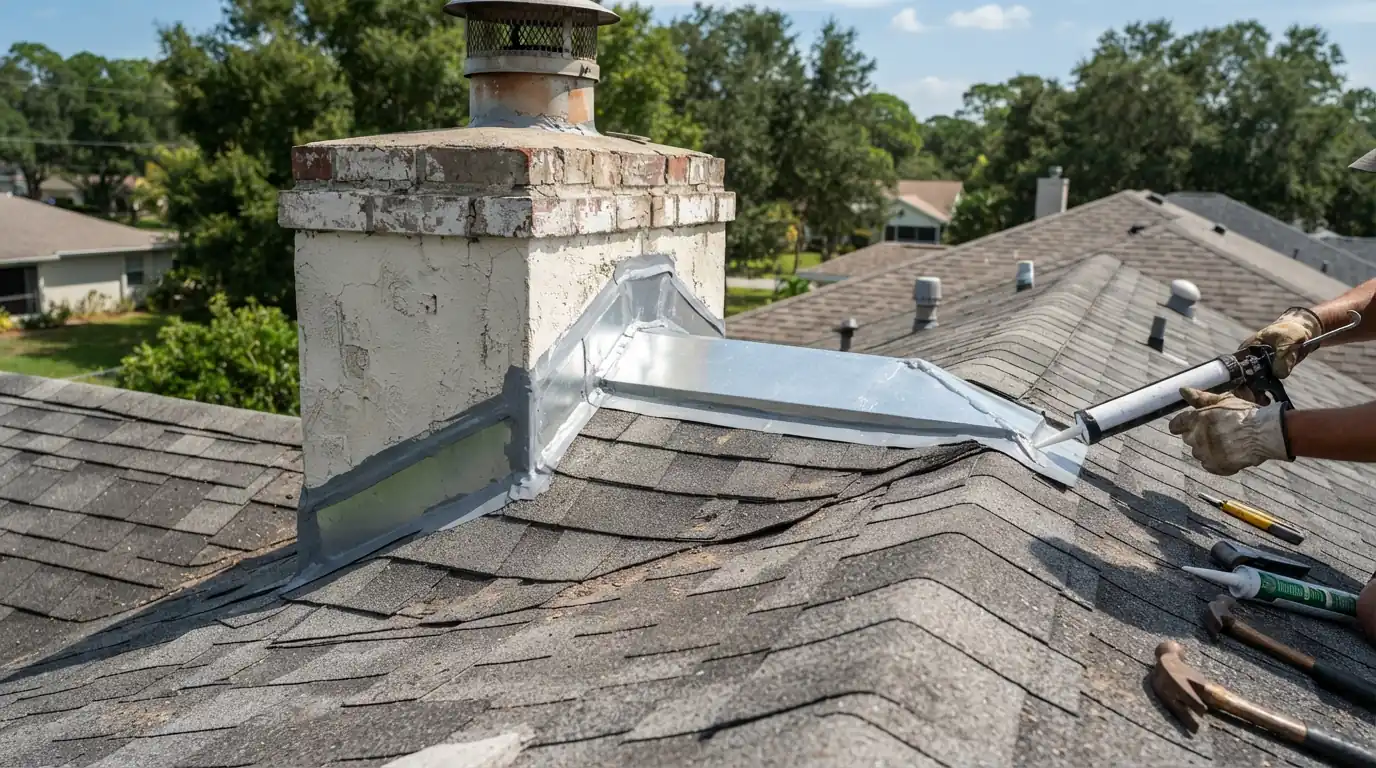
Step and wall flashing repair
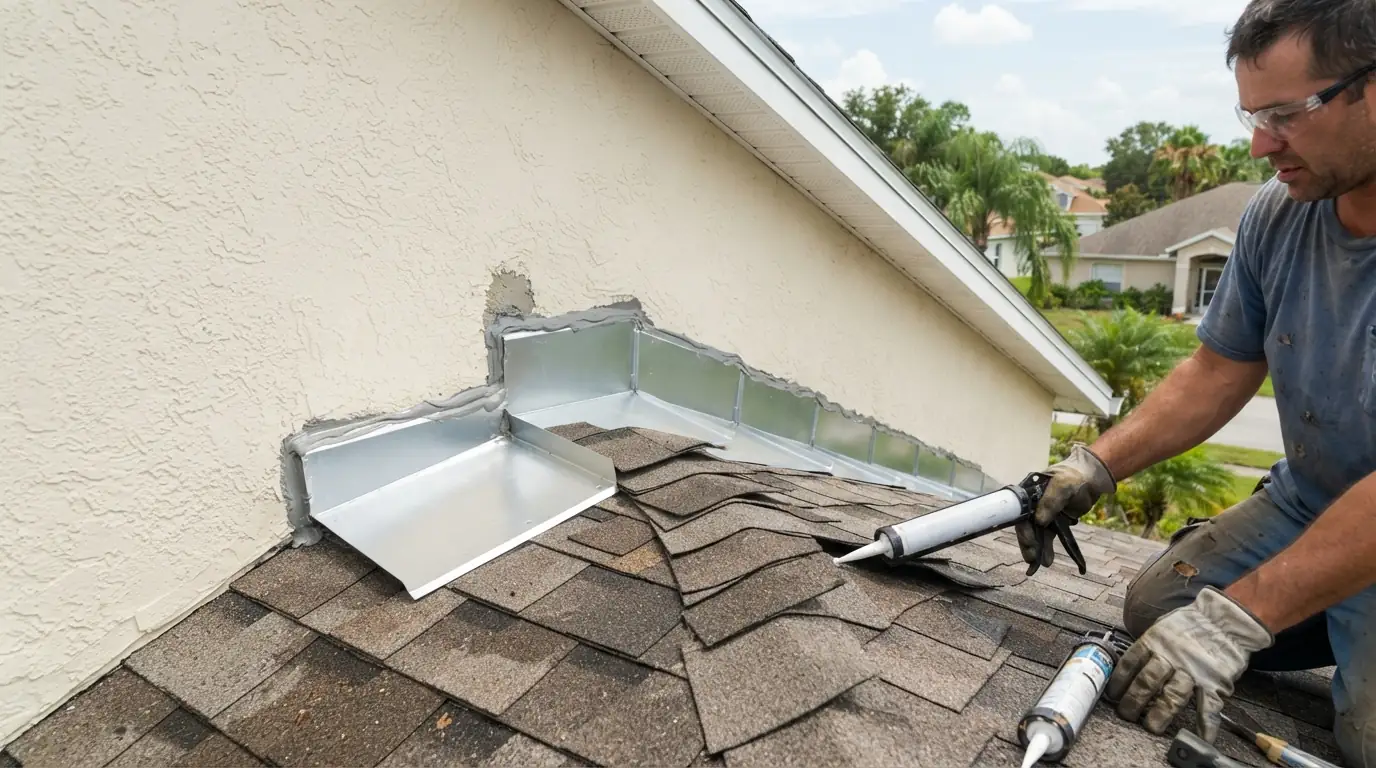
Where a roof slope runs into a sidewall, each course of shingles gets its own L-shaped step flashing tucked under the siding or stucco. Missing steps, a single long piece of bent metal, or siding cut tight to the shingles all let water behind the wall. We remove the lower course of siding or trim as needed, install proper step flashing and a kick-out at the bottom, and reset the siding.
The kick-out turns water into the gutter instead of down the wall behind it.
Roof Flashing Repair
Drip edge replacement
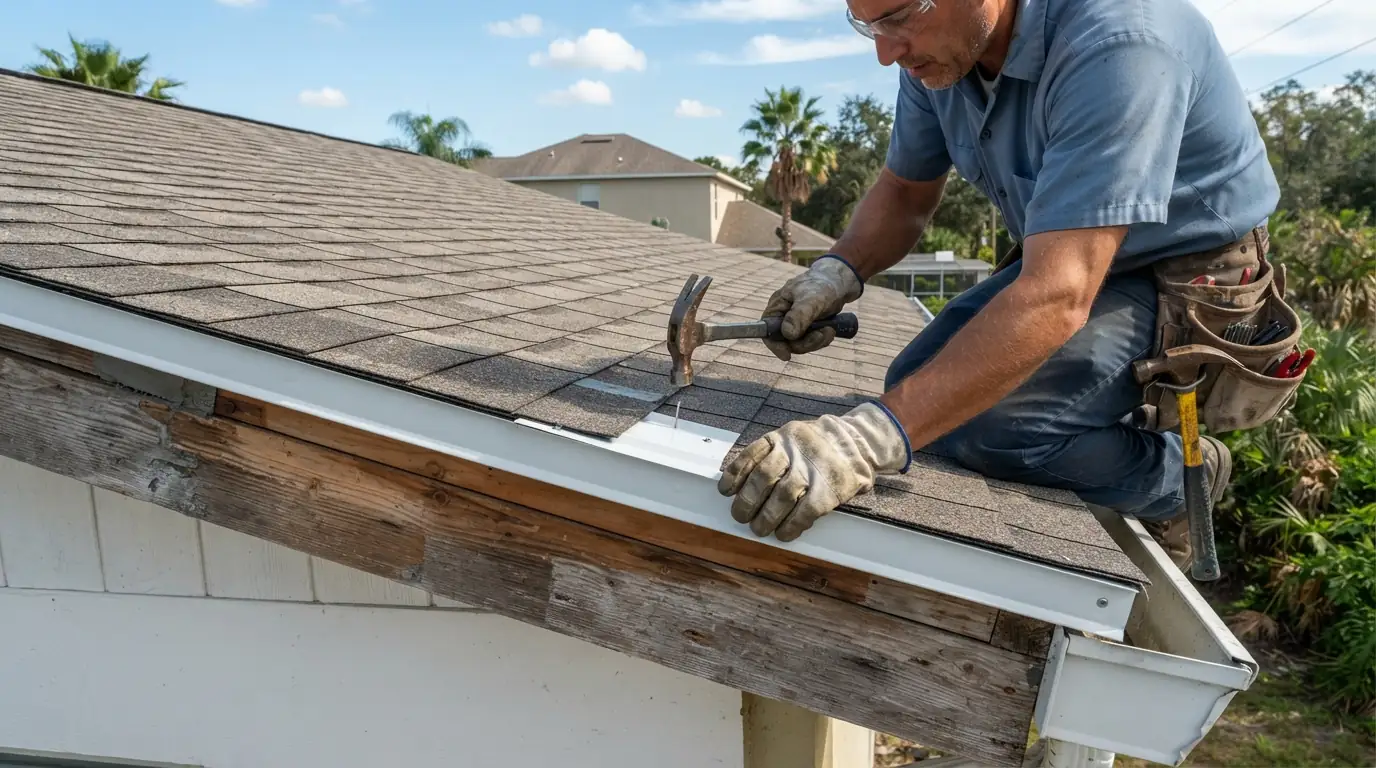
Drip edge is the metal along the eaves and rakes that carries water past the fascia and holds the shingle edge against wind. Missing or rusted drip edge lets water wick back onto the fascia and under the first course, and leaves the roof edge easier for wind to peel. We replace it with continuous metal lapped correctly under or over the underlayment, depending on the edge.
Rotted fascia found behind it is repaired at the same time; see fascia and soffit repair.
Roof Flashing Repair
Valley metal replacement
Open valleys use a metal channel between the two slopes. When that metal rusts through, is too narrow, or has shingles cut short over it, the valley leaks in heavy rain. We lift the shingles along both sides, remove the old metal, lay new underlayment and a wider, heavier valley metal, and trim the shingles back to a clean line with the corners clipped so water cannot track under them.
Closed and woven valleys are repaired to match the rest of the roof.
Roofing in Jacksonville
Flashing, wind-driven rain and Jacksonville's older houses
Flashing is tested by sideways rain. During Irma the Weather Service logged gusts of 69 to 74 mph at Mayport and NAS Jacksonville, the kind of wind that pushes water uphill under laps that shed ordinary rain. On older houses in the historic districts, including Riverside Avondale and Springfield, chimney and wall flashing counts as exterior work, and a Certificate of Appropriateness is required for exterior work there, so the repair is planned with that step in mind.
Do it yourself?
What you can check, and what needs a roofer
| Task | Homeowner | Roofer |
|---|---|---|
| Looking for stains and rust | From inside and from the ground | Not needed |
| Resealing caulk | A stopgap only, and only from a safe ladder | Replacing it with lapped metal |
| Chimney crown cracks | Spot them from the ground with binoculars | Flashing; the crown itself is mason's work |
| Siding at the roof line | Watch for staining | Step flashing and kick-out behind it |
Sealant over a failed flashing buys a season. Plan the permanent repair before the next storm.
Cost factors
What decides the cost of flashing work
Which joint
Drip edge is quick; a chimney with a cricket is the biggest flashing job.
Masonry
Counterflashing set into mortar takes grinding and repointing.
Siding or stucco
Wall flashing may mean removing and resetting a course of siding.
Damage behind it
Wet sheathing or framing found at the joint is repaired first.
The ranges above are published figures for flashing work, not our quote.
Questions we hear
Flashing questions
Wind direction. Driven rain gets behind loose counterflashing or over a missing cricket when it hits the chimney from one side.
Yes. The roof is opened around the joint, the flashing replaced, and the roof closed back up.
As a temporary seal, or where a manufacturer's detail calls for sealant with the metal. Never as the flashing itself.
We handle the flashing and cricket. Cracked crowns and loose brick are flagged for a mason.
A small angled piece at the bottom of a roof-to-wall joint that turns water into the gutter instead of down the wall.
Related work
Other storm and emergency work we do in Jacksonville
Shingle Roof Repair
Covers missing and blown-off shingle replacement, lifted and creased shingle repair, ridge cap repair.
Read the detailsMetal Roof Repair
Covers backed-out fastener and washer replacement, standing seam leak repair, rust and coating failure.
See how it worksTile Roof Repair
Covers cracked and slipped tile replacement, underlayment failure under tile, ridge and hip mortar repair.
Read the detailsReplace the caulk with real flashing
Call any hour. We repair chimney, wall, valley and edge flashing across Jacksonville and answer 24/7.