Jacksonville, FL · Inspection & Protection
Radiant barrier installation for Jacksonville attics
Updated September 2026
In a Jacksonville summer the roof deck gets hot enough to radiate heat down onto the attic insulation all afternoon. A radiant barrier reflects most of that heat back before it reaches the insulation. It is cheapest to add during a reroof, and it can be added to an existing attic too.
- Calls answered 24/7
- Radiant barrier decking on reroofs
- Attic foil for existing roofs
Radiant barrier installation in Jacksonville, FL means adding a reflective foil layer that faces an air space under the roof, either as radiant barrier roof decking installed during a reroof or as perforated foil stapled to the underside of the rafters in an existing attic. Florida Solar Energy Center measurements show it can cut heat gain through an R-19 insulated ceiling by over 40 percent.
Reflect, not insulate
How a radiant barrier works
A hot roof deck radiates heat downward onto the insulation below, which slowly passes it into the ceiling and the rooms beneath. A radiant barrier is a low-emittance foil that faces the attic air space and blocks most of that radiated heat. It does not replace insulation; it keeps the insulation from being baked from above.
It only works facing an open air space, and it works best in a hot, sunny climate with ductwork in the attic, which describes most Jacksonville houses. It works with ventilation, not instead of it.
Cost factors
What decides the cost of a radiant barrier
Reroof or retrofit
Radiant barrier decking during a reroof costs little extra; attic retrofits take more labor.
Attic size and access
Tight or low attics take longer to cover.
Foil type
Perforated foil suits humid attics and costs a little more.
Ventilation fixes
Blocked soffits or mixed exhaust are corrected alongside.
We price radiant barriers inside a reroof estimate where possible, or after seeing the attic.
Radiant Barrier Installation
Radiant barrier roof decking
The simplest way to add a radiant barrier is during a reroof, when the old deck is being replaced or repaired. Radiant barrier sheathing is plywood or OSB with a foil face laminated to the underside; it installs like ordinary decking, with the foil facing down into the attic. On a full reroof with new decking, the added cost over plain sheathing is small.
Where the existing deck is sound and staying, foil is added from the attic instead, rather than replacing good wood.
Radiant Barrier Installation
Attic radiant barrier foil
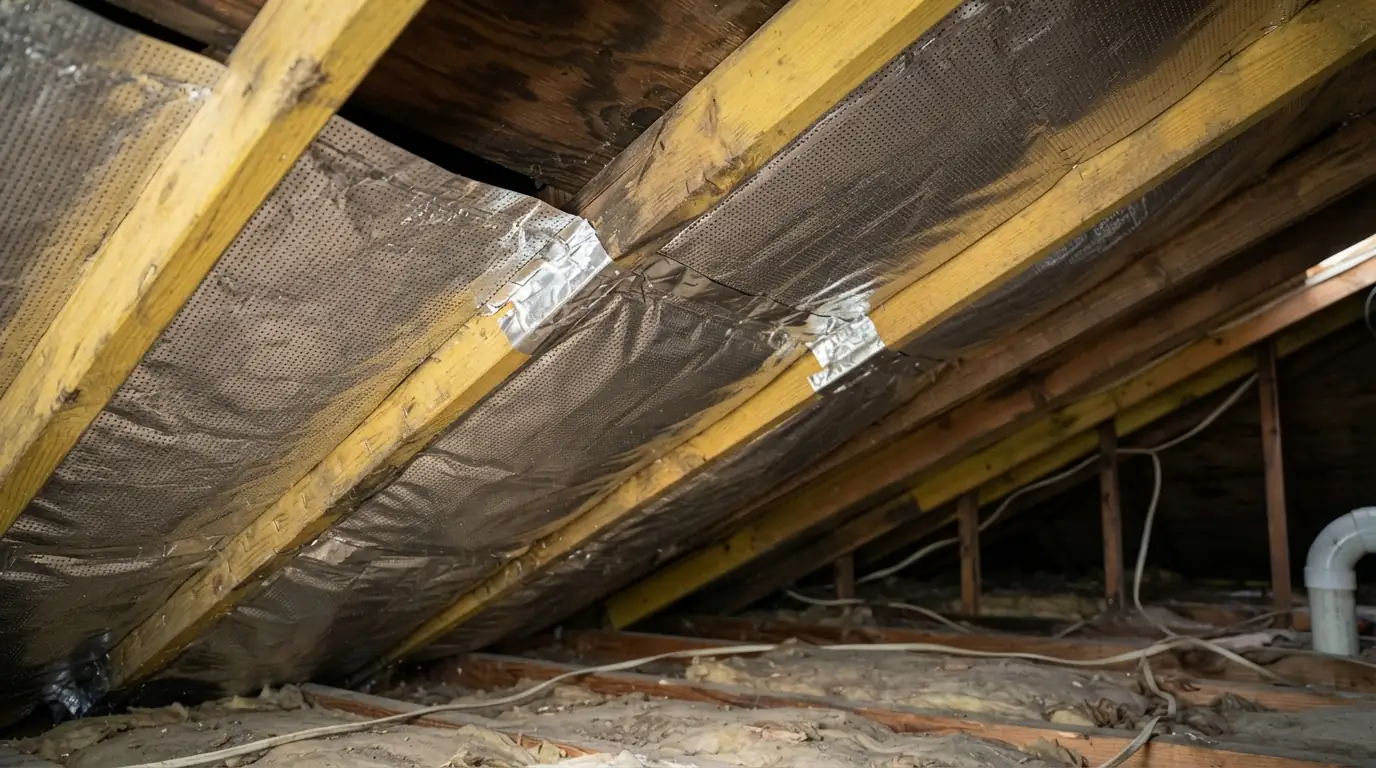
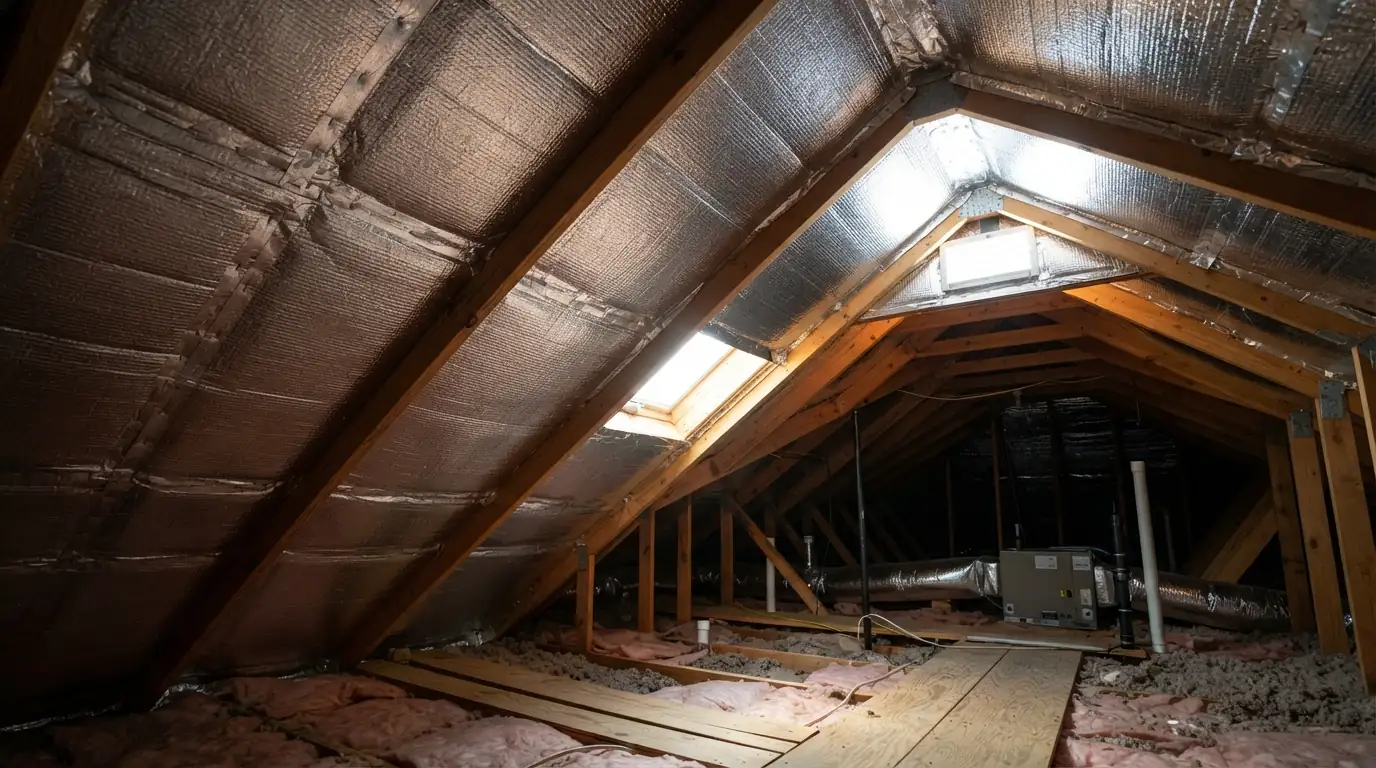
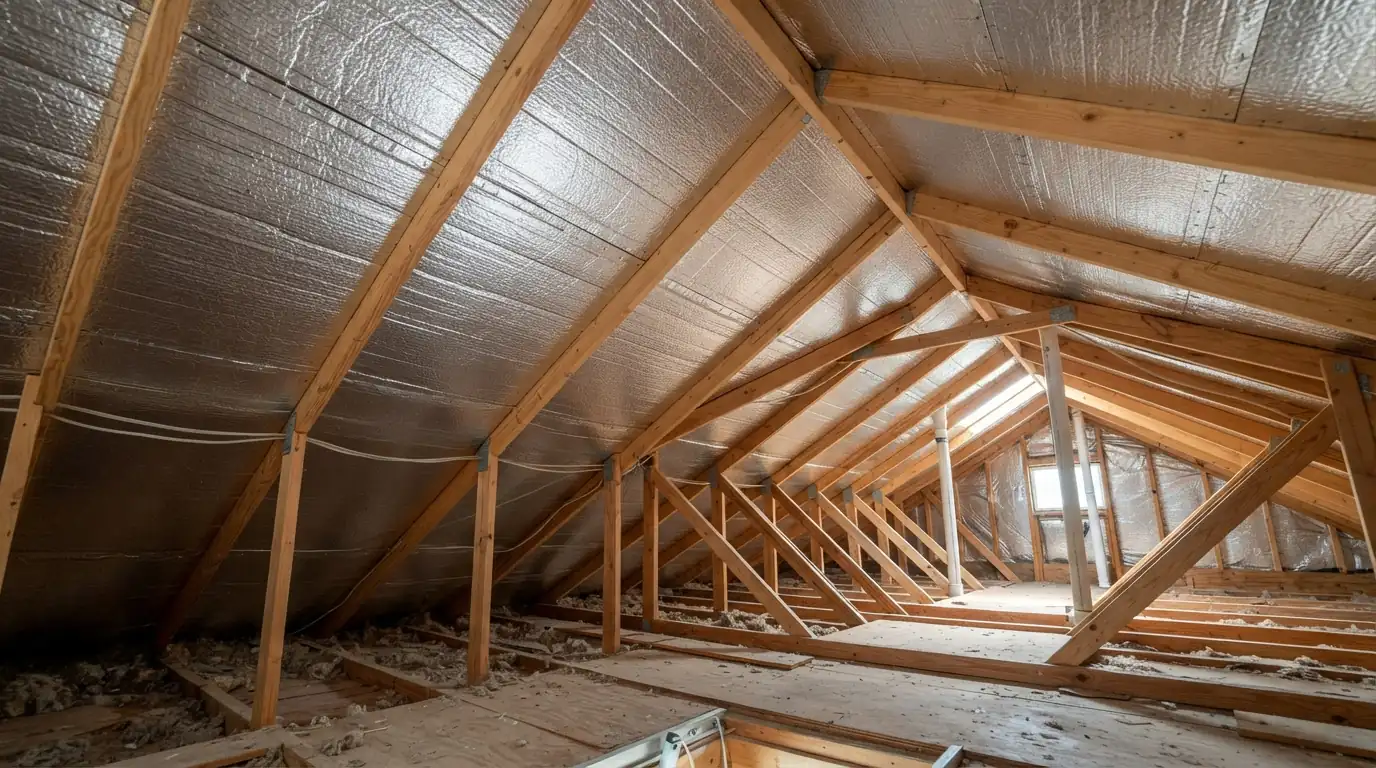
In an existing attic, perforated radiant barrier foil is stapled to the underside of the rafters or truss top chords, leaving an air gap between the foil and the deck. Perforated foil lets moisture pass, which matters in a humid climate. Foil laid on top of the insulation also works at first, but dust settles on it over the years and cuts its effect.
Attics with tight access or low slopes limit how much can be covered, and we tell you what is practical before quoting.
Radiant Barrier Installation
Radiant barriers and ventilation
A radiant barrier keeps the attic floor cooler, but the heat stays in the attic air until ventilation removes it. Balanced intake at the soffits and exhaust at the ridge let that air out. Without it a radiant barrier does less, and the deck runs slightly hotter, so we check the ventilation at the same time and fix blocked soffits or mixed exhaust.
The two together do more than either alone; see roof ventilation for how intake and exhaust are balanced.
Your options
Radiant barrier, more insulation, or both
| Radiant barrier | More attic insulation | |
|---|---|---|
| What it does | Reflects radiant heat from the hot deck | Slows heat moving through the ceiling |
| Best in | Hot, sunny climates with attic ducts | Any climate, especially over thin insulation |
| Easiest time | During a reroof, as barrier decking | Any time, from inside the attic |
| Works with | Insulation and ventilation | A radiant barrier and ventilation |
They do different jobs. In Jacksonville attics, the two together usually do more than either alone.
Step by step
How a radiant barrier job runs
- 1
Attic check
Access, insulation, ducts and ventilation inspected.
- 2
Choose the method
Barrier decking during a reroof, or foil in the attic.
- 3
Fix ventilation
Soffits opened and exhaust balanced if needed.
- 4
Install
Decking with the foil face down, or foil under the rafters.
- 5
Keep clearances
Foil kept clear of vents, flues and fixtures.
- 6
Photos
Coverage photographed for your records.
Roofing in Jacksonville
What the Florida research shows, and when to add it
The Florida Solar Energy Center has measured radiant barriers cutting heat gain through R-19 insulated ceilings by over 40 percent. Its own advice keeps that in proportion: if the ceiling is 20 percent of a home's cooling load, the saving is about 8 percent of total cooling. Timing matters for cost too. Most residential reroofs in Jacksonville are completed in one to two days, and adding radiant barrier decking during one is the cheapest point to do it.
Timing
How long installation takes
On a reroof, radiant barrier decking goes down as part of the deck work and adds little time to the job. In an existing attic, the time depends on the attic's size, height and access more than anything else: a roomy attic goes quickly, a low, cramped one slowly. We tell you which yours is after looking.
Questions we hear
Radiant barrier questions
Yes. They work best in hot, sunny climates with ductwork in the attic, which describes most homes here.
It depends on how much of your cooling load comes through the ceiling. Florida research puts the saving around 8 percent of cooling when the ceiling is a fifth of the load.
Usually, since the added cost over plain decking is small when the deck is being replaced anyway.
No. It reflects radiant heat; insulation slows conducted heat. They work together.
Perforated foil lets moisture pass, which is why it is used in humid attics, alongside proper ventilation.
Related work
Other inspection and protection work
Roof Inspection
Covers annual roof checkup, pre-purchase roof inspection, post-storm inspection.
Learn moreRoof Certification for Insurance
Covers roofs 15 years and older, remaining useful life letters, condition repairs before certification.
Read the detailsRoof Maintenance
Covers pre-hurricane season tune-up, valley and debris clearing, sealant and fastener renewal.
See how it worksTake the heat off the attic
Call any hour. We install radiant barriers on reroofs and in attics across Jacksonville and answer 24/7.