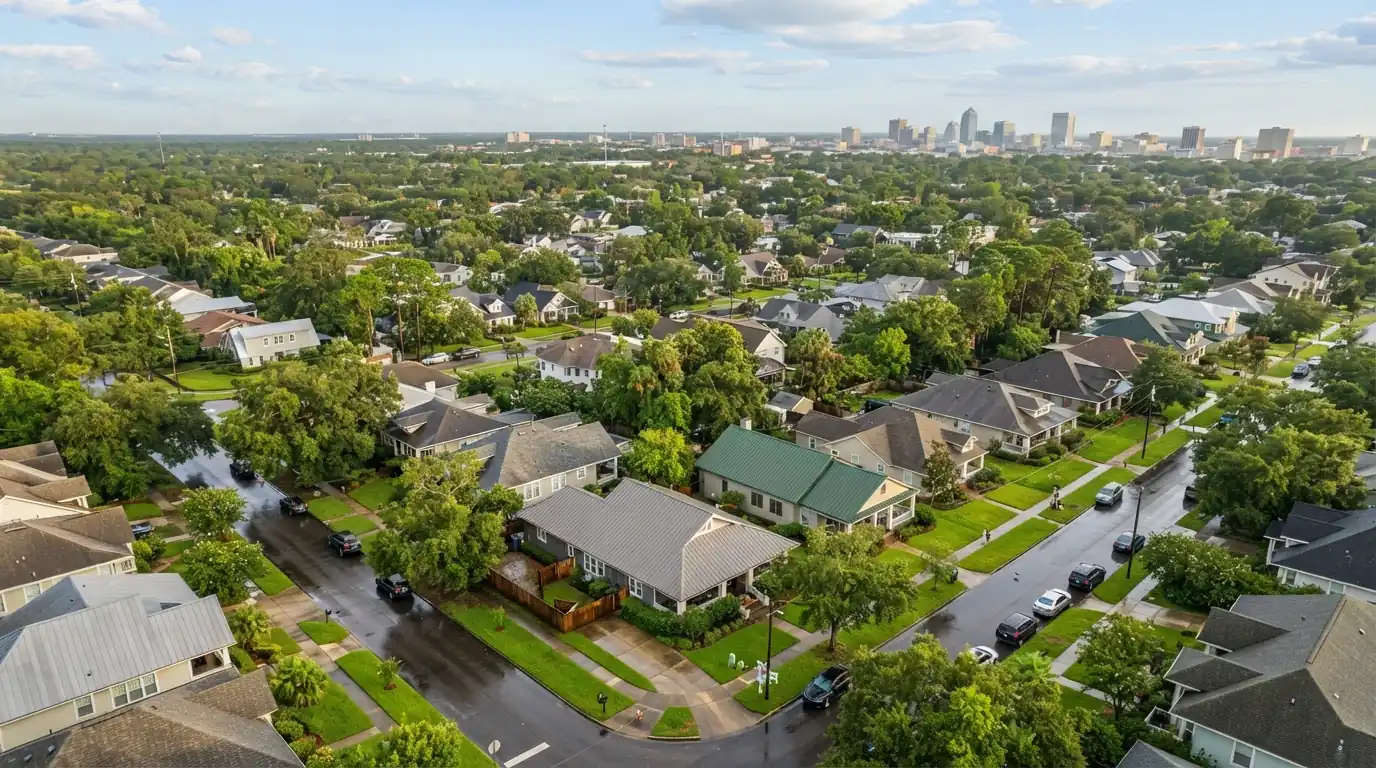
Jacksonville, FL · Flat & Commercial
Condo, townhome and HOA reroofing in Jacksonville
Updated September 2026
A community reroof is a scheduling and communication job as much as a roofing job. We phase the work building by building, keep residents informed, and give the board photo reports it can vote on.
- Calls answered 24/7
- Building-by-building phasing
- Photo reports for the board
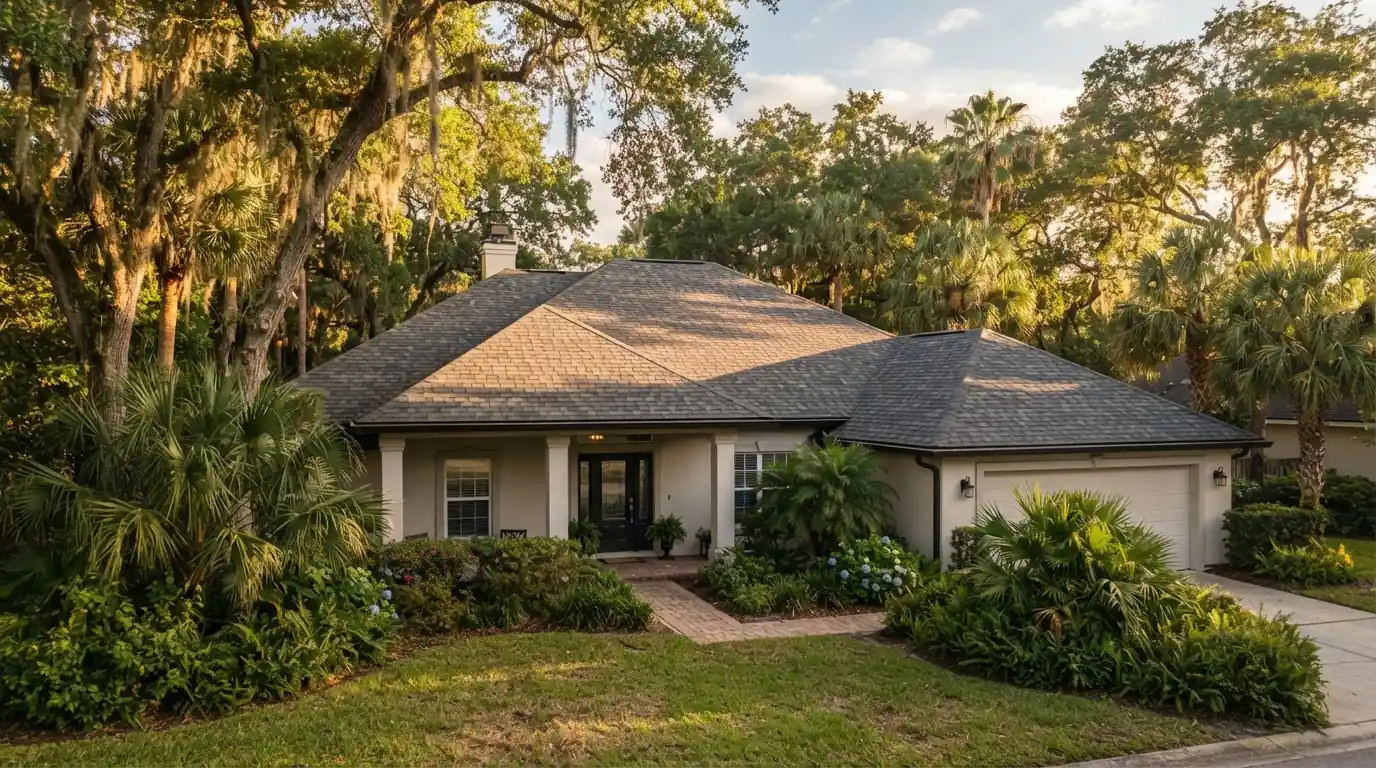
Multi-family and HOA roofing in Jacksonville, FL means reroofing condos, townhomes and apartment buildings one building or phase at a time, with each building permitted, inspected and closed out on its own. Boards get a condition report per building first, so the budget follows the roofs that are actually failing rather than a single date.
Same roofing, different job
What makes a community roof different from a house
The roofing is familiar: shingle on most townhomes, tile or flat membrane on some condo buildings. What changes is everything around it. Residents are home while we work, cars need to move, and a board needs a clear scope before it can approve spending.
We start with a condition report on every building, photographed slope by slope, so the board can see which roofs have years left and which do not. From there the reroof becomes a schedule instead of one disruptive event, and each building gets its own permit through JaxEPICS and its own final inspection.
Cost factors
What moves the price of a community reroof
Number of buildings and phases
More phases mean more mobilizations and permits, though each phase is smaller and easier to fund.
Roof types on the property
Shingle, tile and flat sections are priced separately, and many condo buildings have all three.
Access and staging
Parking, landscaping and pool decks decide where dumpsters and material can sit.
Decking under the old roof
Soft sheathing is replaced as found; get a per-sheet price in writing before work starts.
The range above is a published Duval County figure for architectural shingles, not our quote. A community is priced building by building after the condition report.
Multi-Family & HOA Roofing
Condo and townhome reroofing
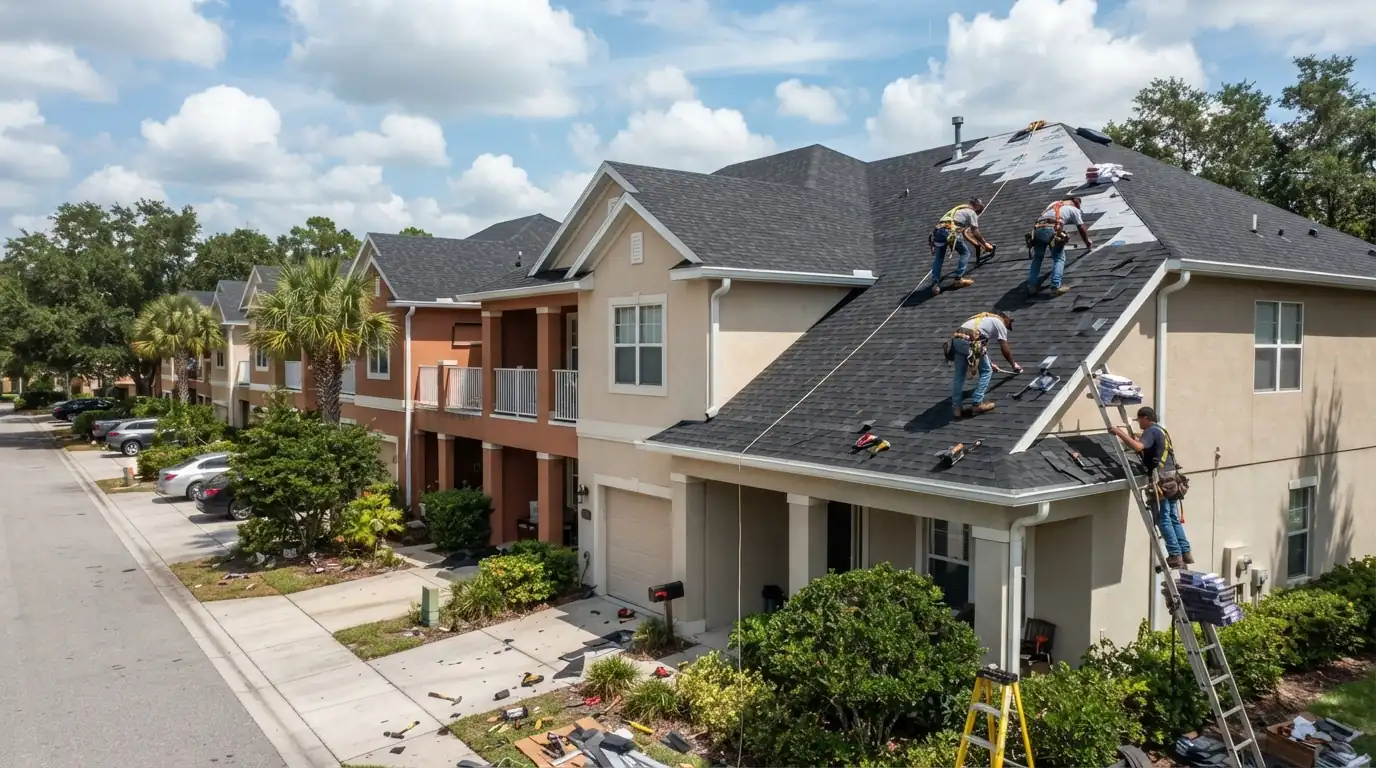
Townhome rows share walls and often share roof planes, so the reroof has to respect unit lines, party-wall flashing and the fire separations between units. We tear off and dry in each section the same day, set new underlayment and flashing, and match the ridge and vent layout across the row so the finished roof reads as one building.
Condo buildings with low-slope sections get the membrane work and the pitched work in the same mobilization, so the building is closed out once.
Typical market range for architectural shingles per roofing square (100 sq ft), Duval County: $375 to $450 per square (source). A planning figure, not a quote.
Multi-Family & HOA Roofing
Phased building-by-building scheduling
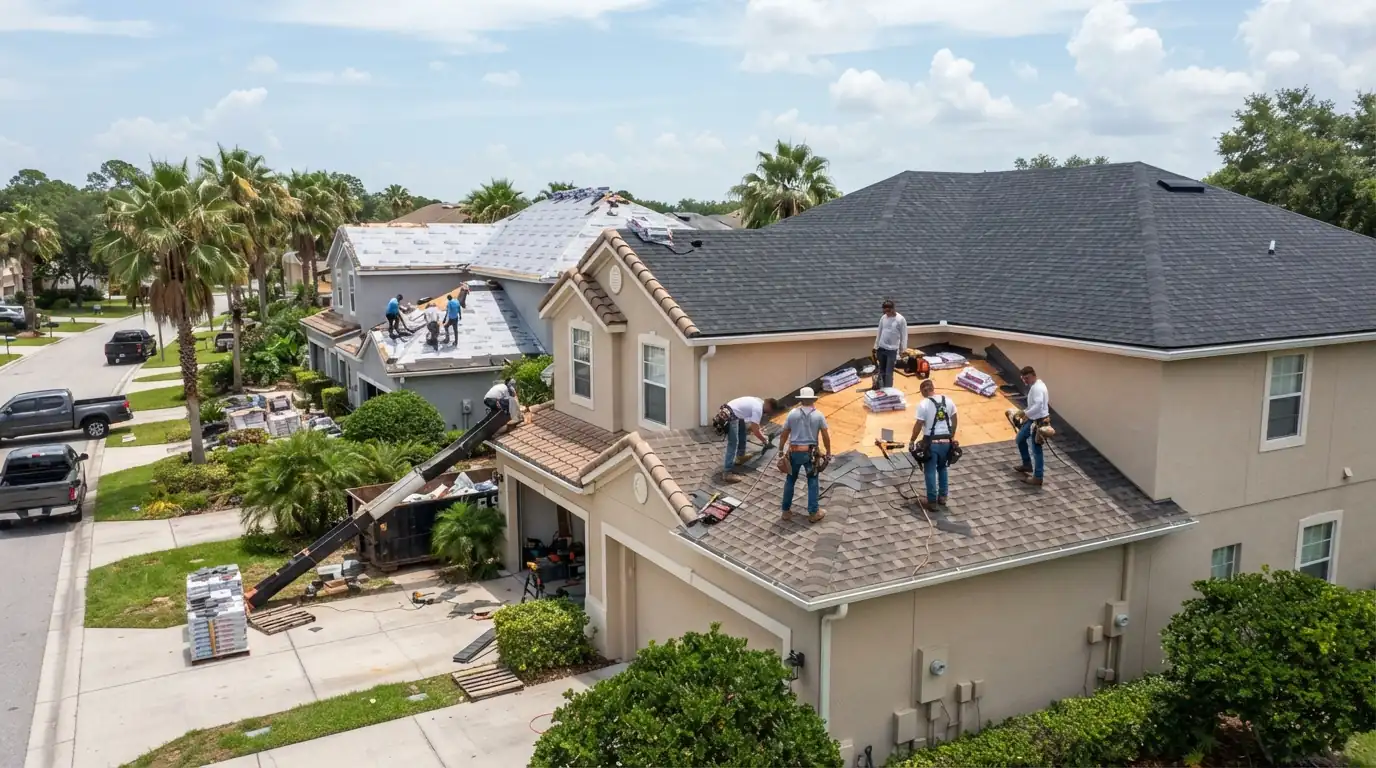
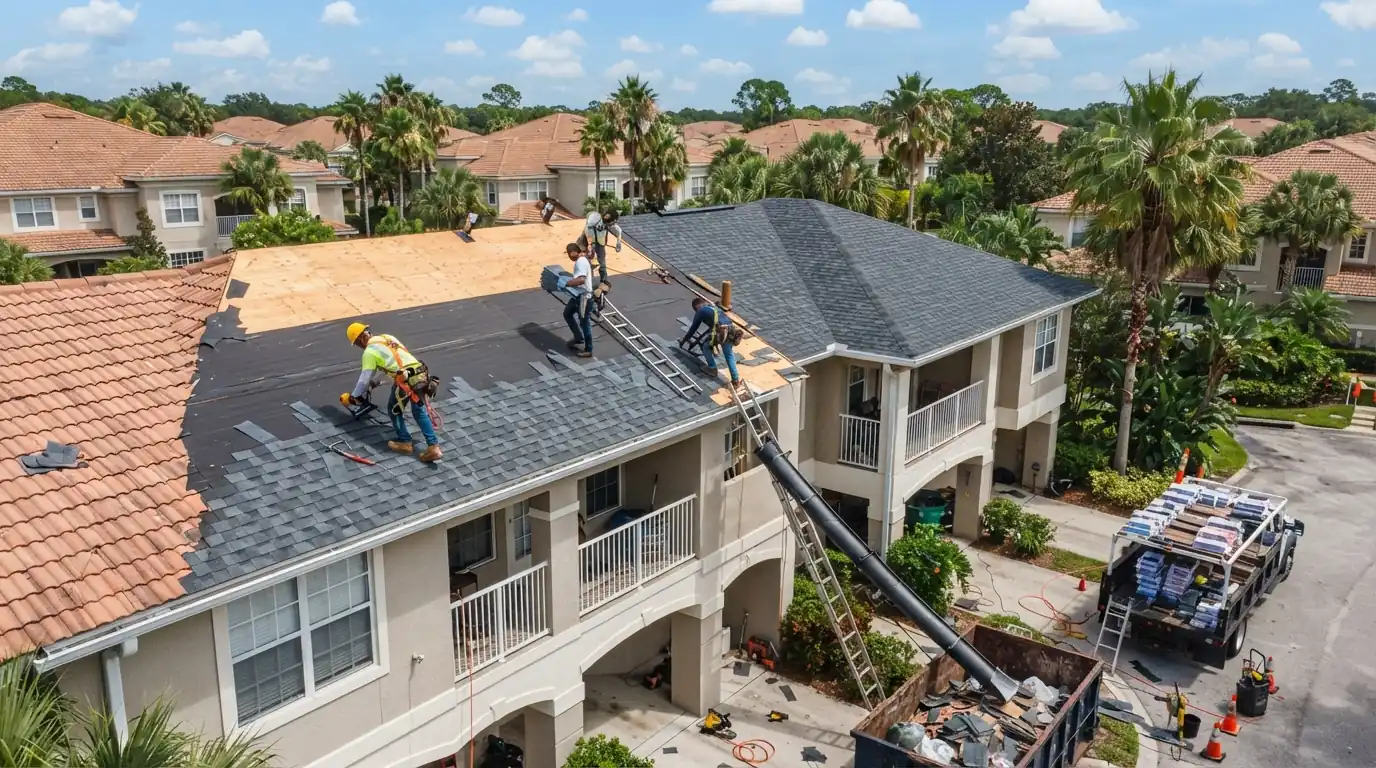
Most associations cannot fund every roof in one year, and most communities do not need to. We rank buildings by condition from the report and propose phases the reserve can carry, worst roofs first. Residents in each phase get notice before work starts, including the days their parking changes.
Phasing also watches the weather. We avoid leaving a building half done going into a forecast storm, and we put the largest tear-offs in the drier months when the calendar allows.
Multi-Family & HOA Roofing
HOA board reporting
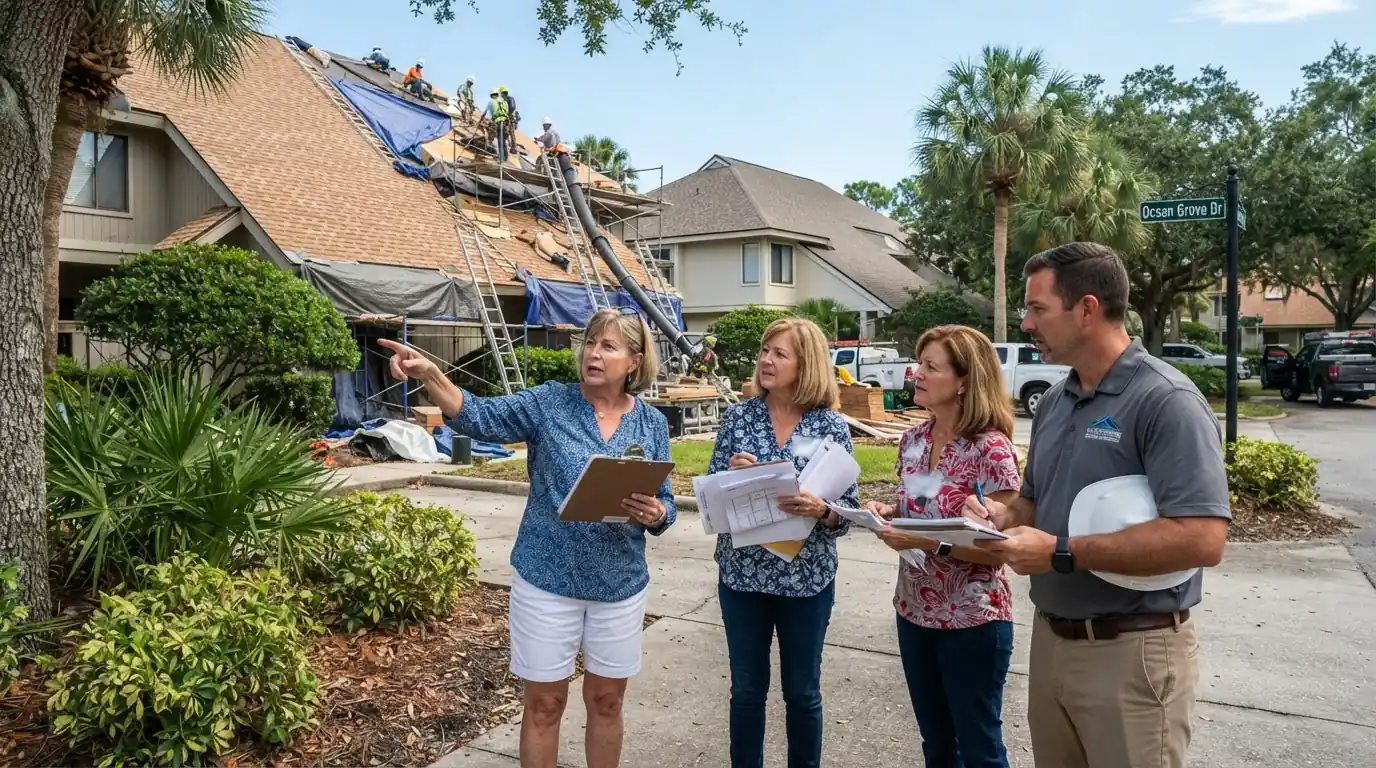
Boards vote on evidence. Each building's report includes photos of every slope, the decking condition seen from the attic where we can get in, the approximate age of the roof covering, and a plain recommendation: repair, watch or replace. For roofs 15 years or older, it notes whether the roof is likely to pass an insurer's useful-life inspection.
We walk the board through it at a meeting or by phone when asked, and update the same reports as each phase closes, so the next budget year starts from current facts.
Your options
Phased reroof, all at once, or repair and watch
| Phased reroof | All buildings at once | Repair and watch | |
|---|---|---|---|
| Best when | Condition varies building to building | Every roof is at the same end of life | Roofs are sound with isolated damage |
| Reserve impact | Spread over several budget years | One large assessment or loan | Lowest now, deferred later |
| Disruption | One building at a time | Whole property for weeks | Minimal |
| Insurance | Newest roofs documented first | Every roof documented at once | Older roofs may face renewal questions |
Phasing is usually the option a reserve study supports, but the condition report decides.
What is included
What each building's reroof includes
- Condition photos of every slope before tear-off
- Permit filed through JaxEPICS for that building
- Resident notice with dates and parking changes
- Tear-off and same-day dry-in on each section
- Decking checked and re-nailed to current code
- New underlayment and metal flashing at walls, valleys and penetrations
- Ridge and vent layout matched across the row
- Final city inspection for the building
- Magnet sweep of lots, walks and beds, and an updated report for the board
Step by step
How a community reroof runs
- 1
Walk the property
Every building photographed slope by slope, with attic checks where access allows.
- 2
Condition report to the board
Repair, watch or replace for each building, with the photos behind it.
- 3
Phase plan
Worst roofs first, sized to what the reserve can carry.
- 4
Resident notice
Dates, parking changes and what to expect on work days.
- 5
Permit and reroof per building
Filed through JaxEPICS; each section dried in the same day.
- 6
Close-out per building
Final inspection, cleanup and an updated report for the board.
Roofing in Jacksonville
Why Florida's roof rules matter more for associations
Two Florida rules shape community reroofs here. Since SB 4-D took effect in May 2022, a roof section built to the 2007 Florida Building Code or later can have more than 25 percent repaired without replacing the whole section, which changes how an association responds when a storm damages a few buildings. And in Jacksonville every permit, including each building of a phased reroof, is filed online through JaxEPICS, so a community project runs as a series of separate permits and inspections rather than one.
We install and repair the lines Northeast Florida suppliers stock, from GAF, Owens Corning and CertainTeed shingles to Eagle concrete tile and Carlisle TPO.
- GAF
- Owens Corning
- CertainTeed
- TAMKO
- Atlas Roofing
- IKO
- Gulf Coast Supply
- Eagle Roofing Products
- Westlake Royal
- Polyglass
- Carlisle
- Johns Manville
- Englert
- VELUX
Questions we hear
Community roofing questions
Yes. Each building is its own permit and its own close-out, which is what makes phasing possible.
No. Expect noise and restricted parking near the building being worked on, usually for a few days. We give the board dates to pass on.
That is what the condition report is for. Each building gets a repair, watch or replace call with the photos behind it.
For roofs 15 years or older, Florida law lets an authorized inspector document remaining useful life. Our certification inspection covers that building by building.
Yes, including TPO and modified bitumen, in the same visit as the pitched roof where possible. See flat roof installation.
Architectural lines from GAF, Owens Corning and CertainTeed are the common choices, picked so the whole row matches.
Related work
Other flat and commercial roofing we do in Jacksonville
Flat Roof Repair
Covers ponding water and drain problems, blisters and split seams, scupper and parapet flashing leaks.
Learn moreFlat Roof Installation
Covers tpo membrane roofs, modified bitumen roofs, tapered insulation for drainage.
Learn moreCommercial Roofing
Covers commercial leak response, commercial reroofing, retail, office and warehouse roofs.
See how it worksPlan the community's reroof around real roof condition
Call to set up the walk. We answer 24/7 and work condo, townhome and apartment roofs across Jacksonville.