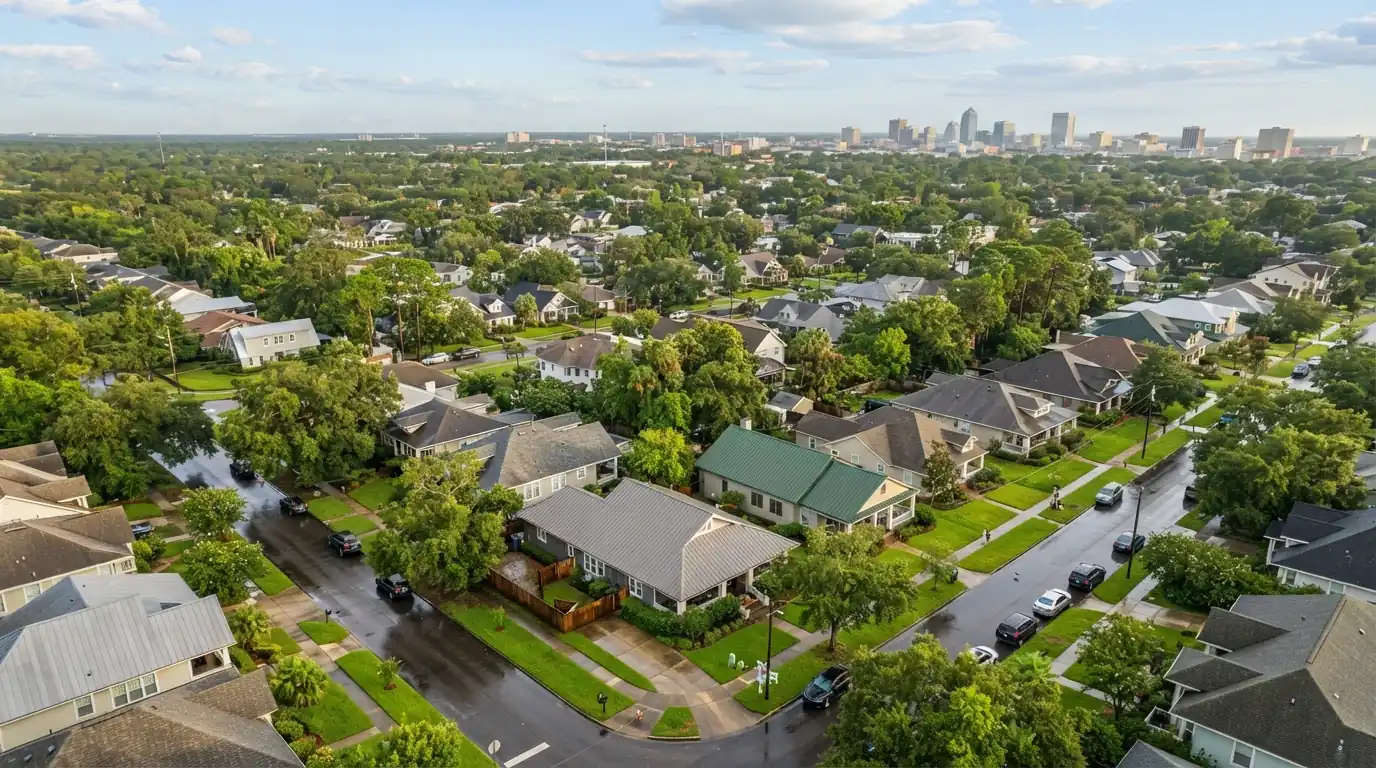
Jacksonville, FL · Inspection & Protection
Attic and roof ventilation for Jacksonville homes
Updated September 2026
A roof without balanced ventilation cooks from both sides. The attic traps summer heat and humid air, shingles age faster, and moisture collects on the deck. We balance intake at the eaves with exhaust at the top.
- Calls answered 24/7
- Ridge, soffit and solar vents
- Checked on every reroof
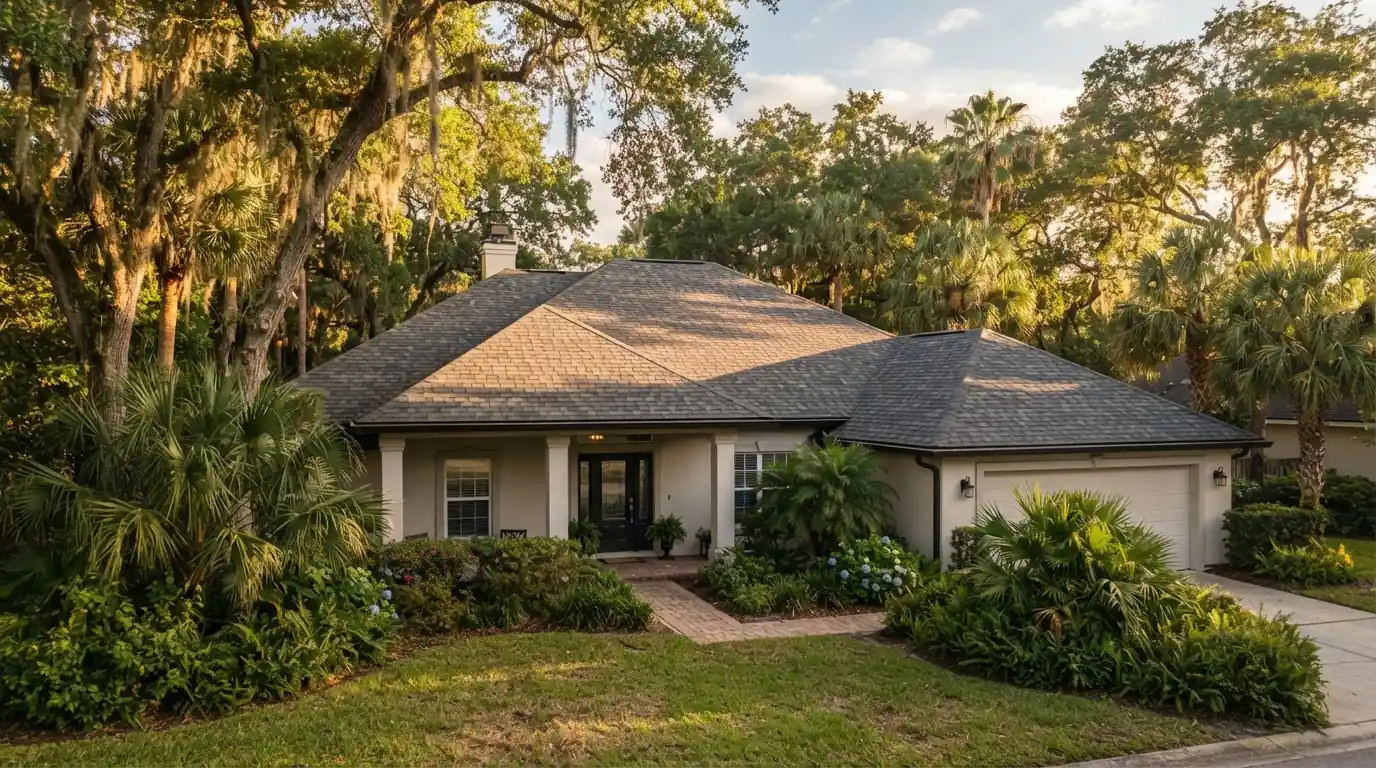
Roof ventilation in Jacksonville, FL means balancing intake air at the soffits with exhaust at or near the ridge, so hot, humid attic air moves out continuously. Most fixes are a ridge vent, cleared or added soffit vents, and removing mixed exhaust types that short-circuit each other. The work is easiest during a reroof, when the ridge and deck are open.
Intake and exhaust
How attic ventilation actually works
Air comes in low, at the soffit vents under the eaves, and leaves high, through a ridge vent or other exhaust near the peak. Heat rising in the attic drives that flow. For it to work, the intake has to be open and roughly balanced with the exhaust, and each attic space should have one exhaust type.
Most problems are imbalance. Soffits painted over or blocked by insulation starve the system; a ridge vent added next to old turbines or gable vents lets exhaust pull from exhaust instead of from the soffits. We look at the whole path from eave to ridge before recommending anything.
Cost factors
What decides the cost of ventilation work
Reroof or retrofit
Adding a ridge vent during a reroof is minor; a retrofit means new ridge caps.
Soffit condition
Solid or painted soffits need vented panels and baffles.
Old vents to remove
Each turbine or box vent removed needs deck patching and shingling.
Attic access
Tight or insulation-packed attics take longer to baffle and clear.
We price ventilation after seeing the attic. On a reroof, balanced ventilation is part of the scope.
Roof Ventilation
Ridge vent installation
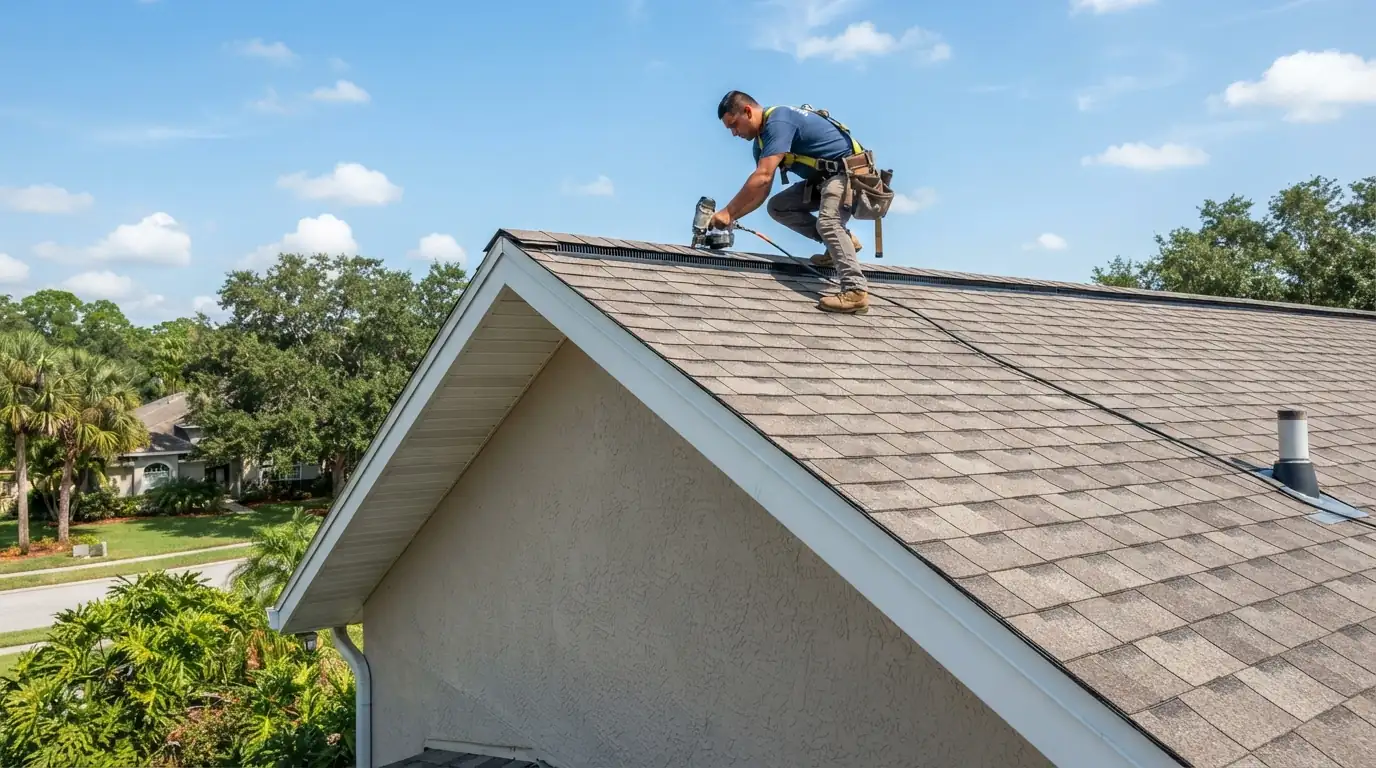
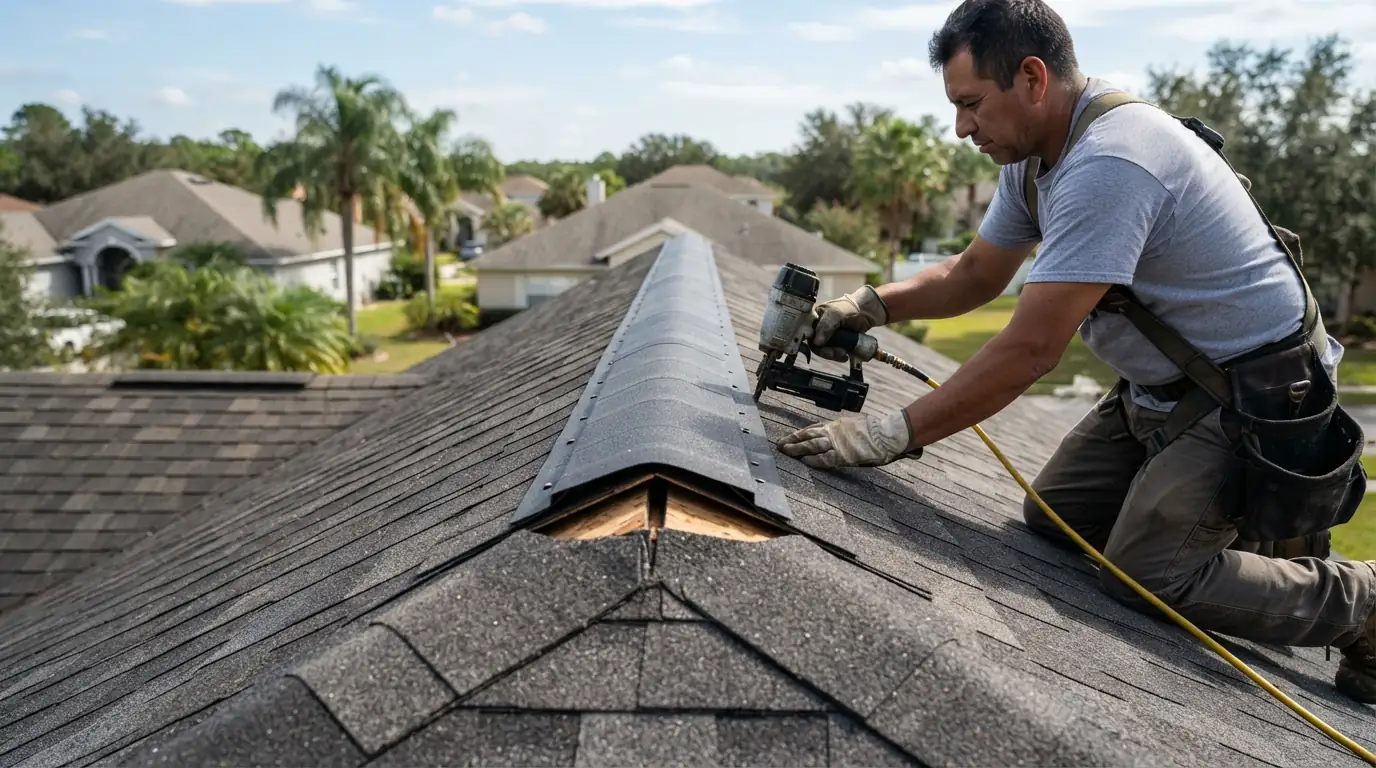
A ridge vent is a continuous slot cut along the peak of the roof deck, covered by a vented cap that sheds rain and lets hot air out along the full length of the ridge. It is the most even exhaust for a gable or hip roof with enough ridge length. We cut the slot to the manufacturer's width, stop it short of the ends and any walls, and cap it with matching shingle or metal ridge.
Installed during a reroof it adds little cost; on an existing roof it means replacing the ridge caps.
Roof Ventilation
Off-ridge and turbine vent replacement
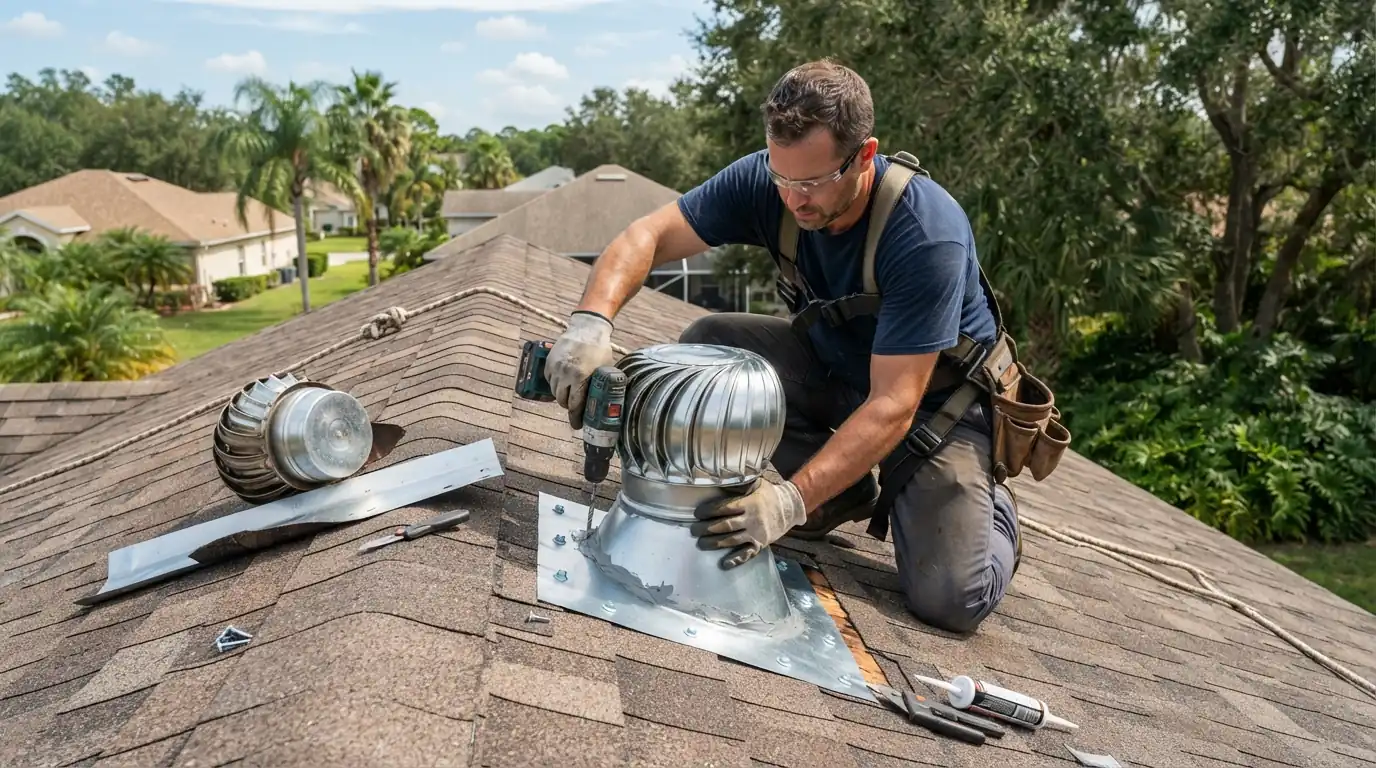
Turbines, box vents and off-ridge vents are common on older Jacksonville roofs. Turbines that squeal or stop spinning, box vents with cracked plastic, and flashings that have lifted are leak points as well as poor exhaust. Where a ridge vent will work, we remove the old units, patch the deck and shingle over. Where the roof has little ridge, such as a hip roof, we use off-ridge or box vents sized to the attic.
A ridge vent and turbines on the same attic is a combination to avoid.
Roof Ventilation
Soffit intake correction
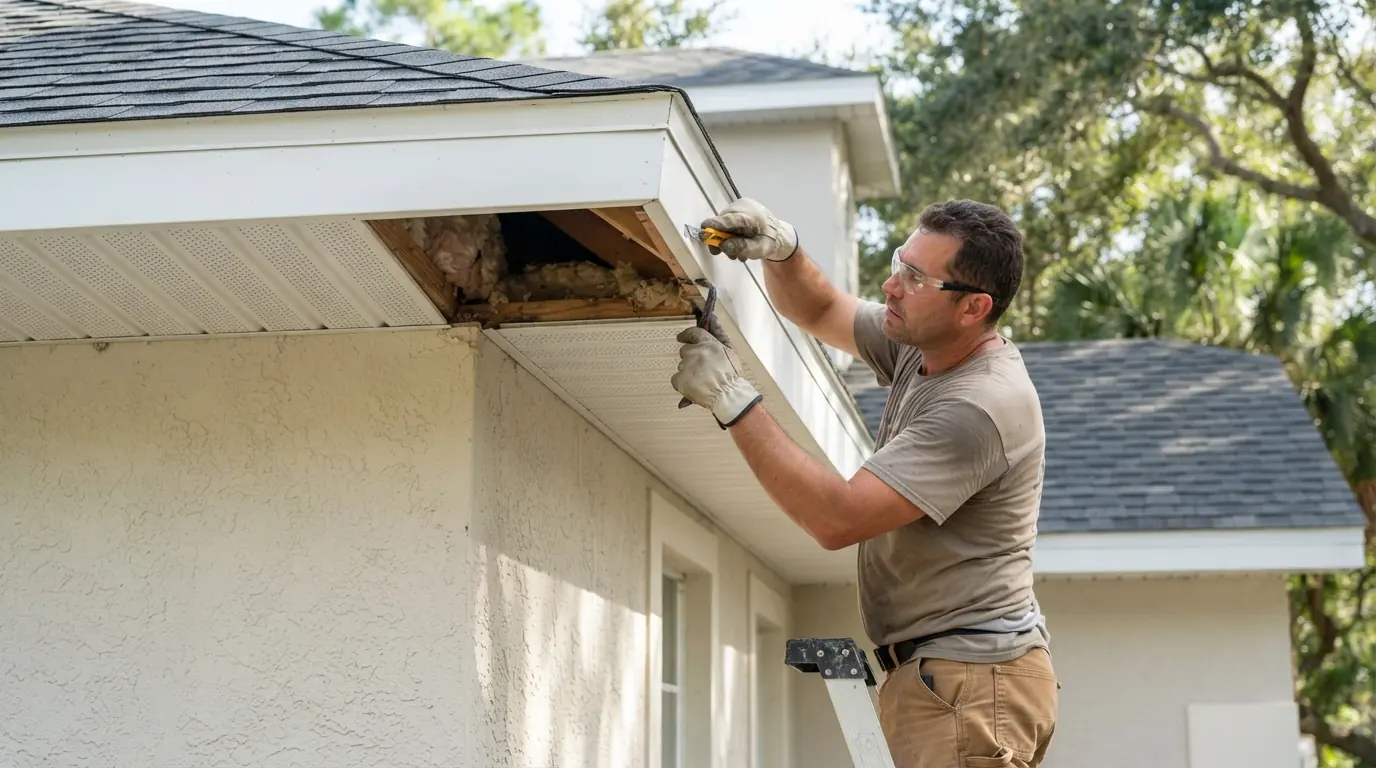
Exhaust only works as well as the intake feeding it. Many soffits are solid, painted shut, or blocked from above by blown insulation packed against the roof deck. We open or replace soffit panels with vented ones, install baffles in the rafter bays so insulation stops at the eave without blocking air, and clear what can be cleared from the attic side.
On homes with little or no soffit overhang, low-profile intake vents near the eave do the same job.
Roof Ventilation
Solar attic fans
Solar attic fans pull air out of the attic with a small panel-powered motor, running hardest on the hottest, sunniest days. They can help attics with limited ridge or trapped heat pockets. They also have a real downside: a powered fan can pull conditioned air up from the house through ceiling gaps, and it should never share an attic with a ridge vent, which it would draw air through instead of from the soffits.
We install them where the attic layout calls for one, with the other exhaust closed off.
Your options
Ridge vent, box vents or a solar fan
| Ridge vent | Off-ridge or box vents | Solar attic fan | |
|---|---|---|---|
| Best on | Gable and hip roofs with enough ridge | Hip roofs with little ridge | Attics with limited passive exhaust |
| Power | None | None | Solar panel |
| Moving parts | None | None | A motor that eventually wears |
| Watch for | Needs open soffit intake | Must not mix with other exhaust | Can pull conditioned air from the house |
Whatever exhaust you choose, it only works with open intake at the soffits.
Step by step
How a ventilation job runs
- 1
Attic check
Heat, moisture staining, insulation and blocked soffits inspected.
- 2
Measure intake and exhaust
Vent area estimated against the attic size.
- 3
Plan one exhaust type
Mixed vents removed; ridge, off-ridge or fan chosen.
- 4
Open the intake
Soffits vented, baffles set in the rafter bays.
- 5
Install exhaust
Ridge cut and capped, or vents flashed in.
- 6
Recheck and photograph
Airflow path confirmed and the work photographed.
Roofing in Jacksonville
Ventilation in a humid Jacksonville attic
Jacksonville's attics deal with heat and moisture together. The city averages about 51 inches of rain a year, and the humid air that comes with it condenses on a cool roof deck at night when an attic cannot breathe. Ventilation requirements for attics and roofs sit in the Florida Building Code 8th Edition, which the City of Jacksonville has enforced for permits since January 2024, so venting is checked as part of any permitted reroof.
What to look for
Signs your attic is not venting properly
An attic too hot to stay in
Trapped summer heat bakes the shingles from below.
Dark staining or mildew on the deck
Moisture is condensing and not leaving.
Rusty nail tips in the attic
Condensation drips from nails that poke through the deck.
Shingles curling early
Heat from below speeds shingle aging.
Upstairs rooms that never cool
A superheated attic radiates into the ceiling below.
We install and repair the lines Northeast Florida suppliers stock, from GAF, Owens Corning and CertainTeed shingles to Eagle concrete tile and Carlisle TPO.
- GAF
- Owens Corning
- CertainTeed
- TAMKO
- Atlas Roofing
- IKO
- Gulf Coast Supply
- Eagle Roofing Products
- Westlake Royal
- Polyglass
- Carlisle
- Johns Manville
- Englert
- VELUX
Questions we hear
Roof ventilation questions
Not always. Many attics need better intake, not more exhaust, so we check the soffits before adding anything at the top.
It is better not to. Two exhaust types on one attic pull from each other instead of from the soffits.
Sometimes, on attics that cannot get enough passive exhaust. It should not share the attic with a ridge vent, and it needs a tight ceiling below it.
Shingle manufacturers generally require proper attic ventilation for their warranties, so check the terms for your roof.
During a reroof, when the deck and ridge are open. It can be retrofitted later, at more cost. See roof replacement.
Related work
Other inspection and protection work
Roof Inspection
Covers annual roof checkup, pre-purchase roof inspection, post-storm inspection.
Read the detailsRoof Certification for Insurance
Covers roofs 15 years and older, remaining useful life letters, condition repairs before certification.
Learn moreRoof Maintenance
Covers pre-hurricane season tune-up, valley and debris clearing, sealant and fastener renewal.
See how it worksLet the attic breathe before next summer
Call any hour. We install ridge, soffit and solar ventilation on Jacksonville roofs and answer 24/7.