Roofing guide · Jacksonville, FL
My Safe Florida Home: how the roof grant works for Jacksonville homes
By Holden Lovett, Roofing Guides Editor · Updated September 2026
Florida's My Safe Florida Home program pays part of the cost of hurricane-hardening a house, and the roof is a big part of what it covers. The program has rules that trip people up, starting with the order in which things must happen. Here is how it works, step by step.
- State program
- Wind mitigation
- Jacksonville, FL
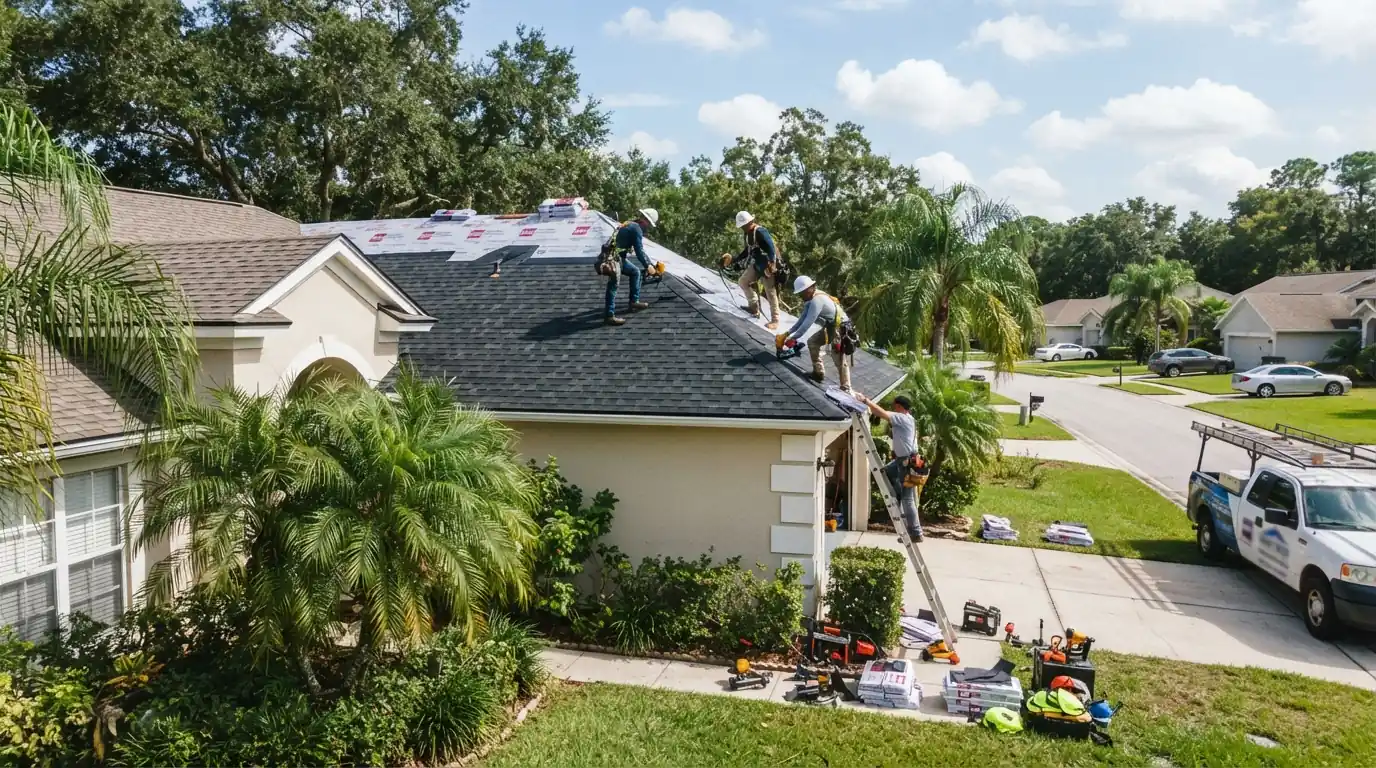
My Safe Florida Home is a state program that provides a free wind mitigation inspection and, for eligible homeowners, grants of up to $10,000, matching $2 for every $1 for moderate-income owners, toward upgrades such as roof-deck attachment, roof-to-wall connections, secondary water resistance and roof covering. It is a grant, not a loan, it pays on a reimbursement basis, and work started before approval does not qualify.
The basics
What the program is
My Safe Florida Home is Florida's grant program for hurricane-hardening existing homes. It starts with a free wind mitigation inspection, and that inspection report decides which improvements the program will help pay for. It is a grant, not a loan, and it works on a reimbursement basis: the approved work is done, inspected, and then paid.
Funding opens in cycles and can run out. When a cycle closes, homeowners with completed inspections may wait for the next round, so it pays to start early and to check the program's current status before planning a roof around it.
Roof items
What it covers on a roof
The roof items the program recognizes line up with the parts of a roof that fail in a hurricane. Opening protection, such as impact windows and shutters, is covered too, but for a roof the four items below are the ones that matter.
The grant is up to $10,000. Moderate-income owners receive $2 from the state for every $1 they put in; the program sets separate terms for other income levels, so read the current rules for your situation.
| Roof item | What it means |
|---|---|
| Roof-deck attachment | How the deck sheathing is nailed to the rafters or trusses |
| Roof-to-wall connections | How the roof framing is tied to the walls, with clips or straps |
| Secondary water resistance | A sealed layer over the deck that keeps water out if the covering blows off |
| Roof covering | The shingles, metal or tile, installed to current wind standards |
Planning a reroof with the grant in mind?
Call and we will price the roof with the wind upgrades broken out line by line.
Step by step
The order things must happen in
The most common and most expensive mistake is starting work too early. The program does not reimburse work started before approval, so a roof replaced in a hurry before the paperwork clears is a roof the grant will not help pay for.
- Apply for the free wind mitigation inspection
- Have the program inspection done and receive the report
- Apply for the grant with the improvements the report recommends
- Wait for approval before any work starts
- Have the approved work done by a contractor registered with the program
- Pass the final inspection, then receive the reimbursement
The report
How the inspection report helps even without a grant
The free wind mitigation inspection is useful on its own. It records how your roof deck is attached, how the roof is tied to the walls, whether there is a secondary water barrier and what protects the openings, which are the same items Florida's wind mitigation inspection form asks about. Keep the report with your house records.
It also works as a plan. If the grant is closed or you do not qualify, the report tells you and your roofer which upgrades would make the biggest difference, so the next reroof can include them. What any of it means for your premium is a question for your agent.
Eligibility
Who can apply
Applicants generally need a homestead exemption on the house, proof of homeowners insurance and contractor quotes for the recommended work, and the program requires a contractor registered with it. The rules change between funding cycles, so check the current eligibility list on the program's own site before counting on a grant.
If you are not eligible, or funding is closed, the same upgrades are still worth doing during a reroof; they are recorded on Florida's wind mitigation inspection form either way.
Timing
Planning a reroof around the grant
If your roof is near the end of its life and you want the grant to help, the timeline matters. Book the free inspection early, before the roof is failing, so there is time for the report, the application and the approval before the work needs to start. If the roof is already leaking, protect the house first; a temporary repair can hold while the paperwork runs.
When the time comes, ask your roofer to price the grant items line by line, deck re-nailing, the secondary water barrier and any strapping, so the application and the final invoice match. See roof replacement and wind mitigation upgrades.
Questions we hear
My Safe Florida Home questions
No. It is a grant, paid on a reimbursement basis after the approved work is done and inspected.
Up to $10,000, with moderate-income owners matched $2 for every $1 they contribute. Check the current rules for other income levels.
No. Work started before approval does not qualify for reimbursement.
Yes. The program inspection is free, and its report decides which improvements qualify.
Funding opens in cycles. You can still get the inspection done, and the upgrades are worth doing during a reroof either way.
The program requires a contractor registered with it, so ask before getting quotes.
Price the roof and the wind upgrades together
Call any hour. We price Jacksonville reroofs with deck re-nailing and secondary water barriers broken out.