Roofing guide · Jacksonville, FL
Roof leaking in Jacksonville? The first steps, in order
By Holden Lovett, Roofing Guides Editor · Updated September 2026
A roof leak feels urgent because it is, but the first half hour is about protecting the inside of the house, not the roof. Here is what to do, in order, and what to leave alone until the weather and a roofer allow.
- Emergency guide
- Before the roofer arrives
- Jacksonville, FL
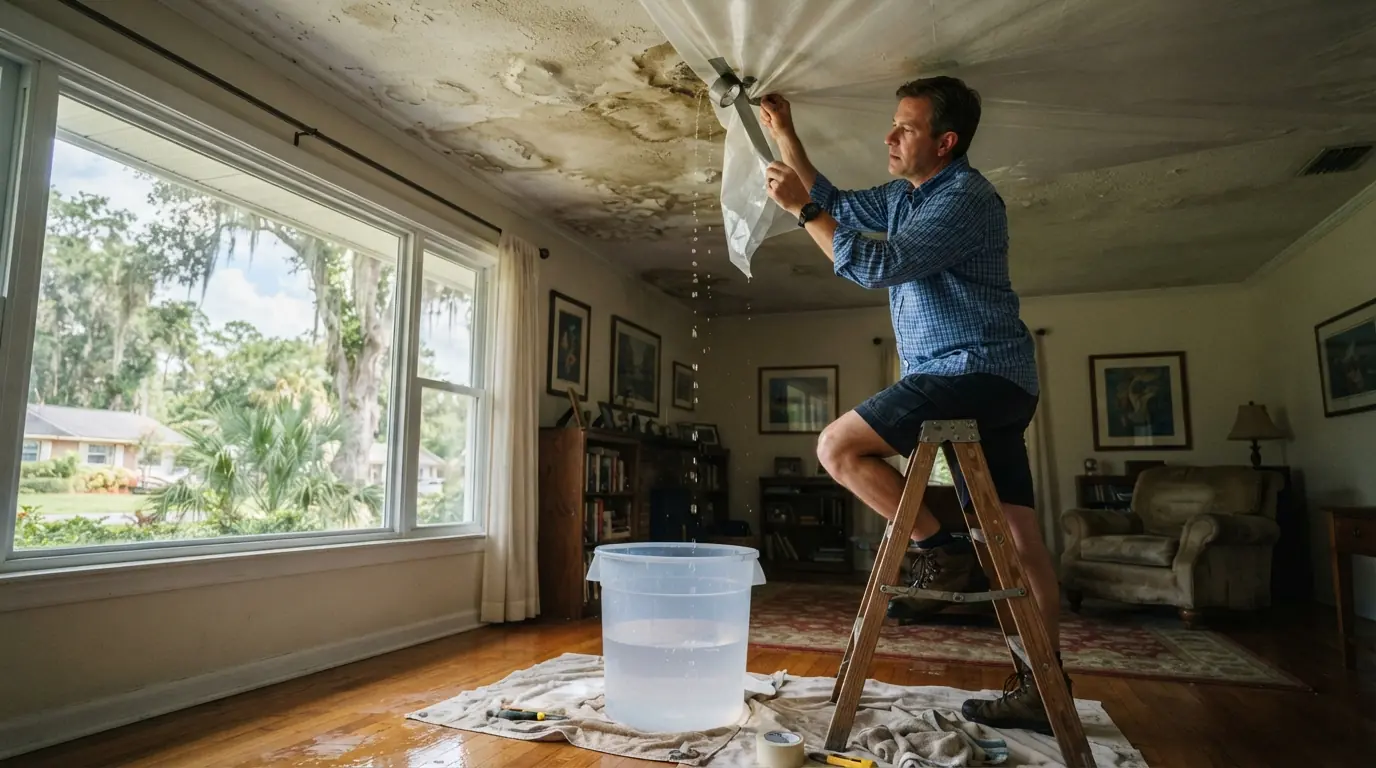
If your roof is leaking in Jacksonville, FL, first protect the room: catch the water, move belongings, turn off power to wet areas at the breaker, and drain a bulging ceiling into a bucket. Stay off the roof, especially in rain or lightning. Take photos, then call a roofer; a temporary dry-in stops the water until a permanent repair can be made in dry weather.
Inside first
The first ten minutes
Work from the inside out. Every step here protects the house while the roof waits, and none of them needs a ladder.
- Put a bucket or bin under the drip, with a towel inside to stop the splashing
- Move furniture, rugs and electronics out of the wet area
- If water is near lights, fans or outlets, turn off that circuit at the breaker
- If the ceiling is bulging, poke a small hole at its lowest point over a bucket so it drains
- Take photos and video of the water, the stain and anything damaged
- Note when it started and what the weather was doing
Safety
Stay off the roof
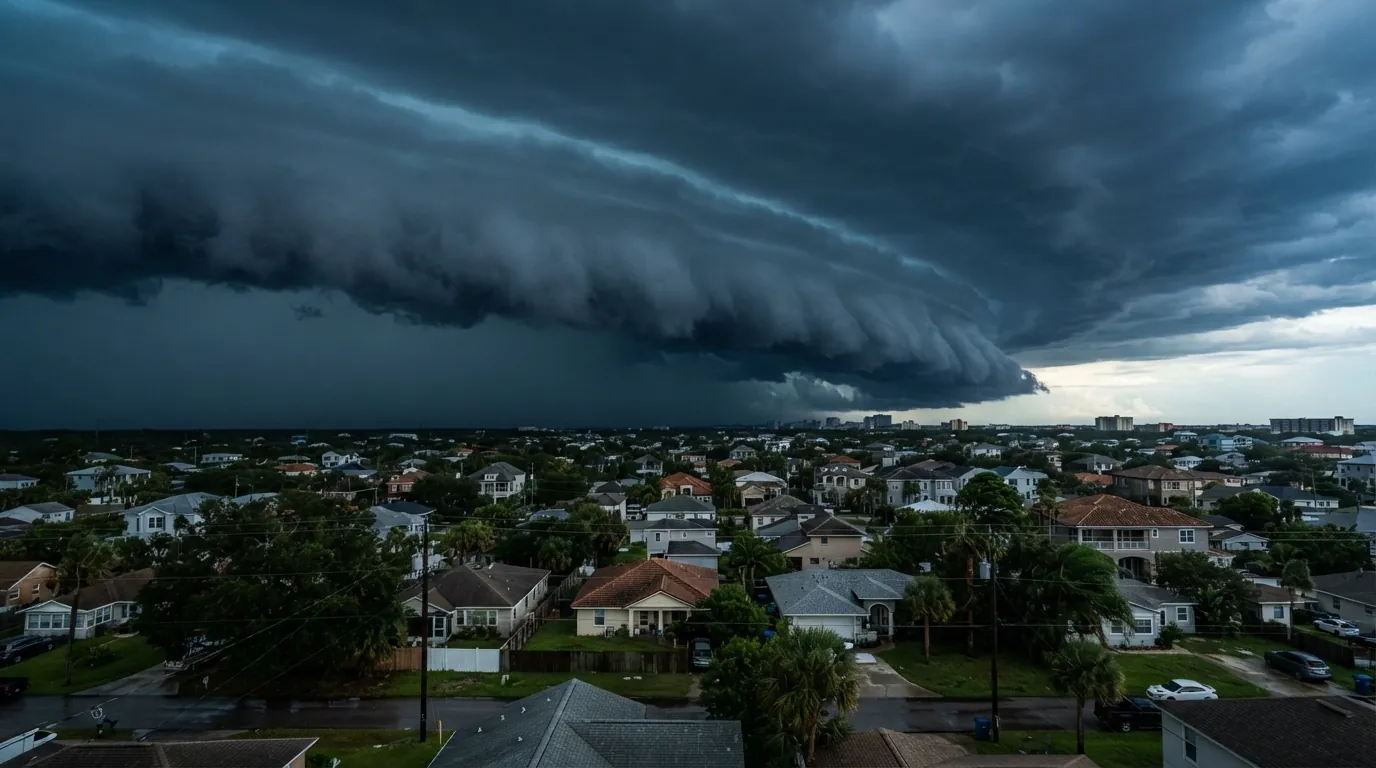
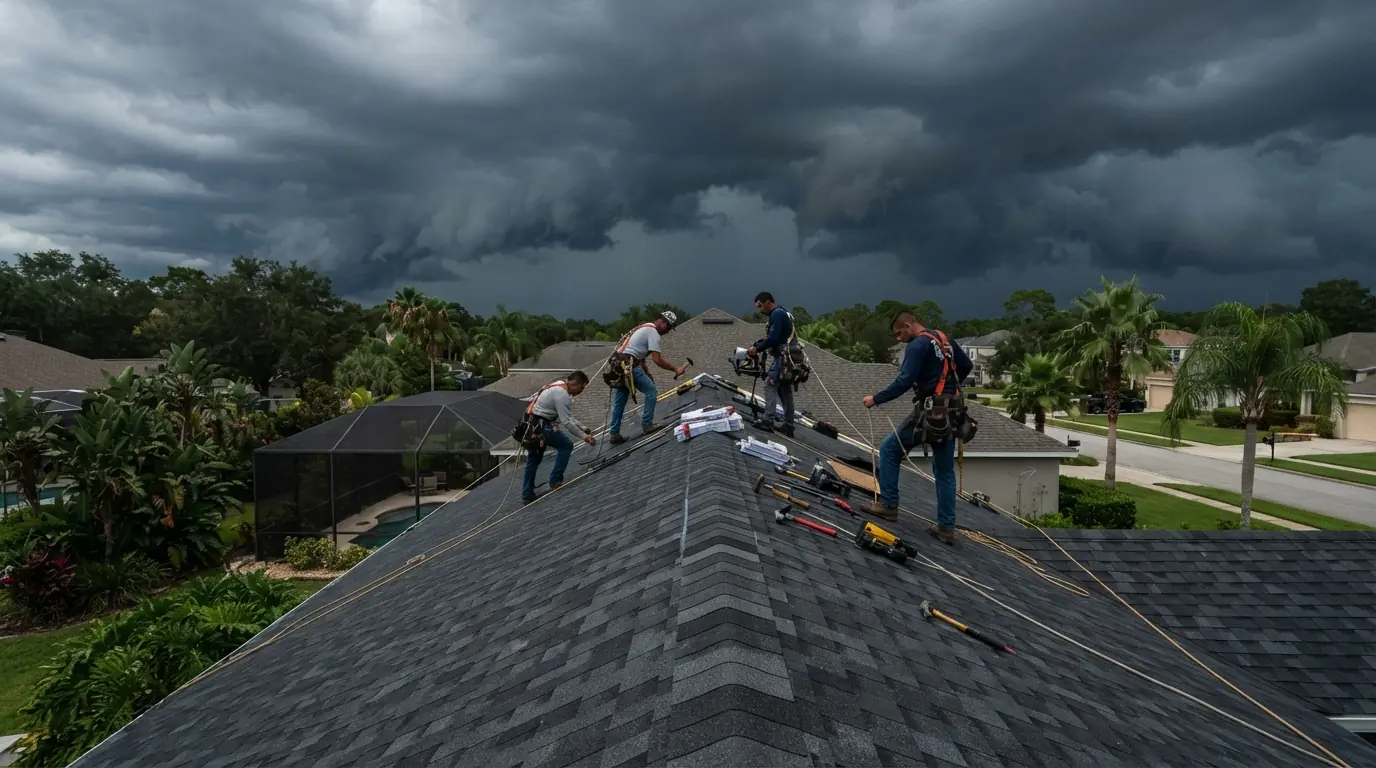
A wet roof is slippery, and Jacksonville's summer storms bring lightning with the rain; one NWS Jacksonville seasonal report counted thunderstorms on 60 days of a single June to August stretch. No leak is worth a fall. Tarping in wind or lightning is dangerous even for crews in harnesses, which is why roofers wait for the storm cell to pass.
The water can wait an hour. Buckets, towels and a drained ceiling will hold most leaks until it is safe to climb, and a proper tarp or dry-in goes on as soon as it is.
Water coming in right now?
Call any hour. We will talk you through the next hour and get a crew up as soon as it is safe.
Clues for the roofer
Find where it is coming from, from inside
If you can get into the attic safely, take a flashlight and look above the stain. Water rarely drops straight down; follow the wet wood uphill toward the peak and you will usually find the area where it enters. Step only on joists or boards, never on the ceiling between them, and stay off wet insulation.
Useful clues for the roofer: does it leak in every rain, or only when the wind blows from one direction? Is it near a chimney, a skylight, a vent pipe or where two roof slopes meet? Is it dripping when it is not raining at all? That last one often points to an air-conditioning line or plumbing rather than the roof.
Do and do not
Temporary fixes: what helps and what makes it worse
Some well-meant fixes cause more damage than the leak. The short version: contain the water inside, and leave the roof to someone equipped for it.
| Helps | Makes it worse |
|---|---|
| Catching and draining the water | Leaving a bulging ceiling to fall on its own |
| Turning off power to wet areas | Using electrical devices near the water |
| Calling for a professional dry-in | Climbing the roof in rain, wind or lightning |
| Photographing everything first | Smearing roof cement on a wet roof, where it rarely bonds |
Making the call
When to call, and what to tell the roofer
Call when you see the leak, not after the rain stops. Tell the roofer where the water is showing, whether anything came through the roof, what kind of roof you have, and whether the ceiling is sagging. Photos help. A roofer who answers at night can talk you through the next hour and set the dry-in for as soon as it is safe.
Keep your own copy of the photos and any invoices. They are the record of what happened and what was done to stop it.
The likely cause
What the repair usually turns out to be
Most leaks trace back to one failed part. On shingle roofs that is usually a cracked pipe boot, a valley or flashing at a chimney or wall. On metal roofs it is often a backed-out screw; on tile roofs, the underlayment beneath the tile. Storms add creased shingles and limb strikes to the list. See roof leak repair for how each is traced.
The emergency visit stops the water; the permanent repair follows in dry conditions with matching materials. See emergency roof repair for how that runs from the first call.
The next few days
After the water stops: drying out
Once the roof is dried in, the inside needs to dry too. The EPA's guidance is to dry water-damaged materials within 24 to 48 hours to prevent mold growth, so run fans and a dehumidifier in the room, pull back wet carpet, and open the attic hatch if it is safe to improve airflow. Ceiling drywall that sagged or stayed soft usually needs replacing; a stain that dries flat can often be sealed and painted once the roof is fixed.
Check the attic again after the next rain. A dry deck above the old stain is the best sign the repair worked; fresh dampness means the water found another path, and the roofer should come back to trace it.
Questions we hear
Roof leak questions
For water coming in, call a roofer to stop it, and keep photos of everything. Questions about what a policy covers are for your insurer or agent.
Only when the roof is dry, the weather is calm and you have a safe way up. Otherwise, wait for a roofer.
Not usually, but it is a leak that has been going for a while. Book an inspection before the next heavy rain.
Wind-driven rain gets under flashing and vents that shed normal rain, so the wind's direction matters.
Wet insulation loses its value and can hold moisture against the deck, so it should be dried or replaced once the leak is fixed.
Stop the leak tonight
Call any hour. We answer 24/7 and dry in Jacksonville roofs as soon as it is safe to climb.