Roofing guide · Jacksonville, FL
Reroofing in Jacksonville's historic districts: a homeowner's guide
By Holden Lovett, Roofing Guides Editor · Updated September 2026
A reroof in one of Jacksonville's historic districts is the same trade with one more step: the Certificate of Appropriateness. Planned well, that step is routine. Here is how the process runs and what to decide before the application goes in.
- Historic homes
- Certificate of Appropriateness
- Jacksonville, FL
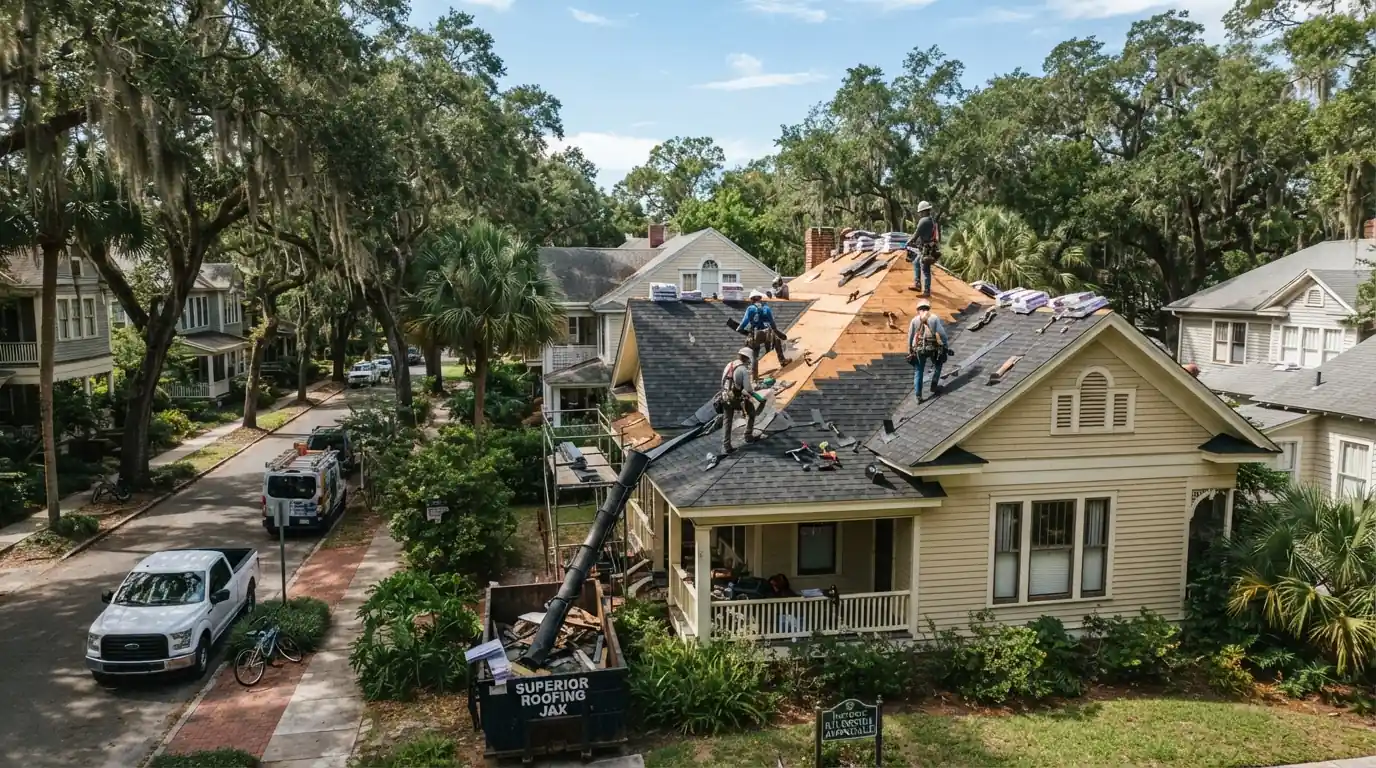
Reroofing in Jacksonville's historic districts, which include Riverside Avondale and Springfield, requires a Certificate of Appropriateness before exterior work starts, and an approved COA is valid for one year. In-kind replacement that keeps the roof's material, color and profile is the simpler path, a change in material gets fuller review, and the roof itself is still permitted and built to the current Florida Building Code.
The districts
Where the rules apply
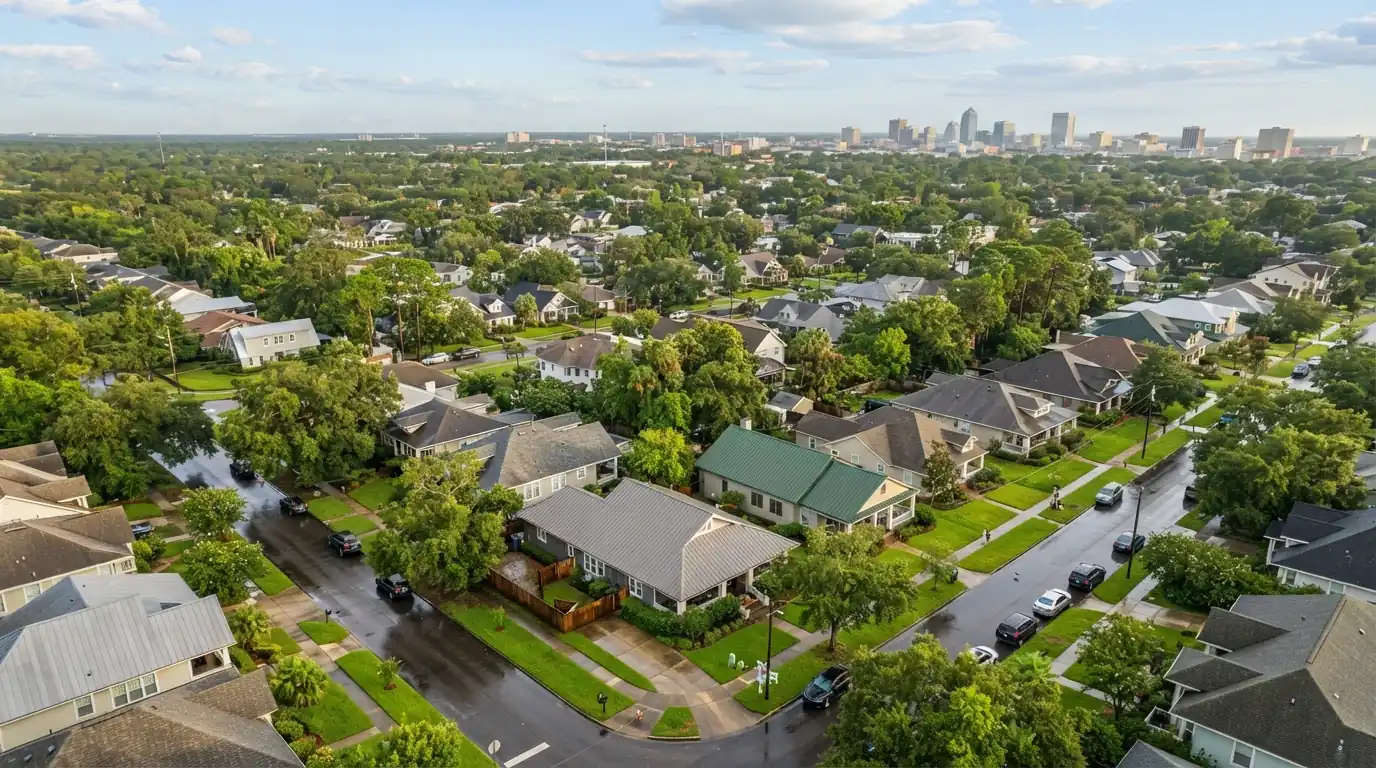
Jacksonville has three locally designated historic districts, including Riverside Avondale and Springfield, and a Certificate of Appropriateness is required for exterior work on properties inside them. Roofing is exterior work, so a reroof there starts with the COA.
If you are not sure whether your house is in a district or is an individually designated landmark, the city's planning records will say. Check before you plan the job rather than after.
Appearance, not structure
What the COA reviews
The review is about how the roof looks from the street: material, color, profile and details such as the ridge treatment and exposed rafter tails. It is not a structural review; the permit and the building code handle that separately.
An in-kind replacement, keeping the same material, color and profile, is the simpler case. A change in material or appearance goes through a fuller review, and some applications go before the Jacksonville Historic Preservation Commission.
Planning a reroof in a historic district?
Call and we will inspect the roof, bring samples, and prepare the COA application with you.
The paperwork
What goes into the application
A clear application moves faster than a vague one. We prepare these with the owner; see historic home roofing for how the job itself runs.
- Photos of the existing roof from the street and each elevation
- The product data sheet for the proposed roof covering
- A color sample or the manufacturer's color name
- A plain description of what changes and what stays
- Details of any trim, fascia or rafter-tail repairs
Under the roof
Old houses, old decks
Riverside and Avondale are dominated by craftsman bungalows, Tudor revivals and prairie-style homes built between 1900 and 1940, and original plank decking is common under those roofs. Sound boards can stay; damaged ones are replaced in kind; and where a new roof needs a continuous nailing surface, plywood can go over the planks, which changes nothing seen from the street.
The deck is fastened to current code either way, and exposed rafter tails and fascia get the same care, because they are part of what the district protects. See roof decking repair.
Sequence
The order of steps
Plan the COA and the work together. An approved COA is valid for one year, and it stays valid for five years once work has begun, so the application and the roofing schedule belong on the same calendar.
- Inspect the roof and the deck from the attic
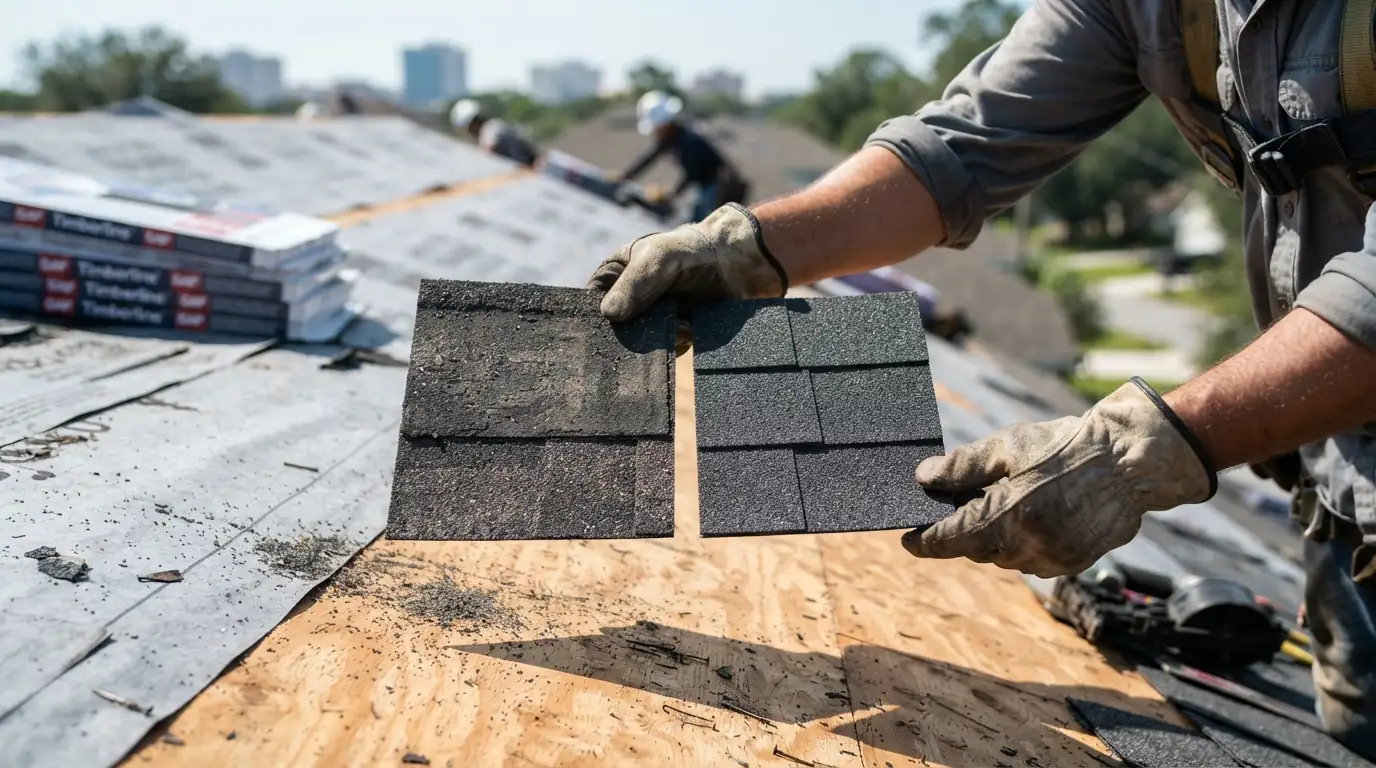
- Choose the material and compare samples against the house in daylight
- Prepare and submit the COA application
- Once the COA is issued, file the permit through JaxEPICS
- Reroof to the current Florida Building Code
- Close the permit with the city's final inspection
During the job
Working carefully on an older house
Older houses need a gentler tear-off than new ones. Plaster ceilings under plank decks can crack from heavy pounding, old trim splits when it is pried carelessly, and mature trees and plantings crowd the drip line. The work is planned around all three: grounds protected, old roofing lifted by hand along the edges, and original trim kept wherever it can be.
The house often shows its history once the roof is open, too, from earlier layers of roofing to old chimney flashing set in mortar. Those details are photographed as they come up, so the owner has a record of what the house was hiding and what was done about it.
Materials
Material choices that usually work
Dimensional shingles in a color that reads like the original suit most bungalows and cottages. Metal can suit houses that had it originally, and tile belongs on Mediterranean revival homes like those in San Marco, which frequently call for clay or concrete tile.
Whatever the material, matching the profile and color as seen from the street is what the review looks for. See metal vs shingle for how the two compare on performance.
Questions we hear
Historic district roofing questions
The COA covers exterior work in the districts, so check with the city for any visible roof work, not only full replacements.
An approved COA is valid for one year, and for five years once work has begun.
Possibly, but a change in material gets a fuller review, and the answer depends on the house and the district's guidelines.
No. The COA covers appearance; the permit, filed through JaxEPICS, covers the building code.
Not usually. Sound boards stay, damaged ones are replaced in kind, and plywood can go over them when needed.
Plan the historic reroof with the paperwork in step
Call any hour. We prepare COA applications and reroof historic homes across Jacksonville.