Roofing guide · Jacksonville, FL
How long a roof lasts in Jacksonville, and what shortens it
By Holden Lovett, Roofing Guides Editor · Updated September 2026
Manufacturers publish lifespans, but a Jacksonville roof lives in heat, humidity and storms that wear it harder than the label assumes. How long yours lasts depends on the material, how it was installed and how it is looked after. Here is what decides it.
- Roof lifespan
- All roof types
- Jacksonville, FL
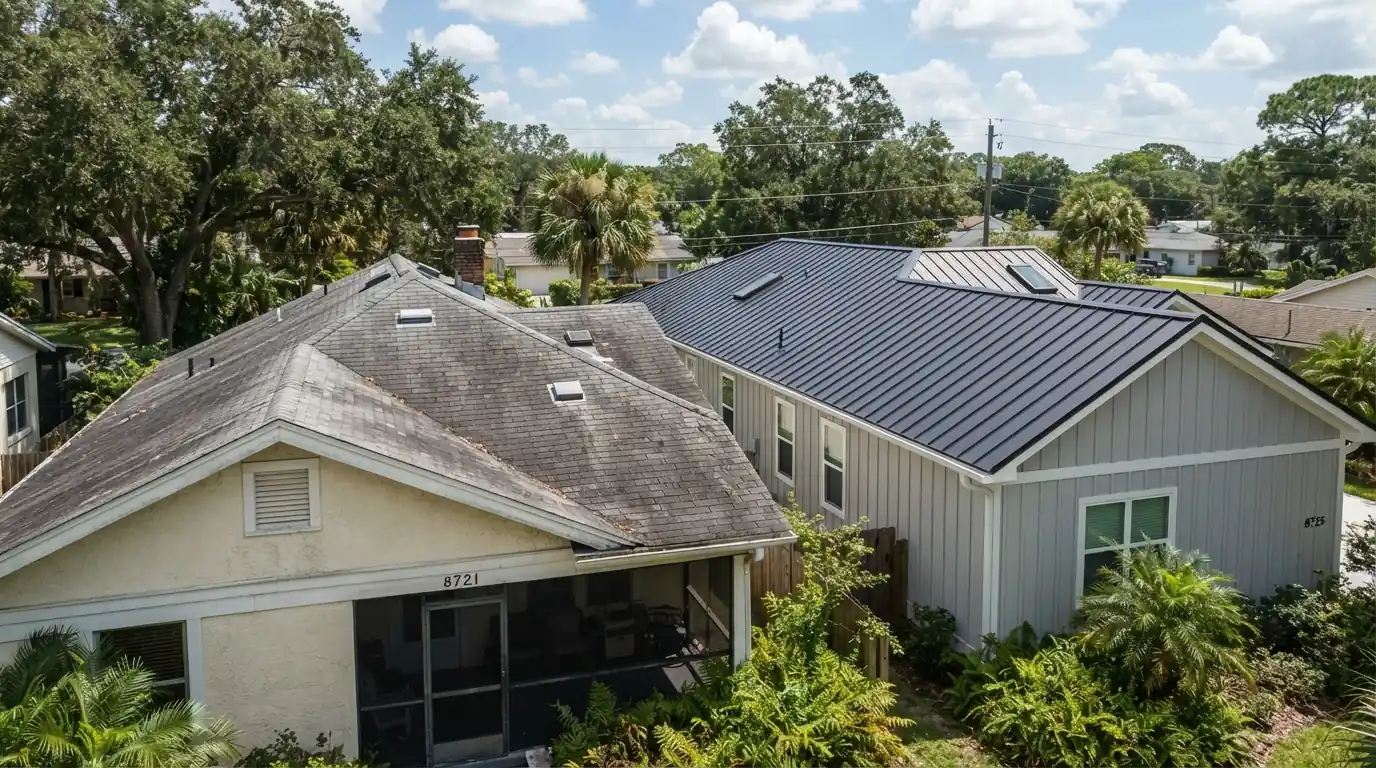
In Jacksonville, FL, asphalt shingle roofs have the shortest working life of the common roof types, metal and tile the longest, and flat membranes depend most on drainage and upkeep. Heat, sun, storms, ventilation and installation quality move any roof's life up or down from the manufacturer's figure, which is why condition, not age, is the real measure of how long a roof has left.
The climate
Why Jacksonville roofs age faster than the label
The Weather Service normal for Jacksonville is 60 summer days at or above 90 degrees, and all that sun and heat break down asphalt, dry out sealants and loosen granules. Humidity works on decks and fasteners from underneath, and storms add sudden damage: one NWS Jacksonville seasonal report counted thunderstorms on 60 days of a single June to August stretch.
Manufacturers' lifespans assume a roof installed and ventilated to their specifications. In this climate, shortcuts at installation or a hot, poorly vented attic show up as lost years faster than they would further north.
Roof types
Material by material
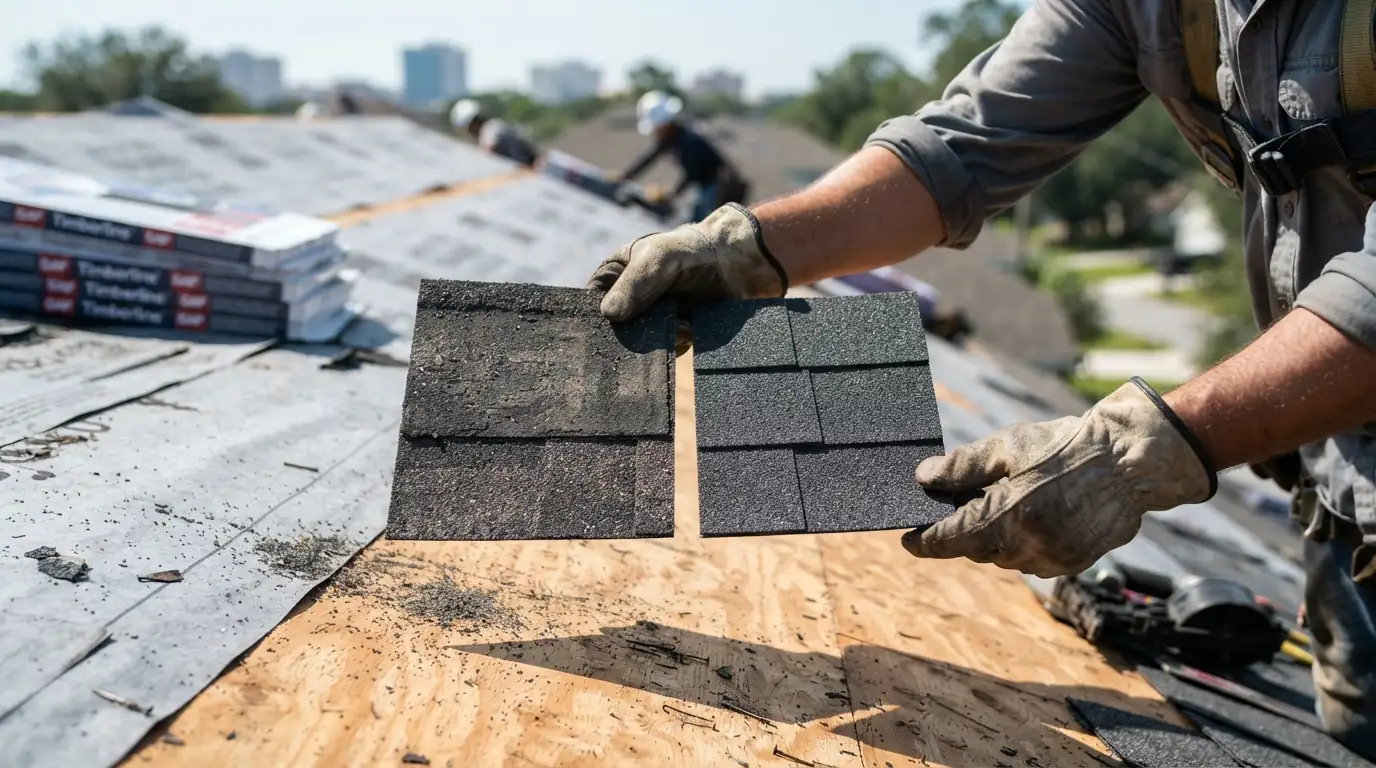
The covering is only part of the answer. On tile roofs in particular, the tile often outlives the underlayment beneath it, which is why many tile roofs are lifted and relaid on new underlayment rather than replaced.
| Roof type | Working life here | What wears it out |
|---|---|---|
| Architectural shingle | Shortest of the common roofs | Sun and heat on the asphalt, wind at the edges |
| Metal | Long | Fastener washers on exposed-fastener roofs; salt near the ocean |
| Concrete and clay tile | Long for the tile, shorter for the underlayment | Underlayment aging beneath sound tile |
| Flat membrane | Depends most on drainage | Ponding water, seams and edges |
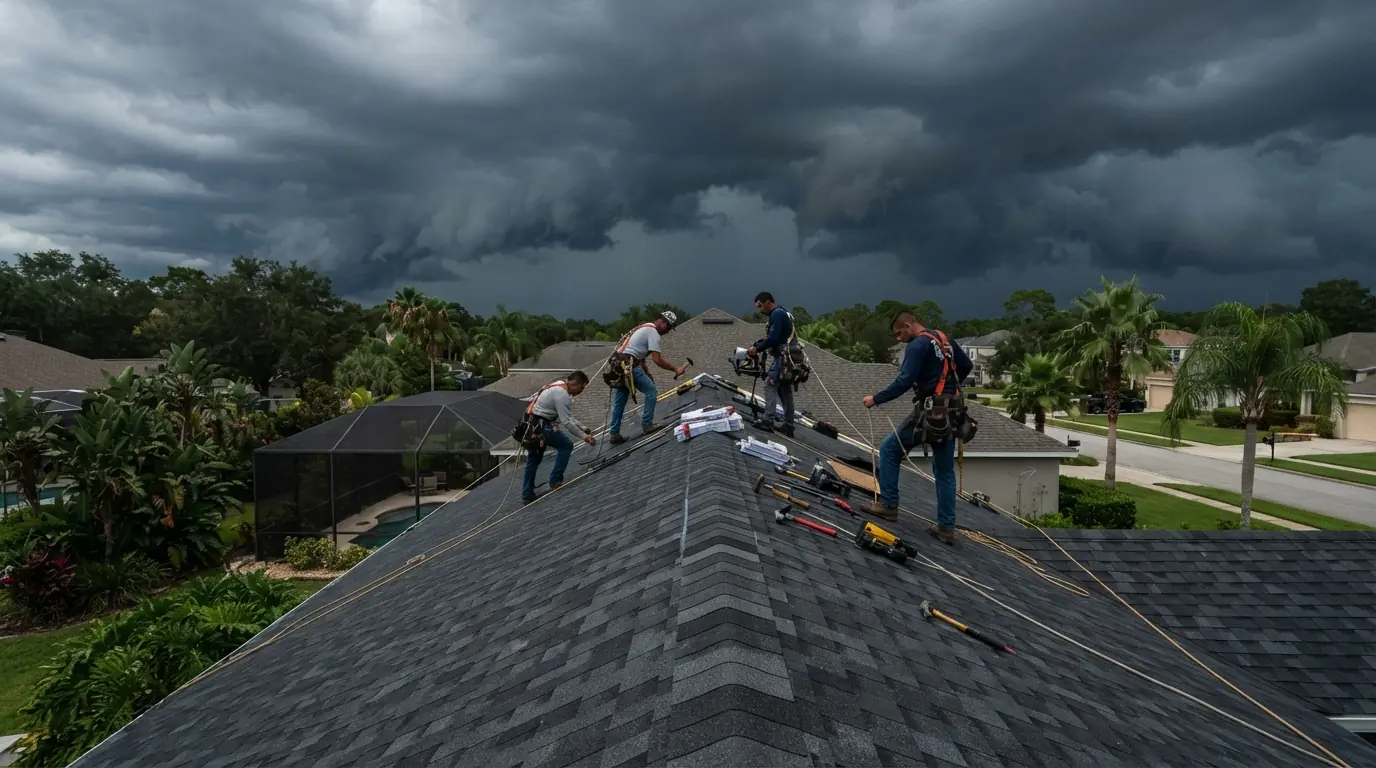
Want to know how long your roof has left?
Call and we will inspect it, photograph every slope, and give you an honest estimate of its remaining life.
Common causes
What shortens a roof's life
Most early roof failures trace back to a handful of causes, and nearly all of them can be avoided or fixed cheaply if they are caught early.
- Poor attic ventilation that bakes the shingles from below
- Installation shortcuts: high nailing, missing drip edge, reused flashing
- Dark colors on full-sun slopes
- Overhanging trees that drop debris and hold moisture
- Clogged valleys and gutters that back water up under the edge
- Storm damage left unrepaired, like creased shingles and lifted flashing
Near the ocean
Coastal roofs wear on their own schedule
Roofs near the beaches age differently from roofs inland. At Atlantic Beach and Jacksonville Beach, coastal storms are a common cause of wind-uplift shingle loss and membrane damage, and shaded roofs there grow algae that speeds granule loss. Salt air adds corrosion to the list, attacking standard fasteners, flashing and the coating on steel panels.
That is why metal is especially popular in those neighborhoods, usually in aluminum or with coastal-rated finishes, and why coastal shingle roofs benefit from closer checks of their edges and ridges each spring. See metal roof installation for the coastal options.
Adding years
What stretches it
The things that add years are mostly small and regular: a spring inspection and tune-up, clear valleys and gutters, balanced attic ventilation, trees trimmed back from the roof, and quick repairs after storms. None of them is expensive compared with an early replacement.
At installation, the choices that matter are proper nailing, a good underlayment, new flashing and ventilation done right. See roof maintenance and roof ventilation.
Paperwork
Age, insurance and planning
Age matters to insurers whatever the roof's condition. Florida Statute 627.7011 draws its line at 15 years, after which an insurer can ask for an authorized inspection showing five or more years of useful life. So even a roof in good shape needs a plan once it passes that mark, whether that means documenting its condition or budgeting for its replacement.
The permit record tells you when the roof was last replaced. If you do not know, that is the first thing to find out. See our guide to the 15-year rule.
Condition
How to tell where your roof stands
The honest measure of a roof's remaining life is its condition, and the only way to judge that is to look at every slope and the attic. See signs your roof is near the end for what to look for, and roof inspection for a photo-documented check.
If the roof is near the end, planning the replacement before it fails lets you choose the material and the season. See our roof cost guide for budgeting.
Questions we hear
Roof lifespan questions
Less time than the same roof would in a milder climate, because heat and sun age the asphalt. Condition matters more than the number on the wrapper.
Yes, typically, when installed to its tested system; exposed-fastener roofs need their screws and washers checked over time.
Because the underlayment beneath the tile wears out first. Many tile roofs are relaid on new underlayment.
Not necessarily. Insurers look at age, but condition decides its real remaining life, and an inspection answers both.
Installation quality and ventilation at the start, then regular inspections and quick storm repairs.
Get an honest read on how long your roof has left
Call any hour. We inspect Jacksonville roofs and document their condition and remaining life.